
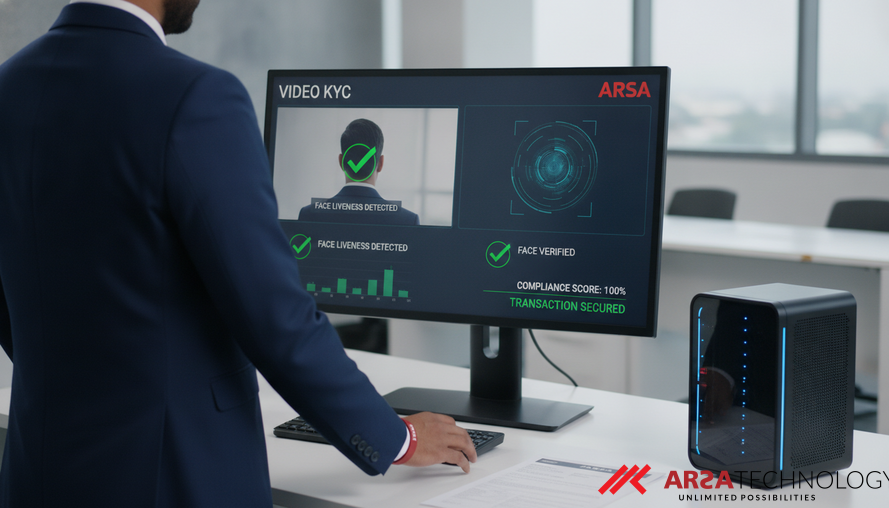

Elevate Compliance: Choosing a Face Liveness API for RBI V-CIP Video KYC in India
In India’s rapidly evolving financial landscape, the Reserve Bank of India’s (RBI) Video-based Customer Identification Process (V-CIP) has become a cornerstone for digital onboarding. For banks and Non-Banking Financial Companies (NBFCs), ensuring strict adherence to these guidelines is paramount, especially when it comes to preventing identity fraud. A critical component of this compliance is a robust face liveness API for RBI V-CIP video KYC in India, designed to detect presentation attacks and verify the authenticity of the individual during a live video interaction.
The digital transformation in the fintech sector demands solutions that are not only efficient but also highly secure and compliant. As of 2026, RBI’s V-CIP framework, including updates from the November 28, 2025 KYC Master Direction, emphasizes the need for stringent controls, including live officer interaction, geo-tagging, encrypted recording, and sophisticated liveness checks. These measures are crucial to counter the increasing threat of deepfakes and synthetic identity fraud, which the original 2020 framework did not fully anticipate.
The Imperative of RBI Compliant Face Liveness Detection
The RBI mandates that V-CIP sessions incorporate a reliable liveness check to confirm that the person on the video call is a real, live individual and not an impostor using a photo, video, or 3D mask. This is where a specialized RBI compliant face liveness detection solution becomes indispensable. Without it, financial institutions risk regulatory observations and significant financial losses due to fraud.
ARSA Technology’s ARSA Face Recognition & Liveness API offers a cloud-based SaaS solution specifically engineered to meet these demanding requirements. It provides a comprehensive identity layer, enabling secure onboarding and authentication with a focus on preventing spoofing attempts. The API supports both passive liveness detection, which can identify AI-artifact signatures and lighting inconsistencies, and active liveness with head movement challenges, making it highly effective against sophisticated presentation attacks.
Key Features of a V-CIP Liveness and Spoof Detection Vendor
When evaluating a V-CIP liveness and spoof detection vendor, Indian banks and NBFCs must consider several factors beyond basic liveness. The solution should offer:
- Comprehensive Liveness Detection: Beyond simple checks, it should incorporate both active and passive methods to counter a wide array of spoofing techniques. This is vital as presentation-attack detection (PAD), while covered by standards like ISO/IEC 30107-3, does not inherently protect against injection attacks or deepfakes that bypass the camera entirely. In 2026, liveness alone is necessary but no longer sufficient without a holistic fraud prevention strategy.
- Robust Face Verification and Identification: The ability to perform 1:1 face verification (comparing a live face to a document photo) and 1:N face recognition against a secure database is fundamental for identity confirmation.
- Data Security and Privacy: Given the sensitive nature of biometric data, the API must ensure isolated per-account face databases for enhanced data privacy and tenant separation.
- Ease of Integration and Scalability: A developer-friendly REST API with clear documentation and quick setup is crucial for rapid deployment. ARSA’s API, for instance, allows for the first API call in under 5 minutes, accelerating time to market for new digital services.
- Audit Trail and Compliance Support: The system should generate detailed audit logs for every decision point, ensuring regulator-ready documentation for inspections. The RBI’s 2025 updates specifically tightened audit and documentation expectations, requiring reviewable training records and randomized-question protocols.
ARSA’s Face Recognition & Liveness API: A Solution for India Digital KYC
ARSA Technology’s Face Recognition & Liveness overview provides a powerful toolkit for financial institutions looking to enhance their India digital KYC face verification API capabilities. Our cloud-based platform, accessible at faceapi.arsa.technology, offers:
- Active and Passive Liveness Detection: Our API incorporates both challenge-response based active liveness and advanced passive liveness to effectively prevent photo, video replay, and other sophisticated spoofing attacks. This layered approach is essential in a landscape where deepfake technology is increasingly accessible.
- Comprehensive Face Analytics: Beyond liveness, the API offers face detection with bounding boxes, age estimation, gender classification, and expression detection (neutral, happy, sad, surprise, anger), providing richer insights during the V-CIP process.
- Secure Face Database Management: Financial institutions can enroll faces into secure, isolated collections, manage identities, and organize data by application or tenant, all within a per-account isolated database.
- Scalable and Cost-Effective: With tiered pricing plans (Basic Free, Pro $29/mo, Ultra $149/mo, Mega $1,290/mo), institutions pay only for what they use, with all features included on every plan. This eliminates the need for significant infrastructure investment and management.
- Developer-Friendly Experience: The API supports JPEG/PNG images and MP4/WebM video for active liveness, with cURL/Python/JavaScript code examples available in the Face Recognition API documentation. A developer dashboard provides usage analytics, and multiple images per face ID can be used for higher accuracy.
Preventing Identity Fraud in Fintech with Advanced Liveness
The threat of identity fraud, particularly through synthetic media and injection attacks, is a growing concern for fintechs. While presentation-attack detection (PAD) is crucial, it’s important to understand its limitations. PAD, as defined by ISO/IEC 30107-3, focuses on detecting physical artifacts used to spoof a biometric system at the sensor. However, injection attacks and deepfakes can bypass the camera entirely, presenting fabricated biometric data directly to the system. Therefore, a comprehensive strategy extends beyond just PAD, incorporating robust liveness detection alongside other fraud prevention measures.
ARSA’s API is designed to be a key part of this comprehensive strategy. As discussed in our blog post, “How to Prevent Identity Fraud with Face Liveness Detection API in Fintech”, advanced liveness detection is a primary defense against such evolving threats. Another relevant article, “Fintech in 2026: How AI Video Analytics and Face Liveness Detection API Can Prevent Identity Fraud”, further elaborates on the importance of these technologies.
The Path to Seamless Compliance and Enhanced Security
For Indian financial institutions, the choice of a video based customer identification process API is a strategic decision that impacts compliance, security, and customer experience. The RBI’s emphasis on robust V-CIP controls, including real-time liveness checks and comprehensive audit trails, underscores the need for a sophisticated and reliable solution.
The HyperVerge blog highlights that RBI’s V-CIP framework, updated in 2025, requires a live, two-way interaction, not a self-serve recorded video. It also mandates GPS-level geo-tagging cross-validated with IP, and officer training with randomized questions to counter deepfake attempts. These detailed requirements necessitate a technology partner that understands and can deliver on these nuances. ARSA Technology, with its 7+ years of experience and NVIDIA Inception/Intel partnerships, is well-positioned to provide such expertise.
Frequently Asked Questions
What are the key components of an RBI compliant face liveness detection system?
An RBI compliant face liveness detection system for V-CIP requires both active and passive liveness checks to confirm the presence of a live individual, not a spoof. It must integrate seamlessly with face verification against identity documents and contribute to a comprehensive, auditable V-CIP flow, including geo-tagging and encrypted session recording as mandated by the RBI.
How does a face liveness API for RBI V-CIP video KYC in India help prevent deepfake fraud?
A robust face liveness API for RBI V-CIP video KYC in India helps prevent deepfake fraud by detecting subtle anomalies that indicate a synthetic or manipulated face. This includes identifying AI-artifact signatures, lighting inconsistencies, and depth-field distortions that deepfake tools struggle to reproduce in real-time. Paired with randomized officer questions and geo-tagging, it forms a strong defense.
What are the benefits of using a cloud-based Face Recognition & Liveness API for V-CIP?
Utilizing a cloud-based Face Recognition & Liveness API for V-CIP offers benefits such as rapid deployment (first API call in under 5 minutes), scalability to handle varying transaction volumes, reduced infrastructure management overhead, and cost-effectiveness through a pay-as-you-go model. It also ensures data privacy with isolated per-account face databases.
Can ARSA’s Face Recognition & Liveness API integrate with existing V-CIP workflows?
Yes, ARSA’s Face Recognition & Liveness API is designed for seamless integration with existing V-CIP workflows. Its REST API allows financial institutions to incorporate advanced liveness detection, 1:1 face verification, and 1:N face identification capabilities into their current digital onboarding and identity management systems. For specific integration patterns, refer to our Face Recognition API documentation or contact ARSA solutions team for custom AI solutions.
Ready to Enhance Your V-CIP Compliance?
Navigating the complexities of RBI V-CIP regulations and the evolving threat landscape requires a technology partner with proven expertise. ARSA Technology’s Face Recognition & Liveness API provides a secure, scalable, and compliant solution for Indian banks and NBFCs. By integrating our advanced liveness detection and face verification capabilities, you can launch secure digital onboarding processes in days, not months, meet your KYC and AML obligations, and protect against sophisticated fraud.
Explore our Face API pricing plans and create a free Face API account to experience the power of ARSA’s enterprise-grade AI. For more insights into the latest in digital identity and fraud prevention, visit the Face Recognition API blog or explore all ARSA products.
Stop Guessing, Start Optimizing.
Discover how ARSA Technology drives profit through intelligent systems.