
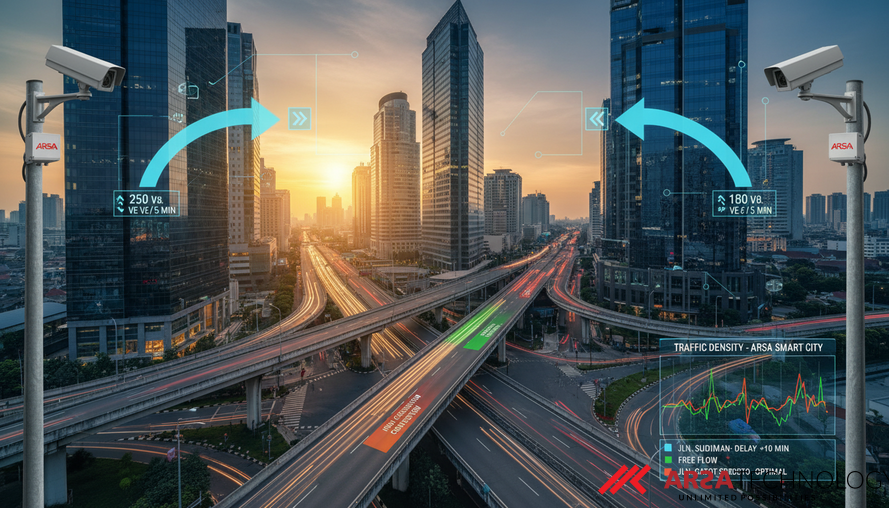

How to Implement AI Traffic Analytics with Existing CCTV Cameras for Smart City Planning
In an era where urban populations are rapidly expanding and logistical demands are escalating, efficient traffic management is no longer a luxury but a necessity. Traditional methods of monitoring traffic, often reliant on manual observation or expensive, purpose-built sensors, struggle to keep pace with the dynamic complexities of modern cities. The good news is that a powerful, cost-effective solution often already exists within your infrastructure: your current Closed-Circuit Television (CCTV) camera networks. This article will explain how to implement AI traffic analytics with existing CCTV cameras, transforming passive surveillance into an active, intelligent system for urban planning and logistics.
For government IT procurement teams and urban planners, the challenge lies in leveraging existing assets to achieve smart city objectives without incurring prohibitive costs or overhauling entire systems. ARSA Technology, with over seven years of experience in AI and IoT solutions, specializes in deploying practical, proven AI that delivers measurable impact. Our AI Video Analytics Software overview offers a robust platform to convert your standard surveillance infrastructure into a sophisticated traffic intelligence network.
The Limitations of Traditional Traffic Monitoring
Historically, understanding traffic patterns involved labor-intensive surveys, inductive loops embedded in roads, or radar systems. While these methods provide some data, they come with significant drawbacks:
- High Installation and Maintenance Costs: Embedding sensors or installing specialized hardware is expensive and disruptive.
- Limited Scope: Point sensors only capture data at specific locations, lacking a holistic view of traffic flow across an entire network.
- Lack of Granularity: Basic counting doesn’t provide insights into vehicle types, speeds, or complex behavioral patterns.
- Delayed Data: Manual analysis or batch processing means insights are often historical, not real-time, hindering effective incident response.
- Scalability Issues: Expanding coverage requires replicating expensive infrastructure, making city-wide deployment challenging.
These limitations often result in reactive traffic management strategies, inefficient resource allocation, and missed opportunities for proactive urban development.
Transforming CCTV into Intelligent Traffic Sensors
The key to overcoming these challenges lies in artificial intelligence. By applying advanced computer vision algorithms to existing CCTV feeds, you can add AI traffic counting to security cameras and unlock a wealth of real-time data. This process doesn’t require replacing your cameras; it enhances their capabilities, turning them into intelligent traffic sensors.
ARSA Technology’s approach focuses on a software-only deployment model, allowing organizations to leverage their current IT infrastructure. This means you can retrofit CCTV for vehicle classification and other advanced analytics without significant hardware investments. The software processes video streams, identifies vehicles, classifies them by type (car, truck, motorcycle, bus), counts them, and analyzes their movement patterns.
How ARSA Technology Enables AI Traffic Analytics with Existing CCTV
ARSA’s ARSA Traffic Monitor (Software) is specifically designed for this purpose. It’s an enterprise-grade video intelligence platform delivered as a fully self-hosted, on-premise solution. This deployment model is critical for government entities and enterprises that prioritize data sovereignty, security, and compliance.
Key Features and Benefits for Government IT Procurement:
- No Hardware Dependency: Deploy the ARSA Traffic Monitor on your existing servers, private data centers, or edge compute infrastructure. This eliminates the need to purchase dedicated AI appliances, significantly reducing initial capital expenditure and simplifying procurement.
- Full Data Ownership: All video streams, inference results, and metadata remain entirely within your infrastructure. For government agencies, this is paramount for preserving privacy, adhering to local data protection regulations (like Indonesia PDPA or EU GDPR readiness), and maintaining complete control over sensitive information.
- Centralized Processing & Scalability: Analyze multiple camera streams from a central location, providing a unified view of your city’s traffic network. The system is scalable by design, allowing you to increase analytics capacity by allocating compute resources as your needs grow, rather than installing new devices at each site.
- Real-time Operational Intelligence: Convert raw video streams into actionable insights:
- Vehicle Counting and Classification: Accurately count vehicles entering, exiting, or passing through specific zones, categorized by type.
- Congestion and Flow Analysis: Identify bottlenecks, measure traffic density, and understand flow patterns in real-time.
- Real-time Alerts and Notifications: Automatically detect incidents like sudden stops, illegal parking, or unusual congestion, enabling rapid response.
- Historical Analytics and Reporting: Generate comprehensive reports on long-term traffic trends, peak hours, and route performance for data-driven transport planning.
- Integration Ready with REST API: The ARSA Traffic Monitor is built for seamless integration. Its REST API allows you to connect with existing dashboards, alerting systems, and data pipelines, ensuring that traffic intelligence flows directly into your operational command centers. You can view real-time data and historical trends through a user-friendly web-based dashboard, like the live dashboard demo.
The Implementation Process: A High-Level Overview
Understanding how to implement AI traffic analytics with existing CCTV cameras involves a structured approach:
1. Assessment of Existing Infrastructure: ARSA’s team works with you to evaluate your current CCTV camera network, including camera types, locations, network connectivity, and server capabilities. This ensures compatibility and identifies any minor adjustments needed.
2. Software Deployment: The ARSA Traffic Monitor software is installed on your designated on-premise servers or private cloud environment. This self-hosted setup ensures full control and data sovereignty.
3. Camera Integration: Existing CCTV streams are connected to the ARSA AI Video Analytics Software. This typically involves configuring network protocols (e.g., RTSP) to feed video data to the analytics engine.
4. AI Model Configuration: Our experts configure the AI models for your specific environment, setting up detection zones, counting lines, and classification parameters tailored to your urban landscape. This allows you to convert surveillance cameras to traffic sensors with precision.
5. Dashboard and Alert Setup: Customize your real-time dashboards to display key metrics relevant to your operations. Configure automated alerts for specific events, such as unusual congestion or incidents, ensuring your teams are immediately informed.
6. Training and Optimization: ARSA provides training for your operational teams to effectively use the system. Continuous monitoring and optimization ensure the AI models adapt to changing conditions and maintain high accuracy.
Beyond Basic Counting: Strategic Urban and Logistics Outcomes
By deploying ARSA’s AI Video Analytics Software, government IT procurement and urban planning departments can achieve significant strategic advantages:
- Enhanced City-Wide Traffic Intelligence: Gain a comprehensive, real-time understanding of traffic dynamics across your entire city, not just isolated points. This holistic view is crucial for smart city initiatives.
- Reduced Infrastructure Costs: By leveraging existing CCTV, you avoid the substantial capital expenditure associated with new, specialized traffic sensors. This translates to a higher ROI and more efficient use of public funds.
- Data-Driven Transport Planning: Access historical data and predictive analytics to inform long-term infrastructure development, public transport route optimization, and urban expansion strategies. This allows for proactive planning rather than reactive problem-solving.
- Real-time Incident Response: Automated alerts for congestion, accidents, or unusual activity enable traffic authorities to respond faster, clear incidents more quickly, and minimize disruption.
- Improved Public Safety: By monitoring traffic flow and identifying potential hazards, the system contributes to safer roads for commuters and pedestrians.
- Optimized Logistics and Supply Chains: For logistics operators, understanding real-time traffic conditions allows for dynamic route optimization, reducing delivery times, fuel consumption, and operational costs. This can also be extended to monitoring specific vehicle types, such as commercial fleets, to ensure compliance and efficiency.
Imagine a city where traffic lights dynamically adjust to real-time flow, where emergency services are routed around congestion automatically, and where urban planners have precise data to design future infrastructure. This vision is achievable by choosing to upgrade traffic cameras with edge AI or centralized AI software like ARSA’s. While the ARSA Traffic Monitor is a software solution, ARSA also offers edge AI systems like the ARSA DOOH Audience Meter (AI Box) for other video analytics applications, demonstrating our versatile deployment capabilities across the product range.
Frequently Asked Questions
How can I add AI traffic counting to security cameras without replacing them?
You can integrate AI video analytics software, such as ARSA Traffic Monitor, with your existing CCTV cameras. This software processes the video feed to detect, count, and classify vehicles in real-time, turning your standard security cameras into intelligent traffic sensors.
What are the benefits of retrofitting CCTV for vehicle classification?
Retrofitting CCTV for vehicle classification provides granular data on traffic composition, enabling better urban planning, targeted traffic management strategies, and improved logistics. It helps identify peak times for different vehicle types and optimize infrastructure without costly hardware overhauls.
Is it possible to convert surveillance cameras to traffic sensors for an entire city?
Yes, with scalable AI video analytics software deployed on-premise, you can convert surveillance cameras across an entire city into a network of intelligent traffic sensors. This centralized processing approach allows for city-wide traffic intelligence and management from a single platform, ensuring data ownership and compliance.
What kind of ROI can government agencies expect from upgrading traffic cameras with AI?
Government agencies can expect significant ROI from upgrading traffic cameras with AI through reduced operational costs (no new hardware), improved traffic flow, faster incident response, and data-driven urban planning. This leads to reduced congestion, lower fuel consumption, and enhanced public safety, with a typical payback period often within 12-24 months for similar AI projects.
Conclusion
The ability to how to implement AI traffic analytics with existing CCTV cameras represents a significant leap forward for smart city initiatives and modern logistics. By transforming your existing surveillance infrastructure into a powerful source of real-time traffic intelligence, you can achieve unprecedented levels of efficiency, safety, and operational insight. ARSA Technology’s on-premise AI Video Analytics Software, including the specialized ARSA Traffic Monitor, provides the robust, secure, and scalable solution needed for government IT procurement teams to drive this transformation. With full data ownership, flexible deployment, and proven accuracy, ARSA empowers you to make data-driven decisions that shape the future of urban mobility.
Ready to unlock the full potential of your existing CCTV infrastructure?
Contact ARSA solutions team today to discuss your specific requirements and explore our comprehensive range of all ARSA products.
Stop Guessing, Start Optimizing.
Discover how ARSA Technology drives profit through intelligent systems.
