
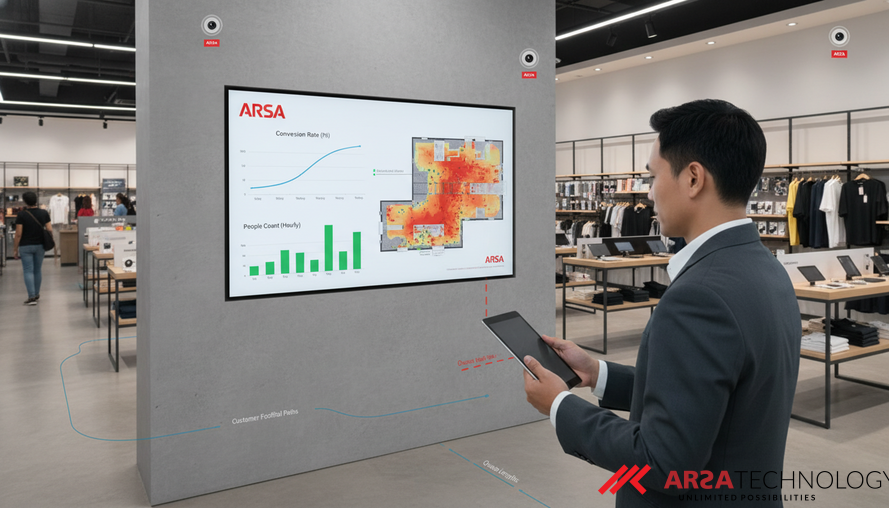

How to Measure Retail Store Conversion Rate with AI Analytics for Optimal Performance
For retail store operations managers, understanding performance goes beyond just sales figures. The true pulse of a retail business often lies in its conversion rate – the percentage of visitors who make a purchase. However, accurately determining how to measure retail store conversion rate with AI analytics has traditionally been a complex, resource-intensive challenge. Manual counting, disparate data sources, and a lack of real-time insights often leave managers making decisions based on incomplete or outdated information.
In today’s competitive retail landscape, especially within bustling shopping malls, leveraging advanced technology is no longer an option but a necessity. AI-powered video analytics offers a transformative solution, providing precise, automated data collection and analysis that turns existing CCTV infrastructure into a powerful source of operational intelligence. This guide explores how ARSA Technology’s Smart Retail Counter, part of our comprehensive AI Video Analytics Software overview, empowers retail managers to accurately measure conversion rates, optimize store performance, and drive profitability with unparalleled efficiency and data privacy.
The Challenge of Traditional Retail Conversion Measurement
Traditional methods for calculating retail conversion rates often involve manual people counting at entrances, which is prone to human error, inconsistent, and lacks granularity. This approach provides only a basic visitor count, failing to capture crucial behavioral data such as dwell time, queue lengths, or specific customer journeys within the store. Without these deeper insights, identifying bottlenecks, evaluating promotional effectiveness, or optimizing store layouts becomes largely guesswork.
Furthermore, integrating visitor data with point-of-sale (POS) systems for an accurate conversion rate calculation can be cumbersome. Many legacy systems aren’t designed for seamless data exchange, leading to fragmented intelligence and delayed reporting. This makes it difficult for retail operations managers to react swiftly to changing conditions or implement data-backed strategies for improvement.
Understanding the Core: How to Measure Retail Store Conversion Rate with AI Analytics
Measuring retail store conversion rate with AI analytics begins by precisely tracking customer footfall and integrating this data with sales figures. ARSA Technology’s Smart Retail Counter software transforms standard CCTV cameras into intelligent sensors, capable of accurately counting people entering and exiting a store. This real-time visitor data is then automatically correlated with transaction data from your POS system via API integration, providing an immediate and accurate conversion rate.
The process is straightforward:
1. Accurate Visitor Counting: AI algorithms analyze video feeds from existing CCTV cameras at store entrances and exits, providing precise, real-time counts of unique visitors. This functions as a robust people counting system for retail stores.
2. Data Integration: The visitor data is seamlessly integrated with your POS system, allowing the software to automatically calculate the conversion rate (number of transactions / number of visitors).
3. Centralized Dashboard: All metrics, including conversion rates, sales, and visitor trends, are displayed on a centralized, intuitive dashboard. This provides a holistic view of performance across single or multiple store locations.
4. Actionable Insights: Beyond the raw numbers, the system identifies patterns and anomalies, highlighting opportunities for operational adjustments.
By automating this process, retail managers gain access to consistent, reliable data, eliminating manual errors and providing the foundation for truly data-driven decision-making.
Beyond Footfall: Advanced AI Customer Footfall Tracking for Shopping Malls
For retail operations managers overseeing stores within larger shopping malls, understanding broader customer movement is critical. ARSA’s AI analytics extends beyond simple entry/exit counts to offer sophisticated AI customer footfall tracking for shopping malls. This capability allows for:
- Zone Analysis: Track how customers move between different areas or departments within a store, identifying popular zones and underperforming sections.
- Dwell Time Analysis: Measure how long customers spend in specific areas or looking at particular displays. Longer dwell times in key product areas can indicate engagement, while short dwell times might signal confusion or lack of interest.
- Path Analysis: Visualize common customer paths, helping to optimize product placement, promotional displays, and overall store flow.
- Multi-Store Aggregation: For brands with multiple outlets in a mall or across different malls, the centralized processing of ARSA’s AI Video Analytics Software allows for aggregated insights, comparing performance benchmarks and identifying best practices across the chain.
This level of detail provides a powerful tool for optimizing not just individual store performance but also contributing to the overall strategic planning for retail presence within a shopping mall environment.
Optimizing Operations with Real-Time Queue Management Analytics
Long queues are a major deterrent for potential customers and a significant contributor to lost sales. ARSA’s Smart Retail Counter includes real-time queue management analytics that empower retail managers to address this pain point proactively. The system uses AI to:
- Detect Queue Formation: Automatically identify when queues begin to form at checkout counters, customer service desks, or fitting rooms.
- Measure Queue Length: Quantify the number of people in a queue and track average waiting times.
- Trigger Alerts: Send instant notifications to staff when queues exceed predefined thresholds, allowing for immediate intervention, such as opening new registers or deploying additional staff.
- Historical Analysis: Analyze queue data over time to identify peak hours, staffing inefficiencies, and the impact of various operational changes.
By minimizing wait times and improving customer flow, businesses can significantly enhance the customer experience, reduce abandonment rates, and directly impact conversion rates and overall sales.
Unlocking Store Layout Insights with Heatmap Analysis Using Existing CCTV
Imagine being able to see exactly where customers spend their time, which displays attract the most attention, and which areas are consistently overlooked. ARSA’s solution provides store heatmap analysis using existing CCTV, turning passive video feeds into dynamic visual insights.
Heatmaps visually represent customer density and movement patterns within your store:
- “Hot” Zones: Areas with high customer traffic and dwell time, indicating popular products, effective displays, or bottlenecks.
- “Cold” Zones: Areas with low customer engagement, suggesting opportunities for layout redesign, product relocation, or improved signage.
This visual intelligence is invaluable for:
- Merchandising Optimization: Place high-demand items in hot zones and strategically position new or promotional items to draw attention.
- Layout Redesign: Identify inefficient layouts that hinder customer flow or obscure products.
- Staffing Allocation: Position staff more effectively in areas where customers frequently dwell or require assistance.
The ability to perform such detailed analysis without additional hardware, simply by leveraging your existing CCTV infrastructure, makes this a highly cost-effective and impactful tool for retail optimization.
ARSA Smart Retail Counter: Your On-Premise Solution for Retail Intelligence
ARSA Technology understands that data privacy and control are paramount for enterprises and government entities. Our ARSA Smart Retail Counter (Software) is delivered as a fully self-hosted, on-premise solution. This means:
- Full Data Ownership: All video streams, inference results, and metadata remain entirely within your infrastructure. There is no cloud dependency for core operations, ensuring maximum privacy and compliance readiness. This commitment to data sovereignty extends across ARSA’s product portfolio, including solutions like the ARSA Face Recognition & Liveness SDK, which is also designed for air-gapped, on-premise deployment for sensitive environments.
- Leverage Existing Infrastructure: Deploy the software on your existing servers or edge compute devices, eliminating the need for new, dedicated AI appliances. This significantly reduces initial investment and speeds up deployment.
- Centralized Processing & Multi-Store Visibility: Analyze multiple camera streams from a central location, providing a unified view of performance across all your retail outlets. The centralized analytics dashboard offers chain-wide retail intelligence, allowing operations managers to compare performance, identify trends, and optimize operations across locations from a single interface.
- Seamless Integration: The system offers a robust REST API for easy integration with existing POS systems, CRM platforms, and other business intelligence tools, creating a truly connected retail ecosystem.
With ARSA, you gain enterprise-grade video intelligence that is production-ready, proven, and engineered for accuracy and operational reliability, backed by 7+ years of experience serving government and enterprise clients.
Achieving Chain-Wide Retail Intelligence and ROI
Implementing AI analytics for conversion rate measurement and operational optimization translates directly into tangible business outcomes and significant ROI. Retail operations managers can expect:
- Increased Conversion Rates: By identifying and addressing bottlenecks, optimizing layouts, and improving customer service through real-time insights, stores can see a measurable uplift in conversions.
- Optimized Staffing: Real-time queue data and footfall analysis enable more efficient staff allocation, reducing labor costs while improving customer experience.
- Enhanced Customer Experience: Shorter wait times, intuitive store layouts, and personalized attention lead to higher customer satisfaction and loyalty.
- Reduced Operational Costs: Leveraging existing CCTV infrastructure minimizes hardware investments, while automated analytics reduce the need for manual data collection.
- Data-Backed Decision Making: Move away from intuition to precise, actionable data for merchandising, promotions, and strategic planning.
- Compliance and Privacy: On-premise deployment ensures full control over sensitive customer data, aligning with stringent privacy regulations.
ARSA Technology’s solutions are designed to deliver practical AI that is deployed, proven, and profitable, turning your retail spaces into intelligent decision engines.
Conclusion
For retail store operations managers, mastering how to measure retail store conversion rate with AI analytics is the key to unlocking unprecedented levels of efficiency and profitability. By transforming existing CCTV systems into intelligent data sources, solutions like the ARSA Smart Retail Counter provide granular insights into customer behavior, optimize operational workflows, and ultimately drive sales. With its on-premise deployment, privacy-first approach, and powerful analytics capabilities, ARSA Technology empowers businesses to gain a competitive edge in the dynamic retail environment.
Ready to transform your retail operations with intelligent AI analytics? Discover the full potential of ARSA’s all ARSA products and see how our solutions can be tailored to your specific needs. Contact ARSA solutions team today for a consultation and a live dashboard demo.
—
FAQ
What is a people counting system for retail stores and how does it work?
A people counting system for retail stores uses AI video analytics to accurately count the number of individuals entering and exiting a store or specific zones. It works by analyzing video feeds from existing CCTV cameras, identifying human forms, and tracking their movement to provide real-time and historical footfall data, which is crucial for calculating conversion rates and understanding traffic patterns.
How can AI customer footfall tracking for shopping malls improve store performance?
AI customer footfall tracking provides detailed insights into customer movement, dwell times, and popular zones within a store or across a shopping mall. This data helps optimize store layouts, merchandise placement, staffing levels, and promotional strategies, leading to improved customer experience, higher engagement, and ultimately, increased sales and conversion rates.
What are the benefits of real-time queue management analytics for retail?
Real-time queue management analytics automatically detects queue formation, measures queue lengths, and tracks waiting times at checkout or service points. The benefits include reducing customer wait times, preventing abandonment, optimizing staff allocation, and improving overall customer satisfaction, all of which contribute to a better shopping experience and higher conversion rates.
Can store heatmap analysis using existing CCTV really help optimize store layouts?
Yes, store heatmap analysis uses existing CCTV footage to create visual representations of customer density and movement patterns. “Hot” zones indicate high traffic and engagement, while “cold” zones show less activity. This visual data is invaluable for optimizing store layouts, placing products strategically, and identifying areas for improvement to enhance customer flow and engagement without requiring new hardware.
—
Stop Guessing, Start Optimizing.
Discover how ARSA Technology drives profit through intelligent systems.
