
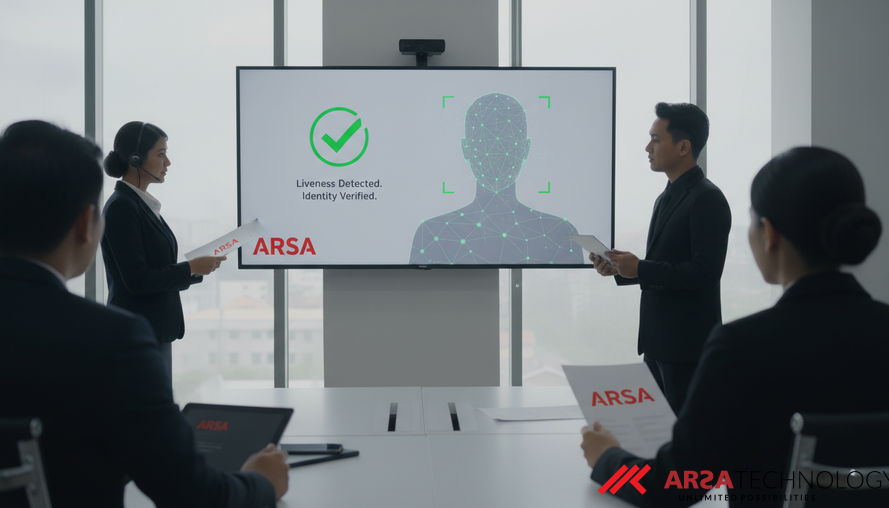

How to Prevent Identity Fraud with Face Liveness Detection API in Proptech
In the rapidly evolving proptech sector, digital interactions are becoming the norm for everything from tenant onboarding and property access to transaction approvals. While this digital transformation offers unparalleled efficiency, it also opens new avenues for sophisticated identity fraud. For risk and compliance officers, the challenge is clear: how to secure these digital pathways without hindering user experience. The answer lies in advanced biometric solutions, specifically, how to prevent identity fraud with face liveness detection API.
Identity fraud, ranging from simple photo spoofing to advanced deepfake attacks, poses a significant threat to proptech companies. It can lead to unauthorized property access, fraudulent lease agreements, and severe financial losses, not to mention reputational damage and regulatory penalties. Traditional verification methods are often insufficient against these modern threats. This guide explores how integrating a robust face liveness detection API can serve as your primary defense, ensuring secure, seamless, and compliant operations.
The Escalating Threat of Identity Fraud in Proptech
The proptech industry, encompassing real estate technology, property management, and smart building solutions, is a prime target for identity fraudsters. Property transactions involve high-value assets, and tenant onboarding requires verification of personal identities, often remotely. This creates numerous vulnerabilities:
- Remote Onboarding: Verifying tenants or buyers without physical presence makes it easier for fraudsters to use stolen identities or fabricated documents.
- Property Access: Smart locks and digital access systems, while convenient, demand stringent identity checks to prevent unauthorized entry.
- Financial Transactions: Approving rental payments, deposits, or property purchases online requires absolute certainty of the user’s identity.
- Data Privacy: Handling sensitive personal data necessitates compliance with regulations like GDPR and local data protection laws, making robust identity verification crucial for maintaining trust and avoiding hefty fines.
The rise of AI-generated media, including deepfakes, further complicates matters. Fraudsters can now create highly convincing fake videos or images to bypass basic facial recognition systems, making static image verification obsolete.
Understanding Face Liveness Detection: Your First Line of Defense
Face liveness detection is a critical technology designed to determine whether the face being presented to a camera is a live person or an inanimate representation (like a photo, video, or 3D mask). It’s the essential layer that elevates facial recognition from mere pattern matching to true identity verification. Without liveness detection, even the most accurate facial recognition system can be fooled by a high-quality photograph.
There are two primary types of liveness detection:
1. Active Liveness Detection: This method involves the user performing specific, guided actions, such as blinking, turning their head, or speaking a phrase. The system analyzes these movements to confirm the presence of a live individual. This is particularly effective for active liveness detection for secure onboarding, where a brief, interactive step significantly enhances security.
2. Passive Liveness Detection: This more advanced method works silently in the background, analyzing subtle cues from a single image or short video stream without requiring user interaction. It detects minute physiological signs, texture analysis, and other indicators to differentiate between a live face and a spoof attempt. This offers a frictionless user experience while still providing strong anti-spoofing capabilities.
Both methods are crucial to stop photo and video spoofing attacks API solutions, providing a robust defense against various fraud vectors.
How to Prevent Identity Fraud with Face Liveness Detection API
Implementing a face liveness detection API is a strategic move for proptech companies aiming to bolster their security posture. Here’s how it works and why it’s effective:
1. Seamless Integration: A well-designed API (Application Programming Interface) allows proptech platforms to easily integrate liveness detection into existing applications, web portals, and mobile apps. This means minimal disruption to your current infrastructure and a faster time to deployment. For instance, ARSA Technology offers its ARSA Face Recognition & Liveness API, which provides instant API integration for developers.
2. Real-time Verification: The API performs liveness checks in real-time, typically in sub-second response times. This is crucial for maintaining a smooth user journey during critical moments like digital onboarding or accessing a property.
3. Advanced Anti-Spoofing Capabilities: The core function of these APIs is to detect and reject fraudulent attempts. This includes identifying static photos, digital images on screens, recorded videos, 3D masks, and even sophisticated deepfakes. By employing a face anti-spoofing API for banking apps, for example, financial institutions protect high-value transactions; proptech can apply this same rigor to property dealings.
4. Deepfake Prevention Face Verification: With the proliferation of generative AI, deepfakes are becoming increasingly realistic. State-of-the-art liveness detection APIs are specifically engineered to identify the subtle inconsistencies and digital artifacts characteristic of deepfake videos, offering a critical layer of defense against these advanced threats.
5. Scalability and Reliability: Cloud-hosted APIs are built for scale, capable of handling thousands to millions of verification requests per month. This ensures that as your proptech business grows, your identity verification infrastructure can keep pace without requiring significant internal IT investment. ARSA’s API, for example, scales to 500K calls/month and boasts 99.67% accuracy on the LFW benchmark.
Key Benefits for Proptech: Beyond Basic Verification
Integrating a face liveness detection API delivers tangible business outcomes for proptech firms:
- Automated KYC Onboarding: Streamline the Know Your Customer (KYC) process for tenants, buyers, and property managers. Automated verification reduces manual review times and human error, accelerating onboarding while maintaining compliance.
- Reduced Manual Verification Costs: By automating identity checks, proptech companies can significantly reduce the operational costs associated with manual verification processes, potentially by up to 80%. This frees up staff to focus on higher-value tasks.
- Enhanced Security and Trust: Protect your assets and your users’ data with enterprise-grade security. Demonstrating a commitment to robust identity verification builds trust with clients and partners, a vital component in the digital economy.
- Compliance Readiness: Meet stringent regulatory requirements for identity verification and data privacy. Solutions like the Face Recognition & Liveness overview from ARSA are designed with compliance in mind, offering features like GDPR/HIPAA encryption for identity verification.
- Improved User Experience: While security is paramount, a smooth user experience is equally important. Passive liveness detection offers frictionless verification, while active methods are designed to be quick and intuitive, ensuring minimal user friction.
- Fraud Prevention and Loss Mitigation: Directly prevent identity fraud with face liveness detection API, thereby mitigating financial losses from fraudulent transactions, unauthorized access, and legal liabilities. This proactive approach safeguards your bottom line and reputation.
ARSA Technology provides a comprehensive solution for these challenges. Our ARSA Face Recognition & Liveness API is a cloud-based, enterprise-grade system offering 1:1 face verification, 1:N face identification, and both active and passive liveness detection. It’s built to combat sophisticated spoofing attacks, including deepfakes, ensuring that only genuine users gain access or complete transactions. The API is available on RapidAPI with a free tier, making it accessible for initial testing and scalable for large-scale deployments. For organizations requiring full data sovereignty, ARSA also offers an on-premise SDK version.
Beyond face recognition, ARSA Technology also offers a range of other AI and IoT solutions. For instance, our ARSA DOOH Audience Meter (AI Box) utilizes AI video analytics for audience measurement, showcasing our broader capabilities in intelligent systems. You can explore all ARSA products to see how AI can transform various operational aspects.
FAQ
What is active liveness detection for secure onboarding?
Active liveness detection for secure onboarding involves prompting a user to perform specific, simple actions (like blinking or turning their head) during a video capture. This interactive process helps verify that a live person is present, preventing fraudsters from using static images or pre-recorded videos during the onboarding process.
How does a face anti-spoofing API stop photo and video spoofing attacks?
A face anti-spoofing API employs advanced AI algorithms to analyze various characteristics of the presented face. It looks for anomalies such as unnatural reflections, lack of depth, pixelation, or inconsistencies in movement that would indicate a photo, video, or mask is being used instead of a live human face.
Can deepfake prevention face verification truly protect against advanced AI fraud?
Yes, modern deepfake prevention face verification technologies are specifically trained on vast datasets of both real and synthetic media. They can detect the subtle, often imperceptible, digital artifacts and inconsistencies that deepfake generation algorithms leave behind, providing a robust defense against even highly sophisticated AI-generated fraud attempts.
What are the benefits of a cloud-hosted face liveness detection API for proptech?
A cloud-hosted face liveness detection API offers proptech companies benefits such as rapid deployment, scalability to handle fluctuating user volumes, reduced infrastructure costs, and continuous updates with the latest anti-spoofing technologies. It allows proptech firms to focus on their core business while leveraging cutting-edge security.
Conclusion
The digital frontier of proptech demands equally advanced security measures. To effectively prevent identity fraud with face liveness detection API is no longer a luxury but a necessity for any organization operating in this space. By adopting robust solutions like the ARSA Face Recognition & Liveness API, proptech companies can ensure secure onboarding, protect sensitive transactions, maintain regulatory compliance, and build lasting trust with their clientele. The future of proptech is intelligent, efficient, and, most importantly, secure.
Ready to secure your proptech operations and eliminate identity fraud? Contact ARSA solutions team today to discuss how our AI-powered face liveness detection API can safeguard your business.
Stop Guessing, Start Optimizing.
Discover how ARSA Technology drives profit through intelligent systems.
