

Implementing an AI Vehicle Counting System for Smart City Traffic Management: A Step-by-Step Guide
Modern urban centers face an escalating challenge: managing complex traffic flows to ensure efficiency, safety, and environmental sustainability. Traditional methods of traffic monitoring often fall short, providing delayed or incomplete data that hinders effective urban planning. This is where an AI vehicle counting system for smart city traffic management becomes indispensable, offering real-time insights that transform passive infrastructure into intelligent decision engines. ARSA Technology provides advanced edge AI solutions, like the ARSA Traffic Monitor (part of our AI Box Series), designed to address these critical needs without the complexities and costs associated with cloud-dependent systems.
This guide outlines a strategic, step-by-step approach for city transport planners to deploy and leverage an AI-powered vehicle counting system, ensuring data privacy, operational reliability, and measurable impact on urban mobility.
The Evolving Landscape of Urban Traffic Challenges
Cities worldwide grapple with congestion, pollution, and inefficient infrastructure. These issues not only impact daily commutes but also hinder economic growth and public well-being. Effective traffic management requires precise, real-time data on vehicle volume, speed, and patterns. Manual counting is labor-intensive and prone to error, while older sensor technologies can be costly to install and maintain. The need for a robust, scalable, and privacy-conscious solution is more pressing than ever.
Understanding the AI Vehicle Counting System for Smart City Traffic Management
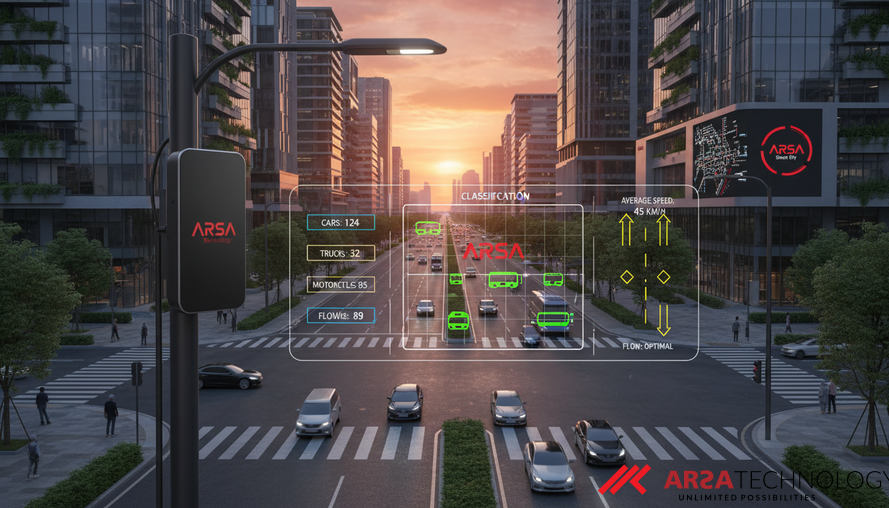
An AI vehicle counting system for smart city traffic management utilizes artificial intelligence to analyze video feeds from existing CCTV cameras, identifying and counting vehicles as they pass. Beyond simple counting, these systems can classify vehicles (e.g., cars, trucks, motorcycles), detect congestion, analyze traffic flow, and even monitor lane utilization. The power of AI lies in its ability to process vast amounts of visual data continuously, extracting actionable intelligence that humans cannot.
ARSA Technology’s approach emphasizes edge computing, where AI processing occurs directly on-site, close to the data source. This decentralized model offers significant advantages in terms of latency, data privacy, and operational costs, making it an ideal choice for sensitive public sector deployments.
Key Benefits of Edge-Based AI Traffic Monitoring Without Cloud
Deploying an AI traffic monitoring system at the edge, rather than relying solely on cloud infrastructure, brings a multitude of benefits, particularly for city planners concerned with data sovereignty and operational continuity.
- Enhanced Data Privacy and Security: With edge processing, video streams and inference results remain within the local network. This means no sensitive data leaves your infrastructure unless explicitly configured, ensuring compliance with stringent regulations like GDPR. ARSA’s solutions are built with this principle in mind, offering full data ownership.
- Reduced Latency and Real-Time Insights: Processing data at the source eliminates the delay associated with transmitting video to the cloud. This enables true real-time traffic flow analytics edge computing, allowing for immediate detection of incidents, rapid response to congestion, and dynamic signal optimization.
- Lower Operational Costs: By minimizing data transfer to the cloud, cities can significantly reduce bandwidth requirements and avoid recurring cloud storage and processing fees. This makes the solution more economically sustainable for large-scale deployments.
- Operational Reliability: Edge systems can operate effectively even in environments with intermittent or no internet connectivity, ensuring continuous traffic monitoring regardless of external network conditions.
- Scalability: ARSA’s AI Box Series offers flexible hardware configurations, from compact Mini PC models for distributed deployments to high-density server models for centralized monitoring, allowing cities to scale their analytics capacity as needed.
Step-by-Step Implementation of ARSA Traffic Monitor
Implementing the ARSA Traffic Monitor, a specialized AI Box for traffic analytics, is designed to be straightforward and efficient for city transport planners.
1. Needs Assessment and Site Survey:
- Identify critical intersections, highways, or urban zones requiring enhanced traffic intelligence.
- Evaluate existing CCTV infrastructure for camera placement, coverage, and video quality. ARSA’s AI Box is designed to work seamlessly with your current cameras, avoiding costly replacements.
- Define specific objectives: Is it primarily for vehicle counting, congestion detection, or detailed vehicle classification?
2. Hardware Deployment (ARSA AI Box):
- The ARSA Traffic Monitor, a plug-and-play device, connects directly to power, network, and your existing CCTV cameras. Its 5-minute setup minimizes disruption.
- Choose the appropriate AI Box model: the Mini PC Model for up to 3 cameras, ideal for distributed intersections, or the Server Model for up to 30 cameras, suitable for centralized monitoring of larger areas.
- Physical installation is minimal, often requiring just mounting and cabling.
3. Software Configuration and Calibration:
- Access the intuitive web-based dashboard (available locally or remotely) to configure analytics modules.
- Define detection zones, virtual tripwires, and alert rules tailored to each camera’s view and specific traffic management goals.
- Calibrate the system for accurate automated vehicle classification using CCTV footage, ensuring precise differentiation between vehicle types.
4. Real-Time Monitoring and Alerting:
- Begin receiving real-time alerts for predefined events such as congestion build-up, unusual traffic patterns, or lane violations.
- Monitor live dashboards that display key metrics like vehicle counts, average speeds, and traffic density. This provides immediate situational awareness for traffic operators.
5. Data Analysis and Reporting:
- Utilize the system’s historical analytics and reporting features to identify long-term trends, evaluate the impact of infrastructure changes, and inform future urban planning decisions.
- Generate comprehensive reports on traffic flow, congestion patterns, and lane utilization to support data-driven urban planning and sustainable mobility programs.
- The data collected by the ARSA Traffic Monitor is anonymized by default, ensuring compliance with data privacy regulations.
Achieving Automated Vehicle Classification Using CCTV
One of the most powerful capabilities of an advanced AI vehicle counting system for smart city traffic management is its ability to perform automated vehicle classification using CCTV. Instead of just counting “vehicles,” the ARSA Traffic Monitor can differentiate between cars, buses, trucks, motorcycles, and even pedestrians. This granular data is crucial for:
- Optimizing Traffic Signal Timing: Adjusting signal phases based on the actual composition of traffic, prioritizing public transport or heavy vehicles when needed.
- Infrastructure Planning: Understanding the distribution of vehicle types helps in designing roads, bridges, and parking facilities that cater to specific needs.
- Environmental Monitoring: Tracking the presence of heavy-duty vehicles can inform air quality initiatives and emission reduction strategies.
- Tolling and Revenue Management: For specific applications, accurate classification can support automated toll collection systems.
Real-Time Traffic Flow Analytics Edge Computing for Data-Driven Decisions
The immediate availability of data through real-time traffic flow analytics edge computing empowers city planners to make agile, informed decisions. Imagine a scenario where an unexpected event causes a sudden surge in traffic on a major arterial road. An ARSA AI Box deployed at a smart traffic counting device for intersections can instantly detect this anomaly, trigger alerts, and provide data that allows operators to:
- Adjust Traffic Signals Dynamically: Reroute traffic or extend green light phases on affected routes.
- Deploy Emergency Services: Guide police or medical teams to incident locations more efficiently.
- Inform Public Transportation: Adjust bus schedules or routes to mitigate delays.
- Communicate with the Public: Provide real-time updates on congestion and alternative routes via digital signage or mobile apps.
This level of responsiveness is only possible when analytics are performed at the edge, minimizing the time between data capture and actionable insight. You can see these capabilities in action through our live dashboard demo.
Choosing the Right Smart Traffic Counting Device for Intersections
Selecting the appropriate smart traffic counting device for intersections involves considering several factors, including the scale of deployment, existing infrastructure, and specific analytical needs. ARSA Technology offers flexibility with its AI Box Series:
- Mini PC Model: Ideal for individual intersections or smaller zones, processing up to 3 camera streams. Its compact form factor and low power consumption make it perfect for distributed edge deployments where minimal infrastructure management is desired.
- Server Model (High-Density): Designed for centralized monitoring of larger areas, capable of processing up to 30 camera streams simultaneously. This model is powered by Intel® Processors paired with dedicated NVIDIA® GPUs, offering high-throughput processing for heavy workloads.
Both models ensure local processing and seamless integration with existing CCTV, providing a robust foundation for your AI vehicle counting system for smart city traffic management. For a comprehensive overview of our solutions, explore all ARSA products.
Beyond Traffic: The Broader Impact of Edge AI in Smart Cities
While the focus here is on traffic management, the underlying edge AI technology has broader applications within smart cities. For instance, similar AI Box technology can be adapted for public safety, retail analytics, or even health monitoring. ARSA Technology’s expertise extends to various domains, from the ARSA Self-Check Health Kiosk for public health screening to comprehensive AI video analytics software for diverse enterprise needs. This versatility highlights the strategic advantage of investing in a flexible, proven AI platform.
Conclusion
The implementation of an AI vehicle counting system for smart city traffic management represents a pivotal step towards creating more efficient, safer, and sustainable urban environments. By leveraging edge computing, such as the ARSA Traffic Monitor (AI Box), city transport planners can gain unparalleled real-time insights, optimize traffic flow, reduce congestion, and make data-driven decisions that benefit citizens and the economy. ARSA Technology’s commitment to privacy, reliability, and ease of deployment ensures that cities can embrace this transformative technology with confidence.
Ready to transform your city’s traffic management? Discover how the ARSA Traffic Monitor can provide the precise, real-time data you need for smarter urban planning. Contact our solutions team today to request a quotation or learn more about our AI Box Series overview.
—
FAQ
Q1: How does an AI vehicle counting system ensure data privacy for citizens?
A1: An AI vehicle counting system, especially one utilizing edge computing like ARSA’s, processes video data locally on the device. This means that video streams and inference results, which are typically anonymized, remain within your infrastructure. This approach significantly reduces the risk of data breaches and ensures compliance with regulations such as GDPR, as no sensitive personal data is transferred to external cloud servers.
Q2: Can ARSA’s AI traffic monitoring system integrate with existing city infrastructure?
A2: Yes, ARSA’s AI traffic monitoring without cloud is specifically designed for seamless integration with existing CCTV cameras and network infrastructure. The plug-and-play nature of the ARSA AI Box Series allows for rapid deployment without requiring costly camera replacements or extensive backend system overhauls, making it a cost-effective upgrade for smart city initiatives.
Q3: What types of insights can a smart traffic counting device for intersections provide beyond simple vehicle counts?
A3: A smart traffic counting device for intersections offers advanced insights beyond basic vehicle counts. It can perform automated vehicle classification using CCTV (identifying cars, trucks, buses, motorcycles), detect congestion, analyze traffic flow patterns, measure average speeds, monitor lane utilization, and identify unusual incidents. These detailed analytics enable more nuanced and effective traffic management strategies.
Q4: Is real-time traffic flow analytics edge computing truly necessary for effective urban planning?
A4: Real-time traffic flow analytics edge computing is crucial for effective urban planning because it provides immediate, actionable insights. By processing data at the source, it eliminates latency, allowing city planners and traffic operators to respond instantly to changing traffic conditions, optimize signal timings dynamically, and make rapid, data-driven decisions that mitigate congestion and improve overall urban mobility.
—
Stop Guessing, Start Optimizing.
Discover how ARSA Technology drives profit through intelligent systems.