

Unlocking Retail Potential: How Customer Heatmap Analytics for Store Layout Optimization Drives Mall Success
For shopping mall property managers, understanding how visitors interact with the physical space is paramount to maximizing revenue and enhancing the overall customer experience. In today’s competitive retail landscape, relying on intuition alone is no longer sufficient. The key to staying ahead lies in data-driven insights, specifically through customer heatmap analytics for store layout optimization. This powerful technology transforms passive CCTV footage into actionable intelligence, revealing exactly where customers go, where they linger, and where bottlenecks occur.
ARSA Technology, with its advanced AI solutions, empowers mall operators to move beyond guesswork. Our cutting-edge tools, like the ARSA Smart Retail Counter (AI Box), leverage artificial intelligence to provide granular insights into customer behavior, enabling you to make informed decisions that directly impact profitability and tenant satisfaction.
The Power of Customer Heatmap Analytics for Store Layout Optimization
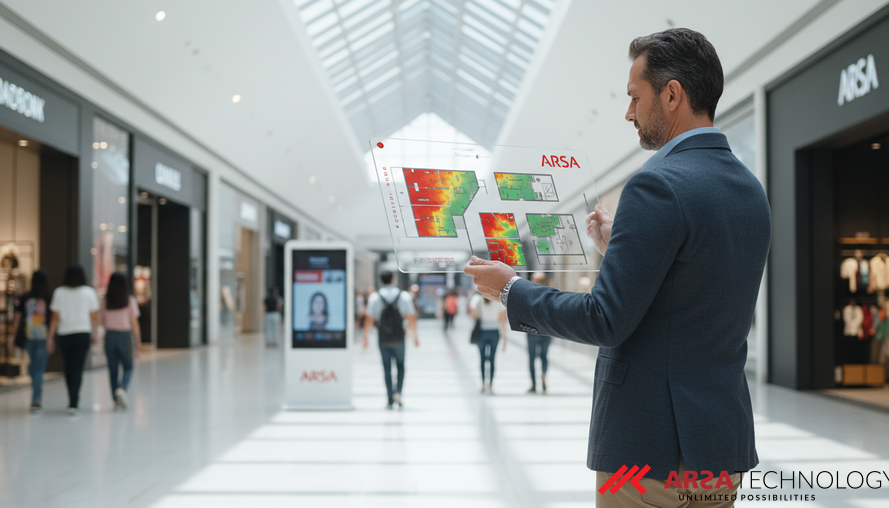
Imagine having a bird’s-eye view of your entire shopping mall, with real-time data highlighting every customer’s journey. That’s precisely what customer heatmap analytics offers. By processing video streams from existing CCTV cameras, AI algorithms identify and track individuals, generating visual heatmaps that overlay activity levels onto your floor plan. Red zones indicate high traffic and engagement, while blue zones show areas with minimal interaction.
This visual representation is invaluable for identifying underperforming areas, optimizing product placement, and strategically positioning new tenants. For mall property managers, this means the ability to:
- Enhance Visitor Flow: Identify congestion points and redesign pathways to improve navigation and reduce frustration.
- Maximize Exposure: Ensure high-value retail spaces and promotional displays are located in areas with maximum visibility.
- Improve Tenant Performance: Provide data-backed recommendations to tenants on how to optimize their individual store layouts and merchandising.
- Strategic Planning: Inform decisions on future renovations, common area activations, and event placements.
Beyond Foot Traffic: AI Dwell Time Analysis for Shopping Malls
While knowing where people walk is important, understanding where they *stop* and *how long* they stay is even more critical. This is where AI dwell time analysis for shopping malls comes into play. ARSA’s Smart Retail Counter, part of our robust AI Box Series overview, goes beyond simple people counting. It accurately measures the time customers spend in specific zones, providing deeper insights into engagement levels.
For example, a high footfall area with low dwell time might indicate a thoroughfare rather than a point of interest. Conversely, an area with moderate footfall but high dwell time suggests strong engagement, even if it’s not on the main path. This data is crucial for:
- Assessing Display Effectiveness: Determine if promotional displays or window dressings are capturing attention.
- Evaluating Seating Areas: Understand if common seating areas are being utilized effectively or if more are needed.
- Optimizing Kiosk Placement: Position temporary kiosks or pop-up stores in areas where customers are likely to pause and interact.
- Understanding Bottlenecks: Identify areas where queues form or where customers get “stuck,” leading to potential frustration and lost sales.
Customer Movement Pattern Analysis with CCTV: A Privacy-First Approach
Modern AI video analytics systems, like those from ARSA Technology, perform sophisticated customer movement pattern analysis CCTV without compromising individual privacy. Our solutions operate on an edge computing model, meaning video streams are processed locally on the ARSA AI Box device, right at the source. This ensures that sensitive data never leaves your network unless explicitly configured, adhering to strict data privacy regulations.
The AI Box processes video in real-time to detect objects and people, generating anonymous data on movement, paths, and densities. This aggregated, de-identified information is then used to create heatmaps and other analytics, offering powerful insights without storing identifiable personal information. This privacy-first approach is essential for building trust with both customers and regulatory bodies.
How to Optimize Retail Floor Plan with Heatmap Data
Implementing heatmap analytics is just the first step; the real value comes from using the data to actively optimize retail floor plan with heatmap data. Here’s a practical guide for mall property managers:
1. Identify Hot and Cold Zones: Analyze heatmaps to pinpoint areas of high activity (hot zones) and low activity (cold zones). Hot zones are ideal for high-value tenants, new product launches, or engaging activations. Cold zones require strategic intervention, such as improved lighting, clearer signage, or a change in tenant mix.
2. Analyze Customer Flow Paths: Observe the most common routes customers take through the mall. Are they following logical paths? Are there areas they consistently bypass? Use this to refine signage, direct traffic, and ensure seamless navigation.
3. Evaluate Storefront Performance: Correlate heatmap data with individual store sales. Are stores in high-traffic areas performing well? If not, perhaps their storefront design or merchandising needs adjustment. For underperforming stores in cold zones, consider relocation or targeted marketing support.
4. Assess Common Area Utilization: Understand how benches, restrooms, food courts, and promotional spaces are used. Heatmaps can reveal if these amenities are easily accessible and meeting visitor needs.
5. Test and Iterate: Retail is dynamic. Use heatmap analytics to test changes to your layout, signage, or tenant mix. Monitor the impact of these changes on customer flow, dwell time, and engagement, then iterate for continuous improvement.
For instance, a mall might discover that a particular corridor consistently shows low foot traffic. By analyzing the heatmap, they might realize it’s poorly lit or lacks compelling storefronts. A strategic intervention, such as adding an interactive digital display or relocating a popular cafe, can transform that cold zone into a vibrant area, increasing overall mall engagement.
Foot Traffic Analytics for Tenant Performance and Leasing Strategies
Beyond internal optimization, foot traffic analytics for tenant performance is a game-changer for leasing strategies. Mall property managers can leverage this data to:
- Attract New Tenants: Present prospective tenants with hard data on footfall and dwell time for specific locations, demonstrating the value of different spaces.
- Support Existing Tenants: Offer insights to current tenants, helping them understand their store’s performance relative to overall mall traffic. This fosters stronger relationships and provides data for joint marketing initiatives.
- Negotiate Leases with Confidence: Use objective data to justify rental rates and demonstrate the value of prime locations.
- Identify Growth Opportunities: Pinpoint areas where certain types of businesses would thrive based on existing customer movement patterns and demographics (e.g., a high dwell time near a children’s play area might be ideal for a toy store).
ARSA’s Smart Retail Counter provides real-time people counting and visitor footfall tracking, offering a clear picture of how many potential customers pass by or enter a specific area. This data, combined with conversion rate measurement capabilities, allows mall managers to quantify the effectiveness of different locations.
ARSA Technology’s Edge: Simple Setup, Powerful Insights
Our ARSA Smart Retail Counter (AI Box) is designed for rapid deployment and ease of use. With a 5-minute plug-and-play setup, it integrates seamlessly with your existing CCTV infrastructure. The edge computing architecture means all AI processing happens on-device, eliminating cloud costs and ensuring maximum data privacy.
Key features include:
- Real-time People Counting: Accurate visitor footfall tracking at entrances and within zones.
- Dwell Time Analysis: Understand how long customers spend in specific areas.
- Heatmap Visualization: Instantly see high and low activity zones.
- Queue Management: Monitor queue lengths and wait times to prevent abandonment.
- Conversion Rate Measurement: Track how many visitors to a zone actually engage or enter a store.
These capabilities translate directly into tangible business outcomes: increasing sales conversion by up to 25%, optimizing staffing costs by understanding peak hours, improving store layout based on actual customer behavior, and reducing queue abandonment through proactive management.
Conclusion
In the dynamic world of retail, understanding your customers’ physical journey is no longer a luxury but a necessity. Customer heatmap analytics for store layout optimization provides the actionable intelligence needed to transform your shopping mall into a more efficient, engaging, and profitable environment. By leveraging ARSA Technology’s edge AI solutions, mall property managers can gain unparalleled insights into customer movement, dwell time, and engagement, driving strategic decisions that benefit tenants and visitors alike.
Ready to unlock the full potential of your shopping mall with intelligent video analytics? Contact ARSA solutions team today to discuss how our AI Box Series can transform your operations. Explore our full range of all ARSA products, including solutions for security, traffic, and even health screening with the ARSA Self-Check Health Kiosk.
—
FAQ
Q: How does AI dwell time analysis benefit shopping malls?
A: AI dwell time analysis helps mall property managers understand how long customers spend in specific areas, revealing engagement levels beyond simple foot traffic. This data is crucial for optimizing display effectiveness, evaluating common area utilization, and strategically placing kiosks or new tenants where customers are most likely to interact.
Q: Can customer movement pattern analysis with CCTV be done while maintaining privacy?
A: Yes, ARSA Technology’s solutions utilize edge computing, processing video streams locally on devices like the ARSA Smart Retail Counter. This approach ensures that customer movement pattern analysis is performed using anonymous, de-identified data, preserving individual privacy and complying with data protection regulations.
Q: What are the key steps to optimize retail floor plan with heatmap data?
A: To optimize your retail floor plan with heatmap data, you should identify hot and cold zones, analyze common customer flow paths, evaluate individual storefront performance, assess common area utilization, and continuously test and iterate changes based on the insights gained from the heatmaps.
Q: How can foot traffic analytics for tenant performance improve leasing strategies?
A: Foot traffic analytics provides objective data on visitor numbers and engagement for specific locations within the mall. This empowers mall property managers to attract new tenants with data-backed proposals, support existing tenants with performance insights, negotiate leases more confidently, and identify optimal locations for different business types.
—
Stop Guessing, Start Optimizing.
Discover how ARSA Technology drives profit through intelligent systems.
