
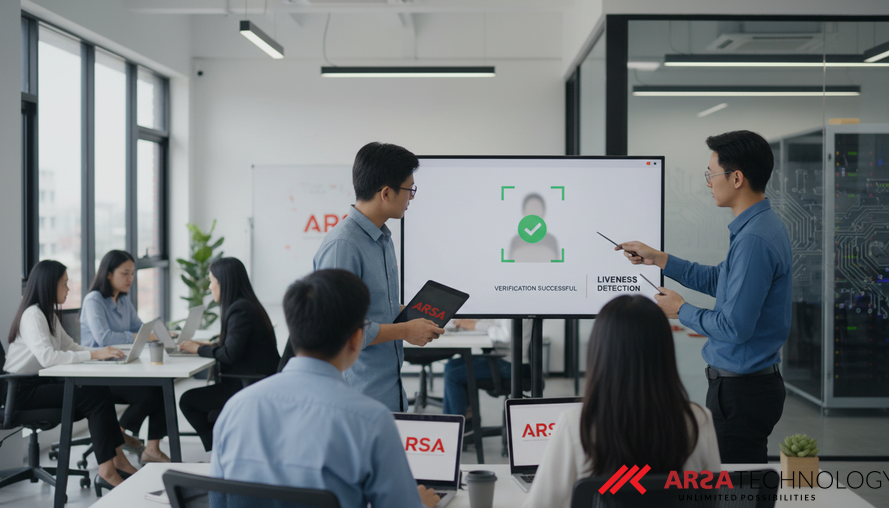

Unlocking Secure Onboarding: The Best Face Recognition API with Liveness Detection for e-KYC in Insurance
The insurance industry is undergoing a rapid digital transformation, driven by the need for efficiency, enhanced customer experience, and robust security. As more services move online, the challenge of verifying customer identities remotely becomes paramount. This is where the best face recognition API with liveness detection for e-KYC emerges as a critical technology, offering a powerful solution to prevent fraud and streamline digital onboarding processes. For developers tasked with building secure and scalable identity verification systems in insurance, selecting the right API is not just about functionality; it’s about ensuring compliance, maintaining trust, and delivering a seamless user journey.
Traditional manual KYC (Know Your Customer) procedures are often cumbersome, time-consuming, and prone to human error, leading to high operational costs and customer drop-offs. In the high-stakes world of insurance, where fraudulent claims and identity theft can lead to significant financial losses, an automated, highly accurate, and secure e-KYC solution is indispensable. ARSA Technology provides enterprise-grade AI solutions, including a sophisticated Face Recognition & Liveness API, specifically designed to meet these demanding requirements.
The Critical Need for the Best Face Recognition API with Liveness Detection for e-KYC in Insurance
Insurance companies face unique challenges in identity verification. From policy applications to claims processing, ensuring that the person interacting with the system is who they claim to be is fundamental. Identity fraud, including synthetic identities and account takeovers, costs the industry billions annually. This necessitates a robust solution that goes beyond simple document checks.
Modern e-KYC requires not only verifying an identity document but also confirming the presence of a live individual. This is where face liveness detection API for fintech apps and insurance platforms plays a vital role. It differentiates between a live person and a spoofing attempt using photos, videos, or 3D masks. Without this crucial layer of security, even the most advanced face recognition can be circumvented, leaving insurance providers vulnerable.
Moreover, the competitive landscape demands a frictionless customer experience. Lengthy onboarding processes can deter potential clients, directly impacting growth. An efficient face verification API for digital onboarding can significantly reduce the time and effort required for new customer sign-ups, converting more prospects into policyholders while maintaining stringent security standards.
Understanding Face Recognition & Liveness Detection Technologies
At its core, face recognition technology involves identifying or verifying a person based on their facial features. There are two primary modes of operation:
- 1:1 Face Verification: This involves comparing a newly captured face image against a single, pre-enrolled reference image (e.g., from an ID document or a previous registration). This is commonly used for login authentication or confirming identity during a transaction.
- 1:N Face Identification: This compares a captured face image against a database of multiple enrolled faces to find a match. This is useful for identifying individuals in a watchlist or for access control scenarios.
Liveness detection, on the other hand, is the crucial anti-spoofing mechanism. It ensures that the face being presented to the camera belongs to a live person and not a fraudulent representation.
- Active Liveness Detection: This typically involves challenge-response interactions, where the user is prompted to perform specific actions (e.g., turn head, blink, speak a phrase).
- Passive Liveness Detection: This analyzes subtle cues from a single image or short video stream, such as micro-movements, reflections, and texture analysis, to determine liveness without explicit user interaction. The anti-spoofing face recognition REST API from ARSA Technology incorporates both active and passive methods for comprehensive fraud prevention.
Why ARSA’s Face Recognition & Liveness API Stands Out for Digital Onboarding
For developers building identity verification platforms for insurance, ARSA Technology offers a compelling solution with its Face Recognition & Liveness API. This cloud-based API is engineered for high performance, accuracy, and ease of integration, making it the ideal choice for modern e-KYC requirements.
Our API is a complete identity layer, not just a simple comparison endpoint. It provides:
- Robust Face Database Management: Easily enroll, update, and remove identities within secure collections, organized by application or tenant. This functionality is crucial for any cloud face recognition with built-in database solution, ensuring data integrity and scalability.
- High-Accuracy Recognition & Verification: With a proven 99.67% accuracy rate (LFW benchmark), the API supports both 1:1 face verification for secure logins and step-up authentication, and 1:N face identification for broader access control and monitoring needs.
- Advanced Active + Passive Liveness Detection: ARSA’s API employs a sophisticated combination of active challenge-response and passive liveness detection to effectively prevent photo, video replay, and 3D mask spoofing attacks. This robust anti-spoofing face recognition REST API ensures that only genuine users are onboarded.
- Seamless Integration: Delivered as a REST API, it offers fast and straightforward integration into existing applications and platforms. Developers can quickly leverage ARSA’s powerful AI capabilities without extensive development overhead.
- Scalability and Accessibility: Available on the RapidAPI marketplace, the ARSA Face Recognition & Liveness API offers flexible pricing tiers, including a free tier for testing and scalability up to 500,000 API calls per month for enterprise needs. This makes it accessible for startups and large corporations alike.
By implementing ARSA’s solution, insurance companies can achieve significant business outcomes:
- Prevent Identity Fraud: Drastically reduce the risk of fraudulent policy applications and claims, protecting financial assets and reputation.
- Automate KYC Onboarding: Streamline the entire onboarding process, moving from manual, paper-based checks to a fully digital, sub-second verification flow.
- Reduce Manual Verification Costs: By automating identity checks, businesses can realize up to an 80% reduction in operational costs associated with manual verification.
- Enhance Customer Experience: Provide a fast, convenient, and secure digital onboarding journey that meets modern customer expectations.
Key Considerations When Choosing a Face Recognition API
When evaluating potential face recognition solutions for your insurance platform, several factors beyond just accuracy should be considered:
1. Accuracy and Reliability: While ARSA boasts 99.67% accuracy, evaluate the provider’s performance on diverse datasets and real-world scenarios. False positives (incorrectly identifying someone) and false negatives (failing to identify someone correctly) can have significant implications in insurance.
2. Liveness Detection Robustness: The quality of face liveness detection API for fintech apps is paramount. Ensure the solution can counter various spoofing techniques, from simple photos to sophisticated deepfakes. ARSA’s blend of active and passive methods offers superior protection.
3. Data Privacy and Security: For sensitive biometric data, understanding how the API handles and stores information is crucial. ARSA’s cloud API processes data in memory during sandbox testing and never stores it, and offers an on-premise SDK version for organizations requiring absolute data sovereignty and air-gapped deployments. This commitment to data control aligns with stringent regulations like GDPR and Indonesia PDPA.
4. Scalability and Performance: The API must be able to handle fluctuating volumes of verification requests without compromising speed or accuracy. Sub-second verification response times are essential for a smooth user experience.
5. Ease of Integration and Documentation: A well-documented REST API with clear examples and a responsive support team can significantly accelerate development and deployment. ARSA’s presence on RapidAPI simplifies this process.
6. Vendor Reputation and Support: Choose a partner with a proven track record. ARSA Technology, with over seven years of experience and a portfolio of government and enterprise clients, demonstrates strong expertise and reliability. Our solutions are production-grade, not experimental, as evidenced by deployments in critical sectors. For instance, our ARSA Basic Safety Guard (AI Box) demonstrates our capability in delivering robust, real-world AI solutions.
Future-Proofing Your Insurance Operations with ARSA
The digital landscape for insurance is constantly evolving, and so are the methods of fraud. Investing in a future-proof identity verification solution is critical. ARSA Technology’s Face Recognition & Liveness overview demonstrates our commitment to continuous innovation in AI and IoT. Our modular AI platforms are designed for environments where latency, privacy, reliability, and regulatory compliance are non-negotiable.
By choosing ARSA, insurance providers gain a strategic partner capable of delivering not just a product, but an integrated solution that enhances security, optimizes operations, and drives measurable ROI. We understand that the best face recognition API with liveness detection for e-KYC is one that seamlessly integrates into your existing infrastructure, protects your customers, and accelerates your business.
Ready to transform your digital onboarding and fraud prevention strategies? Explore all ARSA products and see how our enterprise AI solutions can empower your insurance operations.
Frequently Asked Questions
What is a face verification API for digital onboarding?
A face verification API for digital onboarding is a software interface that allows applications to compare a user’s live facial scan with a photo on their identity document (e.g., KTP, passport) to confirm their identity remotely. This process is crucial for e-KYC, ensuring the user is legitimate and present during the onboarding process.
How does an anti-spoofing face recognition REST API work?
An anti-spoofing face recognition REST API uses advanced AI algorithms, including both active (challenge-response) and passive (subtle cue analysis) liveness detection, to determine if a live person is present. It detects and prevents fraudulent attempts using photos, videos, masks, or deepfakes, ensuring that only genuine users pass the verification.
What are the benefits of using cloud face recognition with a built-in database for insurance?
Cloud face recognition with a built-in database offers several benefits for insurance, including rapid deployment, scalability to handle large user volumes, reduced infrastructure costs, and centralized management of identity data. It streamlines e-KYC, enhances fraud prevention, and provides a seamless digital onboarding experience for customers.
Can ARSA’s Face Recognition API integrate with existing insurance systems?
Yes, ARSA’s Face Recognition & Liveness API is designed for seamless integration via a standard REST API. It is hardware-agnostic and can be easily incorporated into existing insurance applications, customer portals, and backend systems to enhance identity verification and digital onboarding workflows.
Stop Guessing, Start Optimizing.
Discover how ARSA Technology drives profit through intelligent systems.
