
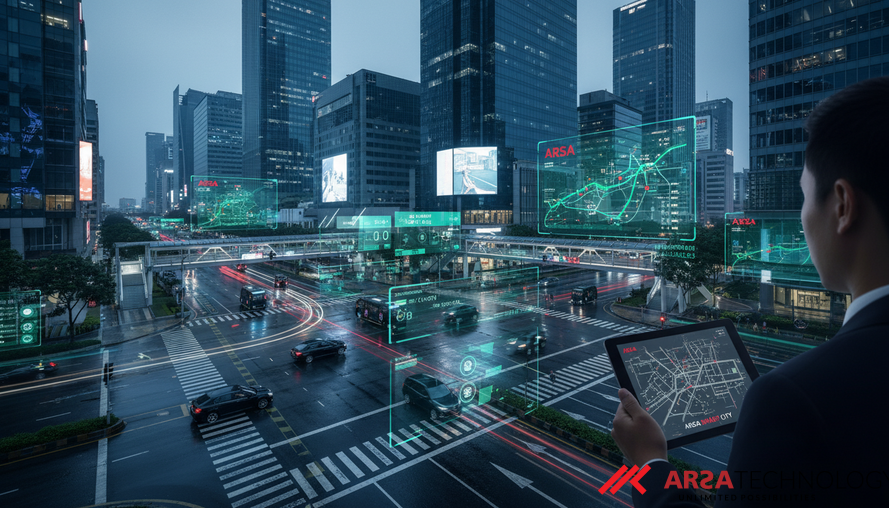

Why Smart-city Leaders Are Investing in Edge AI Analytics for Traffic Management
Urban centers worldwide are grappling with escalating traffic congestion, pollution, and the demand for more efficient public services. City transport planners are constantly seeking innovative solutions to transform chaotic roadways into intelligent, responsive networks. This quest has led many smart-city leaders to invest heavily in advanced technologies, particularly the AI vehicle counting system for smart city traffic management, which leverages the power of edge AI analytics. This paradigm shift promises not just to count vehicles, but to understand and predict urban mobility patterns, fundamentally reshaping how cities operate.
Traditional traffic management systems often rely on outdated infrastructure, manual data collection, or cloud-dependent solutions that introduce latency and data privacy concerns. However, the emergence of edge AI has provided a robust alternative, enabling real-time processing and immediate insights directly at the source of data generation—the intersection. This article explores why this technology is becoming indispensable for modern urban planning.
The Imperative for Intelligent Traffic Management
The challenges facing urban traffic planners are multifaceted. Beyond sheer volume, factors like vehicle type, speed, lane utilization, and incident detection all contribute to congestion and inefficiency. Manual observation is labor-intensive and prone to error, while traditional loop detectors offer limited data granularity. Cloud-based systems, while powerful, can incur significant data transfer costs and introduce delays, which are unacceptable for critical real-time decision-making in traffic control.
Smart cities require systems that are:
- Real-time: To respond to dynamic traffic conditions instantly.
- Accurate: For reliable data-driven decisions.
- Scalable: To cover vast urban areas without prohibitive costs.
- Secure: To protect sensitive urban data.
- Efficient: To minimize operational overhead and maximize ROI.
Edge AI analytics directly addresses these requirements by bringing computational power closer to the data source.
How Edge AI Transforms Vehicle Counting and Traffic Analysis
An AI vehicle counting system for smart city traffic management deployed at the edge processes video streams from existing CCTV cameras directly on-site. This eliminates the need to send massive amounts of video data to a central cloud server, drastically reducing bandwidth requirements and processing latency. For city transport planners, this means immediate access to critical information, allowing for proactive interventions rather than reactive responses.
Consider the capabilities of such a system:
- Automated Vehicle Classification Using CCTV: Beyond simple counting, edge AI can accurately classify vehicles into categories like cars, trucks, motorcycles, and buses. This granular data is crucial for understanding the composition of traffic flow, identifying specific bottlenecks caused by heavy vehicles, and informing decisions on lane restrictions or optimized signal timings for different vehicle types.
- Real-Time Traffic Flow Analytics Edge Computing: With processing happening at the edge, traffic flow analytics are delivered in real-time. This includes metrics such as vehicle speed, density, queue length, and average travel time across specific road segments or entire intersections. This capability allows traffic lights to dynamically adjust based on live conditions, reroute traffic during incidents, or even send alerts to drivers about impending congestion.
- AI Traffic Monitoring Without Cloud: One of the most significant advantages for government and public sector entities is the ability to perform comprehensive AI traffic monitoring without cloud dependency. This ensures data sovereignty, reduces cybersecurity risks associated with external data transfer, and provides full control over sensitive urban infrastructure data. For ARSA Technology, this commitment to on-premise and edge solutions is a core principle, offering peace of mind to clients in regulated environments.
ARSA Traffic Monitor: A Smart Traffic Counting Device for Intersections
ARSA Technology’s ARSA Traffic Monitor (AI Box) exemplifies the power of edge AI for smart city applications. This plug-and-play solution is specifically designed to transform existing CCTV infrastructure into an intelligent traffic analysis hub. It’s a dedicated smart traffic counting device for intersections and other critical urban points, offering unparalleled ease of deployment and immediate operational value.
The ARSA Traffic Monitor is part of our robust AI Box Series, engineered for rapid rollout projects. With a 5-minute setup, it integrates seamlessly with existing CCTV cameras, processing video streams locally on the device. This edge processing capability ensures low latency and high data privacy, as video streams are analyzed on-device and do not leave your network unless explicitly configured.
Key functions include:
- Precise vehicle counting and vehicle classification.
- In-depth traffic flow analysis and congestion detection.
- Monitoring of lane utilization and incident detection.
The system provides real-time dashboards and historical reports, accessible locally or remotely, giving city planners a comprehensive view of urban mobility. For organizations that prefer a software-only deployment on their existing servers, ARSA also offers ARSA Traffic Monitor (Software), providing the same powerful analytics with centralized processing.
Tangible Business Outcomes and ROI
Investing in an AI vehicle counting system for smart city traffic management delivers significant, measurable business outcomes:
- Optimize Traffic Flow by 40%: By providing real-time data on congestion and flow, cities can implement dynamic signal timing, intelligent rerouting, and adaptive lane management strategies. This leads to a substantial reduction in travel times and fuel consumption.
- Data-Driven Urban Planning: The rich historical data generated by these systems offers invaluable insights for long-term urban planning. City planners can identify growth areas, anticipate future infrastructure needs, and make informed decisions on road expansions, public transport routes, and pedestrian zones.
- Reduce Congestion: Proactive detection of incidents and bottlenecks allows for rapid response, clearing blockages faster and preventing minor issues from escalating into widespread gridlock. This directly translates to less frustration for commuters and improved air quality.
- Automate Vehicle Counting: Eliminating manual counting methods saves significant labor costs and provides continuous, unbiased data collection, freeing up personnel for more strategic tasks.
ARSA Technology’s solutions are built on over seven years of expertise, with a track record of successful deployments for government and enterprise clients across Southeast Asia. Our focus on practical, proven AI ensures that our systems deliver measurable impact, not just experimental features. Explore all ARSA products to see how our AI and IoT solutions are transforming various industries.
The Road Ahead for Smart Cities
The integration of edge AI analytics into smart city infrastructure is no longer a futuristic concept; it is a present-day necessity. As urban populations continue to grow, the demand for efficient, sustainable, and safe transportation systems will only intensify. An AI vehicle counting system for smart city traffic management provides the foundational intelligence required to meet these demands, offering a pathway to more livable and productive cities. By choosing robust, on-premise or edge-deployed solutions like the ARSA Traffic Monitor, city leaders can ensure data privacy, operational reliability, and long-term scalability.
FAQ
What is an AI vehicle counting system for smart city traffic management?
An AI vehicle counting system for smart city traffic management uses artificial intelligence to analyze video feeds from cameras (often existing CCTV) to detect, count, and classify vehicles in real-time. This data helps cities understand traffic patterns, manage congestion, and optimize urban planning.
How does automated vehicle classification using CCTV benefit urban planning?
Automated vehicle classification using CCTV provides granular data on different vehicle types (cars, trucks, motorcycles). This allows city planners to analyze specific traffic compositions, identify infrastructure stress points, and tailor traffic management strategies, such as dynamic lane assignments or signal timing, to improve overall flow and reduce congestion.
Can ARSA’s AI traffic monitoring without cloud ensure data privacy?
Yes, ARSA Technology’s AI traffic monitoring without cloud dependency, particularly with the ARSA Traffic Monitor (AI Box), ensures that all AI processing and data analysis occur locally at the edge. This means video streams and inference results do not leave your network unless explicitly configured, providing full data ownership and enhanced privacy for sensitive urban data.
What makes the ARSA Traffic Monitor a smart traffic counting device for intersections?
The ARSA Traffic Monitor is a smart traffic counting device for intersections because it offers plug-and-play installation with existing CCTV, performs real-time vehicle counting, classification, and congestion detection directly at the edge, and provides instant insights through local processing. This enables dynamic traffic adjustments and data-driven decisions for optimizing intersection performance.
Stop Guessing, Start Optimizing.
Discover how ARSA Technology drives profit through intelligent systems.
