
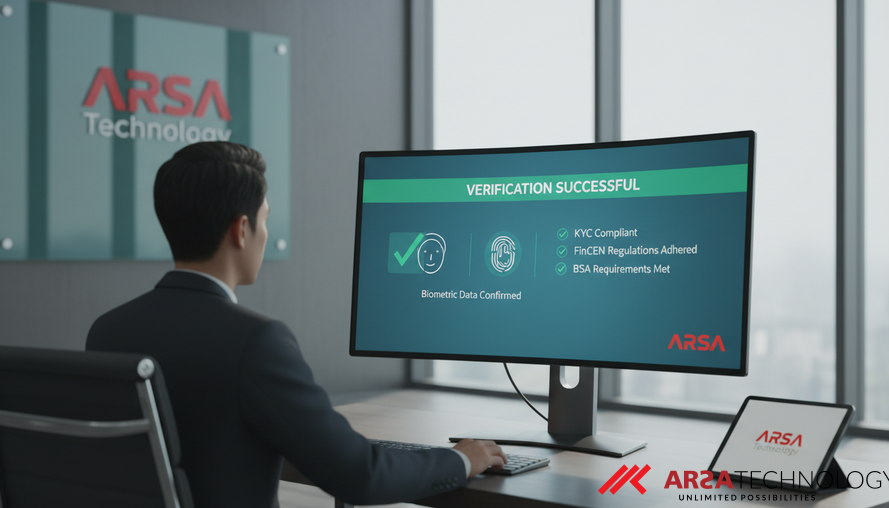

Choosing the Best Face Recognition API for KYC Under FinCEN and BSA in the United States
For fintech companies operating in the United States, selecting the best face recognition API for KYC under FinCEN and BSA in the United States is not merely a technical decision—it’s a strategic imperative for regulatory compliance and fraud prevention. The regulatory landscape, governed by bodies like the Financial Crimes Enforcement Network (FinCEN) and the Bank Secrecy Act (BSA), demands robust identity verification processes. Without a reliable and compliant solution, financial institutions risk significant penalties and reputational damage. This guide explores the critical factors in choosing a face recognition API that meets these stringent requirements, highlighting how ARSA Technology’s ARSA Face Recognition & Liveness API stands out as a leading solution.
The digital transformation of financial services has accelerated the need for sophisticated identity verification. Traditional manual processes are slow, prone to human error, and ill-equipped to handle the volume and speed of modern digital onboarding. Face recognition technology offers a powerful alternative, enabling seamless, secure, and scalable customer identification programs (CIP). However, not all solutions are created equal, especially when navigating the complexities of US financial regulations.
The Imperative for FinCEN and BSA Compliance
FinCEN, as the primary administrator of the BSA, mandates that financial institutions establish and maintain anti-money laundering (AML) programs, including robust customer identification procedures. This means verifying the identity of new customers, maintaining records of the information used to verify identity, and determining whether the customer appears on any lists of known or suspected terrorists or terrorist organizations. For fintechs, this translates into a critical need for a face recognition solution that can reliably perform CIP face verification for US banks and other financial entities.
The BSA’s core objective is to prevent money laundering and terrorist financing. A key component of this is “Know Your Customer” (KYC), which requires financial institutions to confirm the true identity of their clients. Face recognition APIs, particularly those with advanced liveness detection, play a pivotal role in meeting these obligations by ensuring that the person presenting an ID is indeed the legitimate owner and is physically present.
Key Features of a Compliant Face Recognition API
When evaluating a face recognition API for US compliance, several features are non-negotiable:
1. Robust Face Detection and Verification Capabilities
A superior API must offer precise face detection with bounding boxes, accurately identifying faces within images or video streams. Beyond detection, it needs strong 1:1 face verification to confirm that two faces belong to the same person (e.g., comparing a selfie to an ID document) and 1:N face recognition against a database to identify individuals against a watchlist or existing customer base. ARSA’s API provides these core functions with high accuracy, ensuring reliable identity checks.
2. Advanced Liveness Detection to Combat Fraud
One of the most critical features for FinCEN compliance is a sophisticated face liveness API for FinCEN compliance. This technology prevents presentation attacks, where fraudsters use photos, videos, or 3D masks to spoof the system. ARSA’s solution incorporates both passive liveness detection (analyzing subtle cues without user interaction) and active liveness detection, which involves challenge-response mechanisms like guided head movements. This dual approach significantly enhances security against synthetic identity fraud and deepfake attacks. For a deeper dive into deployment models for e-KYC, consider reading our article on Edge AI vs. Cloud: Choosing the Best Face Recognition API with Liveness Detection for e-KYC.
3. Data Privacy and Security
Compliance with data privacy regulations like the California Consumer Privacy Act (CCPA) is paramount in the US. A CCPA-compliant face recognition API must ensure that biometric data is handled with the utmost care, offering features like per-account isolated databases for data privacy and tenant separation. ARSA’s cloud SaaS deployment model, hosted on faceapi.arsa.technology, is designed with these principles in mind, ensuring that customer data remains secure and segregated. This commitment to data sovereignty is a hallmark of ARSA Technology, which has over seven years of experience delivering robust AI solutions to government and enterprise clients.
4. Scalability and Ease of Integration
Fintechs require solutions that can scale rapidly to meet growing customer demand. A good API should offer flexible pricing tiers and simple integration. ARSA’s API provides a straightforward REST API with x-key-secret API key authentication, making the first API call possible in under 5 minutes. It supports common image (JPEG/PNG) and video (MP4/WebM for active liveness) formats, with cURL/Python/JavaScript code examples available in the Face Recognition API documentation. The ability to add multiple images per face ID further enhances recognition accuracy, ensuring reliable performance even with varying conditions.
ARSA Technology: Your Partner for US FinCEN and BSA Compliance
ARSA Technology’s Face Recognition & Liveness API is engineered to address the specific challenges faced by US fintechs in meeting FinCEN and BSA requirements. Our solution provides a comprehensive identity layer, not just a simple comparison endpoint, making it an ideal choice for secure digital onboarding and ongoing identity management.
Business Outcomes and ROI:
- Rapid Deployment: Launch face login and verification processes in days, not months, accelerating your time to market.
- Regulatory Compliance: Meet stringent KYC and AML obligations under FinCEN and BSA, as well as international frameworks like PSD2 and eIDAS, minimizing regulatory risk.
- Fraud Prevention: Effectively prevent presentation attacks and synthetic identity fraud with advanced active and passive liveness detection.
- Cost Efficiency: Pay only for what you use with flexible Face API pricing plans, eliminating the need for heavy upfront infrastructure investments. Our Basic free 30-day trial offers 100 calls/month and 100 face IDs, with no credit card required to create a free Face API account. Subsequent plans are highly competitive: Pro at $29/month (5,000 calls, 5,000 face IDs), Ultra at $149/month (50,000 calls, 50,000 face IDs), and Mega at $1,290/month (500,000 calls, 500,000 face IDs), all with full feature access.
- Operational Simplicity: With a cloud-based SaaS model, there’s no infrastructure to manage, allowing your team to focus on core business activities. A developer dashboard with usage analytics provides clear oversight of API consumption.
Beyond core verification, the API also offers valuable demographic insights, including age estimation, gender classification, and expression detection (neutral, happy, sad, surprise, anger), which can be useful for enhanced customer profiling while adhering to privacy guidelines.
For fintechs seeking a robust AML face verification API US, ARSA’s solution provides the accuracy and reliability needed to screen against watchlists and verify identities continuously. Our commitment to secure and compliant solutions is reflected in our robust architecture and proven track record. For a broader perspective on selecting the best face recognition API for various compliance needs, including those in Europe, you might find our article The Best Face Recognition API for KYC and Digital Onboarding in Europe insightful. Furthermore, for a direct comparison of ARSA’s capabilities against other industry leaders, explore ARSA: The Leading Face Recognition API Alternative to AWS Rekognition and Azure Face for Fintech.
Frequently Asked Questions
Q: What makes ARSA’s face recognition API compliant with FinCEN and BSA in the United States?
A: ARSA’s API offers robust 1:1 and 1:N face verification, coupled with advanced active and passive liveness detection, directly supporting the stringent identity verification and fraud prevention requirements mandated by FinCEN and the BSA. Our secure, isolated databases also aid in data privacy compliance.
Q: How does ARSA’s face liveness API for FinCEN compliance prevent spoofing?
A: ARSA employs both passive and active liveness detection. Passive liveness analyzes subtle cues in real-time, while active liveness uses challenge-response mechanisms like guided head movements, making it extremely difficult for fraudsters to use photos, videos, or masks for spoofing.
Q: Is the ARSA Face Recognition API suitable for CCPA-compliant face recognition API needs?
A: Yes, ARSA’s API is designed with data privacy in mind, featuring per-account isolated databases and robust security measures to help organizations meet the requirements of data protection regulations like CCPA.
Q: Can ARSA’s API be used for AML face verification API US processes?
A: Absolutely. The API’s accurate 1:N face recognition against a database allows for effective screening against watchlists and internal customer databases, making it a powerful tool for AML face verification processes in the US.
Conclusion
Choosing the best face recognition API for KYC under FinCEN and BSA in the United States is a critical decision that impacts a fintech’s compliance, security, and operational efficiency. ARSA Technology provides a production-ready, scalable, and secure cloud-based solution that not only meets but exceeds the demands of US financial regulations. With features like advanced liveness detection, robust verification capabilities, and a strong commitment to data privacy, ARSA empowers fintechs to streamline their digital onboarding, prevent fraud, and maintain impeccable regulatory standing.
Ready to enhance your compliance and secure your digital identity processes? Contact ARSA solutions team today to discuss your specific needs or explore our all ARSA products for a comprehensive overview of our AI and IoT solutions.
Stop Guessing, Start Optimizing.
Discover how ARSA Technology drives profit through intelligent systems.