
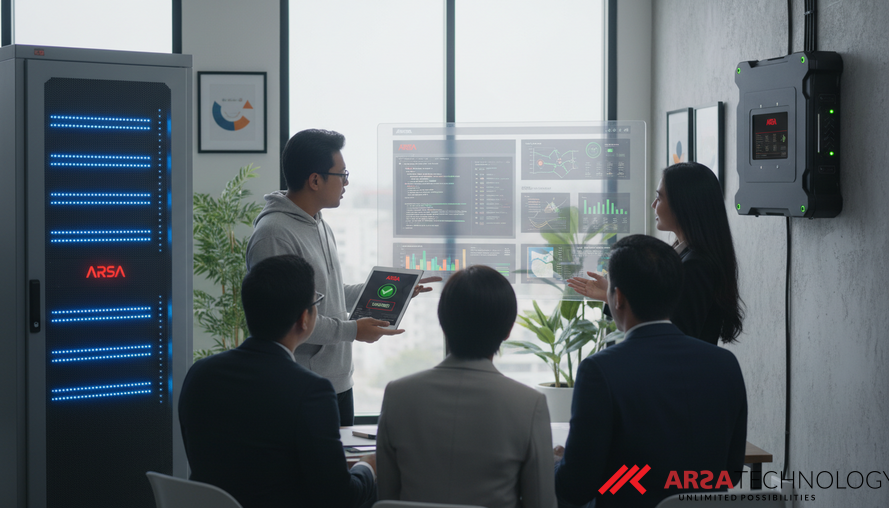

Edge AI vs. Cloud: Choosing the Best Face Recognition API with Liveness Detection for e-KYC
In the rapidly evolving landscape of digital transactions and online services, particularly within the proptech sector, robust identity verification is no longer a luxury—it’s a necessity. Businesses are constantly searching for the best face recognition API with liveness detection for e-KYC to streamline digital onboarding, enhance security, and comply with stringent regulations. The fundamental choice often boils down to two primary architectural approaches: Edge AI or Cloud-based solutions. Each offers distinct advantages and trade-offs, making the decision critical for long-term operational success.
For proptech companies, this choice impacts everything from tenant screening and property access management to secure transaction verification. Automating these processes with reliable face recognition technology can significantly reduce manual verification costs by up to 80%, while also preventing identity fraud and ensuring a seamless user experience. Understanding which deployment model aligns with your business needs is paramount.
The Imperative of Face Recognition with Liveness Detection for e-KYC
Electronic Know Your Customer (e-KYC) processes are foundational for establishing trust in digital interactions. In proptech, this translates to verifying the identity of prospective tenants, buyers, or even contractors remotely. Traditional methods are often slow, prone to human error, and vulnerable to sophisticated fraud attempts. This is where a powerful face verification API for digital onboarding becomes indispensable.
A critical component of any effective e-KYC solution is liveness detection. Without it, fraudsters can easily bypass face recognition systems using photos, videos, or 3D masks—known as presentation attacks. Liveness detection ensures that the person presenting their face is a real, live individual, not an imposter. This anti-spoofing face recognition REST API capability is vital for maintaining the integrity of your identity verification workflows and protecting your business from financial losses and reputational damage.
Edge AI for Face Verification: Local Processing, Specific Use Cases
Edge AI refers to artificial intelligence processing that occurs directly on a local device or server, close to the data source, rather than sending data to a centralized cloud server. For face verification, this means that the camera feed is analyzed on-site, with only metadata or verification results potentially sent elsewhere.
Advantages of Edge AI:
- Low Latency: Processing happens instantly at the source, ideal for real-time applications like physical access control where sub-second response times are critical.
- Enhanced Privacy: Raw video data often never leaves the local network, appealing to organizations with strict data sovereignty requirements or those operating in highly regulated environments.
- Offline Operation: Edge solutions can function without continuous internet connectivity, making them suitable for remote or air-gapped locations.
- Reduced Bandwidth Costs: Less data needs to be transmitted over networks, saving on bandwidth, especially for deployments with many cameras.
Disadvantages of Edge AI:
- Higher Initial Hardware Investment: Requires specialized hardware (like ARSA’s AI Box Series) with sufficient processing power at each deployment site.
- Complex Management: Scaling across numerous distributed edge devices can introduce management complexities, including updates, maintenance, and monitoring.
- Limited Scalability for Database: While local processing is fast, managing a large, centralized face database across many edge devices can be challenging without a robust backend synchronization strategy.
Edge AI solutions are particularly well-suited for specific proptech applications such as secure building access control, where immediate verification at a gate or door is paramount, and data privacy is a top concern.
Cloud-Based Face Recognition: Scalability, Ease, and Comprehensive Features
Cloud-based face recognition leverages powerful remote servers and scalable infrastructure to perform AI inference. Data (or relevant features extracted from data) is sent to the cloud for processing, and results are returned via an API. This model is often the preferred choice for developers seeking rapid deployment and broad functionality.
Advantages of Cloud-Based Face Recognition:
- Ease of Integration: A cloud face recognition with built-in database, offered as a REST API, allows developers to integrate powerful biometric capabilities into their applications with minimal effort. ARSA’s Face Recognition & Liveness API, for instance, is available on RapidAPI, offering a free tier and quick setup.
- Scalability: Cloud infrastructure can effortlessly scale to handle varying loads, from a few hundred API calls to hundreds of thousands per month, accommodating growth without requiring hardware upgrades. ARSA’s API scales to 500,000 calls/month for enterprise needs.
- Lower Upfront Costs: No need for significant hardware investment; pricing is typically usage-based, making it accessible for startups and large enterprises alike.
- Centralized Management: A single cloud platform manages the face database, analytics, and updates, simplifying operations.
- Advanced Features: Cloud APIs often come with a rich set of features, including 1:1 face verification, 1:N face identification, and sophisticated active and passive liveness detection, all managed by the provider.
Disadvantages of Cloud-Based Face Recognition:
- Internet Dependency: Requires a stable internet connection for continuous operation.
- Data Transfer Concerns: While secure, transmitting data to the cloud may raise privacy concerns for some highly sensitive applications or regions with strict data residency laws. (For these cases, ARSA offers an on-premise SDK version).
- Potential Latency: Network latency can introduce slight delays compared to edge processing, though modern cloud APIs are optimized for sub-second response times.
For proptech companies focused on digital onboarding, e-KYC, and identity verification across a broad user base, a cloud-based solution like ARSA’s Face Recognition & Liveness API offers unparalleled flexibility, scalability, and a comprehensive feature set.
ARSA Face Recognition & Liveness API: The Ideal Cloud Solution for e-KYC
When evaluating the best face recognition API with liveness detection for e-KYC, ARSA Technology’s cloud-based Face Recognition & Liveness API stands out as a robust and developer-friendly solution. Engineered for high accuracy (99.67% on LFW benchmark) and reliability, it provides all the necessary tools for secure identity management and fraud prevention in proptech and beyond.
Key Features and Business Outcomes:
- 1:1 Face Verification: Instantly compare a user’s selfie with their ID document photo to confirm identity during digital onboarding. This feature is crucial for e-KYC, ensuring the person registering is indeed who they claim to be.
- 1:N Face Identification: For applications requiring identification against a larger database, such as managing access for multiple tenants or employees across various properties, the API can identify a person from a collection of enrolled faces.
- Active and Passive Liveness Detection: This is the cornerstone of anti-spoofing. ARSA’s API employs both active (challenge-response based) and passive (AI-driven analysis of a single image/video frame) methods to detect and prevent fraudulent attempts using photos, videos, or masks. This robust face liveness detection API for fintech apps and proptech ensures that only real, live individuals are verified.
- Built-in Face Database Management: The API includes a secure, cloud face recognition with built-in database, allowing you to easily enroll, update, and manage face collections for your users. This simplifies the backend infrastructure required for identity management.
- REST API for Seamless Integration: Designed for developers, the API offers straightforward integration into existing applications and platforms, enabling rapid deployment of secure identity verification workflows.
- RapidAPI Marketplace & Free Tier: Get started quickly with a free tier on RapidAPI, allowing you to test capabilities before committing. This accessibility makes it an excellent choice for developers evaluating the best face recognition API with liveness detection for e-KYC.
- Sub-Second Verification Response: Critical for a smooth user experience, ARSA’s API delivers verification results in sub-second times, minimizing friction during onboarding or access attempts.
- Fraud Prevention: By combining accurate face recognition with advanced liveness detection, the API acts as a powerful deterrent against identity fraud, protecting both your business and your users. This is essential for maintaining trust and compliance in sensitive proptech transactions.
For organizations with unique requirements for on-premise deployment or edge processing, ARSA Technology also offers the Face Recognition & Liveness SDK and the AI Box Series, providing flexible solutions across various operational realities. However, for the agility and scalability demanded by modern digital onboarding and e-KYC, the cloud API is often the optimal choice.
Conclusion
Choosing between Edge AI and Cloud for face verification depends heavily on your specific operational context, privacy requirements, and scalability needs. While Edge AI offers advantages in ultra-low latency and strict data localization, cloud-based solutions generally provide greater flexibility, easier integration, and superior scalability for a wide range of e-KYC and digital onboarding applications.
For proptech companies and developers seeking the best face recognition API with liveness detection for e-KYC, ARSA Technology’s Face Recognition & Liveness API offers a compelling package. Its high accuracy, comprehensive anti-spoofing measures, and developer-friendly REST API make it an ideal choice for automating identity verification, preventing fraud, and ensuring a secure, efficient user experience. Explore all ARSA products or contact ARSA solutions team today to discuss how our technology can transform your identity verification processes.
Frequently Asked Questions
What makes a face verification API ideal for digital onboarding in proptech?
An ideal face verification API for digital onboarding in proptech combines high accuracy for 1:1 face matching, robust active and passive liveness detection to prevent spoofing, and a user-friendly REST API for easy integration. It should also offer scalable infrastructure to handle varying user volumes and provide features like a built-in face database for efficient identity management.
How does an anti-spoofing face recognition REST API protect against identity fraud?
An anti-spoofing face recognition REST API protects against identity fraud by using advanced liveness detection techniques. These techniques verify that the presented face belongs to a live person, not a photo, video, or mask. This prevents fraudsters from using static images or recorded footage to impersonate legitimate users during e-KYC or access attempts.
Can a cloud face recognition with built-in database meet strict data privacy requirements?
Yes, a reputable cloud face recognition with built-in database can meet strict data privacy requirements through robust encryption, isolated databases for each client, and compliance with global data protection regulations like GDPR. While data is processed in the cloud, providers like ARSA Technology prioritize security and ensure data is handled with the highest standards. For environments requiring absolute data sovereignty, on-premise SDK options are also available.
What are the key benefits of using a face liveness detection API for fintech apps and proptech?
The key benefits of using a face liveness detection API for fintech apps and proptech include significantly reducing the risk of identity fraud, automating and accelerating the e-KYC process, improving user experience by eliminating manual checks, and ensuring compliance with regulatory standards for secure digital transactions. It helps build trust and protects against financial losses from impersonation.
Stop Guessing, Start Optimizing.
Discover how ARSA Technology drives profit through intelligent systems.