
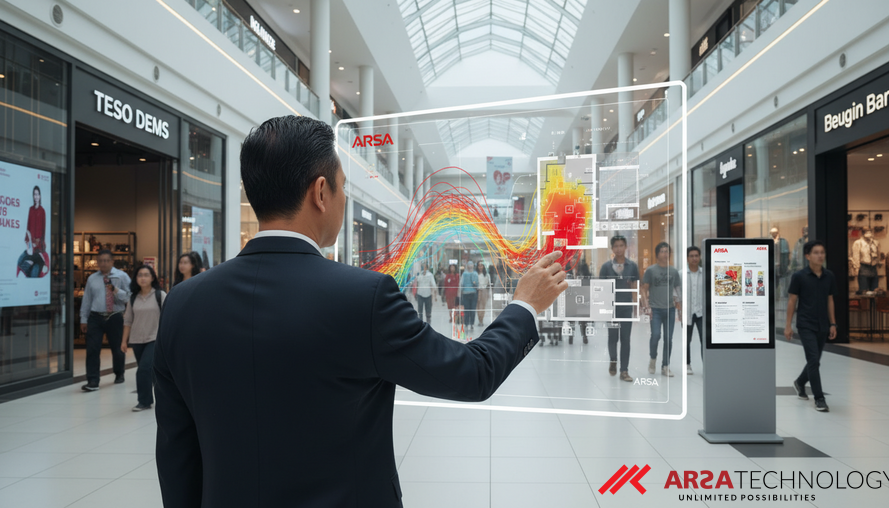

Customer Heatmap Analytics for Store Layout Optimization: A Mall Manager’s Guide
In the competitive landscape of modern retail, understanding customer behavior is no longer a luxury—it’s a necessity. For mall property managers, optimizing the physical space of a shopping center is paramount to attracting tenants, enhancing visitor experience, and ultimately, driving revenue. This is where customer heatmap analytics for store layout optimization emerges as a game-changer, transforming passive surveillance into actionable intelligence. By visualizing where customers go, linger, and avoid, mall managers can make data-driven decisions that significantly impact profitability and operational efficiency.
Traditional methods of observing foot traffic or relying on anecdotal evidence fall short in providing the granular insights needed to truly optimize a retail environment. AI-powered video analytics, however, offers a precise and scalable solution, turning existing CCTV infrastructure into a powerful tool for strategic planning.
The Power of Visualizing Customer Journeys
Imagine being able to see, at a glance, the most popular entrances, the busiest aisles, and the ‘cold spots’ that customers consistently bypass. This is the core promise of customer heatmap analytics. By processing video feeds from security cameras, advanced AI algorithms can generate visual representations—heatmaps—that highlight areas of high and low activity within a retail space.
These heatmaps provide an intuitive understanding of customer flow, revealing patterns that might otherwise go unnoticed. For a mall property manager, this means insights into:
- Peak Traffic Zones: Identifying areas with the highest visitor density, which are prime locations for anchor tenants or high-visibility promotions.
- Customer Flow Paths: Understanding the natural routes customers take through common areas and within stores, allowing for strategic placement of amenities, signage, or new retail concepts.
- Dwell Time Hotspots: Pinpointing where customers spend the most time, indicating successful displays, comfortable seating areas, or potential bottlenecks.
This visual data is invaluable for making informed decisions, moving beyond guesswork to a scientific approach to retail space management.
AI Dwell Time Analysis for Shopping Malls: Unlocking Deeper Insights
Beyond simple footfall counting, the true value of AI-driven analytics lies in its ability to perform sophisticated analyses like AI dwell time analysis for shopping malls. Dwell time refers to the amount of time a customer spends in a specific area or looking at a particular display. For mall managers, this metric is critical for several reasons:
- Tenant Performance Evaluation: Longer dwell times in a tenant’s store often correlate with higher engagement and potential sales. This data can be used to assess tenant performance, justify rental rates, or identify areas where tenants might need support in optimizing their in-store experience.
- Common Area Effectiveness: Are your seating areas truly inviting? Is the new art installation capturing attention? Dwell time analysis can quantify the engagement levels of common areas, helping to justify investments in amenities and public spaces.
- Marketing and Advertising Placement: Understanding where customers pause allows for more effective placement of digital signage, promotional kiosks, or pop-up stores, maximizing their exposure and potential impact.
ARSA Technology’s Smart Retail Counter, part of our robust AI Box Series, excels in providing these precise metrics. By deploying edge computing devices, the system processes video data locally, ensuring privacy and delivering real-time insights into customer behavior. This allows for immediate adjustments to store layouts or promotional strategies, directly impacting the bottom line.
Optimizing Retail Floor Plan with Heatmap Data
The direct application of heatmap data is to optimize retail floor plan with heatmap data. This isn’t just about moving a display; it’s about strategic spatial planning that can lead to significant business outcomes. For a mall property manager, this could involve:
- Rethinking Common Area Layouts: If heatmaps show congestion in certain walkways, reconfiguring seating, kiosks, or even pedestrian flow can improve traffic and reduce frustration. Conversely, underutilized areas can be redesigned to become more attractive or functional.
- Strategic Tenant Placement: New tenants can be placed in high-traffic areas identified by heatmaps, or strategically positioned to draw traffic into less-visited zones, creating a more balanced flow throughout the mall.
- Enhancing Wayfinding: Heatmaps can reveal areas where customers get lost or hesitate. This data can inform the placement of clearer signage, interactive directories, or even digital guides to improve navigation.
- Maximizing Kiosk and Pop-Up Effectiveness: Temporary installations like kiosks or pop-up shops can be positioned in high-dwell or high-traffic areas to maximize their visibility and potential for engagement.
By continuously analyzing heatmap data, mall managers can iterate on their floor plans, ensuring that every square foot of the property is working to its full potential.
Customer Movement Pattern Analysis CCTV: From Surveillance to Strategy
Historically, CCTV systems were primarily for security and loss prevention. However, with the advent of AI video analytics, customer movement pattern analysis CCTV has transformed these cameras into powerful business intelligence tools. Instead of just recording incidents, ARSA’s AI video analytics software processes live feeds to:
- Track Visitor Footfall: Accurately count people entering and exiting the mall, specific stores, or zones, providing foundational data for traffic analytics.
- Identify Bottlenecks and Congestion: Detect areas where customers slow down or accumulate, indicating potential issues with layout, staffing, or popular attractions.
- Understand Pathing: Map the routes customers take, revealing preferred paths and identifying areas that are consistently overlooked.
- Measure Queue Lengths: Monitor queues at service desks or popular stores, allowing for proactive staffing adjustments to reduce wait times and improve customer satisfaction.
This granular understanding of customer movement helps mall managers not only enhance security but also proactively manage the customer experience, leading to increased satisfaction and repeat visits. ARSA’s solutions are designed to be privacy-first, processing data at the edge to ensure that sensitive information remains within your control.
Foot Traffic Analytics for Tenant Performance: A Data-Driven Approach
For mall property managers, providing value to tenants is key to retention and attracting new businesses. Foot traffic analytics for tenant performance offers a transparent, data-driven way to demonstrate the value of a location and help tenants succeed. By providing tenants with insights into:
- Storefront Conversion Rates: How many people passed by versus how many entered the store? This helps tenants evaluate their window displays and promotions.
- In-Store Dwell Times: Which sections of a store are most engaging? This helps tenants optimize their internal layout and product placement.
- Peak Hours: When are the busiest times for a particular store or area? This allows tenants to optimize staffing and inventory.
This data fosters a collaborative environment where mall management and tenants can work together to improve overall retail performance. ARSA’s Smart Retail Counter (Software) offers similar capabilities for those preferring a centralized software deployment on their existing servers.
ARSA Smart Retail Counter (AI Box): Your Edge AI Solution
ARSA Technology understands the unique challenges faced by mall property managers. Our ARSA Smart Retail Counter (AI Box) is engineered for rapid deployment and immediate impact. This plug-and-play edge AI system integrates seamlessly with your existing CCTV infrastructure, requiring just 5 minutes for setup.
Key benefits for mall property managers include:
- Edge Processing: All AI analytics occur locally on the device, ensuring full data ownership, minimal latency, and robust privacy. No reliance on cloud connectivity for core operations.
- Real-time Insights: Get immediate data on people counting, visitor footfall tracking, queue management, heatmap visualization, and dwell time analysis.
- Scalability: Each AI Box can process up to 3 camera streams, and multiple units can be deployed across various zones or stores for comprehensive coverage.
- Business Outcomes: Expect to see tangible improvements, such as the potential to increase sales conversion by 25% for your tenants, optimize staffing costs for common areas, improve overall store layout, and significantly reduce queue abandonment rates.
- Cost Efficiency: By leveraging existing CCTV and processing at the edge, you minimize cloud data transfer costs and infrastructure overhauls.
ARSA Technology has over 7 years of experience delivering production-ready AI and IoT solutions for governments and enterprises across Southeast Asia. Our commitment to accuracy, scalability, privacy, and operational reliability ensures that our solutions deliver measurable impact.
Frequently Asked Questions
What is customer heatmap analytics for store layout optimization?
Customer heatmap analytics for store layout optimization uses AI to process CCTV footage, generating visual maps that show customer density and movement patterns within a retail space. These heatmaps help identify popular areas, traffic flow, and underutilized zones, enabling data-driven decisions to improve store layouts and overall operational efficiency.
How can AI dwell time analysis for shopping malls benefit my property?
AI dwell time analysis for shopping malls provides insights into how long customers spend in specific areas. This data helps evaluate tenant performance, assess the effectiveness of common area amenities, and optimize the placement of marketing and advertising materials, ultimately enhancing the visitor experience and driving revenue.
Can customer movement pattern analysis CCTV improve tenant performance?
Yes, by transforming existing CCTV into a strategic tool, customer movement pattern analysis CCTV provides valuable data like foot traffic, queue lengths, and customer paths. Sharing these insights with tenants helps them optimize their storefronts, in-store layouts, and staffing, leading to better conversion rates and overall performance.
What are the privacy implications of using heatmap analytics?
ARSA Technology’s solutions, such as the ARSA Smart Retail Counter (AI Box), prioritize privacy by performing all AI processing at the edge. This means video streams are analyzed on-device, and raw biometric data does not leave your network unless explicitly configured, ensuring full data ownership and compliance readiness.
Conclusion
For mall property managers, the era of guesswork in retail space management is over. Leveraging customer heatmap analytics for store layout optimization provides an unparalleled opportunity to understand, predict, and influence customer behavior. By adopting advanced AI solutions like the ARSA Smart Retail Counter (AI Box), you can transform your existing infrastructure into a powerful engine for growth, ensuring your mall remains a vibrant, profitable destination.
Ready to unlock the full potential of your retail spaces? Contact ARSA Technology’s solutions team today to discuss how our AI-powered analytics can optimize your operations and drive measurable success. Explore all ARSA products to find the right fit for your needs.
Stop Guessing, Start Optimizing.
Discover how ARSA Technology drives profit through intelligent systems.
