
Edge AI vs. Cloud: Choosing the Best Real-Time Congestion Detection System for Urban Traffic Planning
Urban centers worldwide grapple with the persistent challenge of traffic congestion. For smart city project managers and property management professionals, implementing an effective real-time congestion detection system for urban traffic planning is paramount. Such a system not only alleviates daily commute frustrations but also underpins strategic urban development, emergency response, and overall quality of life. The critical decision lies in choosing the right technological backbone: Edge AI or cloud-based solutions. Each approach offers distinct advantages, and understanding these differences is key to deploying a system that is both efficient and sustainable.
ARSA Technology, with its proven track record in AI video analytics and edge computing, understands the nuances of these deployment models. We recognize that the ideal solution must align with specific operational needs, data privacy requirements, and budgetary constraints. This guide will compare Edge AI and cloud-based systems, helping you determine which best fits your vision for advanced traffic management.
The Imperative for Real-Time Congestion Detection
Modern cities demand more than just passive traffic monitoring. They require active, intelligent systems capable of providing immediate insights into traffic conditions. A robust real-time congestion detection system for urban traffic planning enables authorities to:
- Dynamically adjust traffic signals to optimize flow.
- Reroute vehicles during peak hours or incidents.
- Provide accurate travel time predictions to commuters.
- Enhance emergency vehicle response times.
- Inform long-term infrastructure planning with precise data.
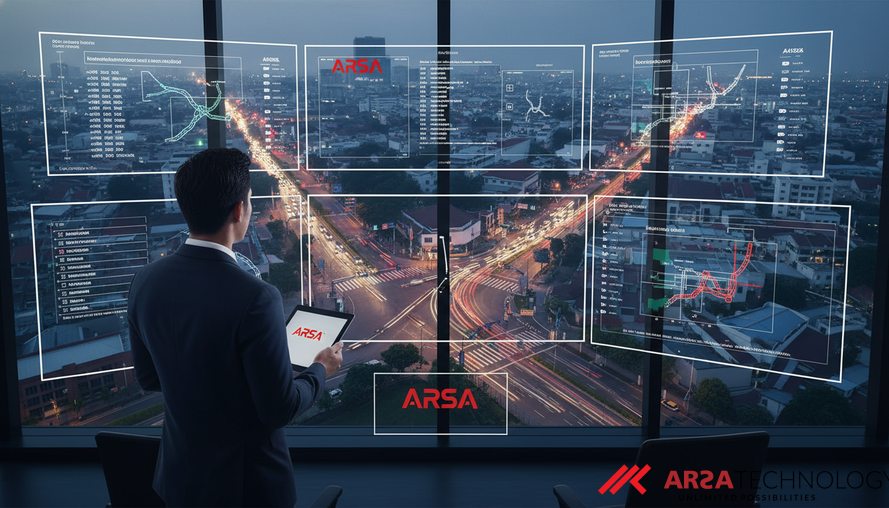
Without real-time data, urban planning remains reactive, leading to inefficiencies and increased operational costs. The goal is to transform passive CCTV feeds into active intelligence, turning every camera into a smart sensor.
Edge AI for Traffic Management: Local Power, Immediate Insights
Edge AI refers to artificial intelligence processing that occurs directly on a local device, or “at the edge” of the network, rather than sending data to a centralized cloud server. For traffic management, this means AI-powered devices are installed near traffic cameras, processing video streams on-site.
Advantages of Edge AI:
- Low Latency: Processing data at the source eliminates delays associated with transmitting video to the cloud and back. This is crucial for automated incident detection on highways and immediate response to rapidly evolving traffic situations.
- Enhanced Data Privacy: Raw video footage and sensitive traffic data remain within your local network. This is a significant advantage for government and public sector entities concerned with data sovereignty and compliance.
- Reduced Bandwidth Costs: Only metadata or aggregated insights are sent over the network, drastically cutting down on bandwidth usage and associated cloud data transfer fees.
- Offline Operation: Edge AI systems can function entirely without an internet connection, ensuring continuous operation even during network outages.
- Scalability: Deploying individual edge devices like the ARSA Traffic Monitor (AI Box) allows for modular scaling. You can add more units as your city expands, distributing the processing load.
Disadvantages of Edge AI:
- Hardware Investment: Requires dedicated edge hardware at each deployment site, which can be an upfront cost.
- Distributed Management: Managing a large fleet of edge devices might require a robust centralized management platform.
ARSA’s AI Box Series exemplifies the power of edge computing for traffic management. The ARSA Traffic Monitor, specifically, is a plug-and-play solution designed for rapid deployment. It integrates seamlessly with existing CCTV infrastructure, requiring just 5 minutes for setup. This means cities can upgrade their traffic intelligence without replacing expensive camera systems.
Cloud-Based AI for Traffic Management: Centralized Processing, Broad Reach
Cloud AI solutions involve sending video streams or data from local cameras to remote cloud servers for processing. The AI models run in the cloud, and insights are then sent back to local dashboards or applications.
Advantages of Cloud AI:
- Centralized Infrastructure: No need for on-site hardware beyond cameras and network connectivity. All processing power is managed by the cloud provider.
- Flexible Scaling: Cloud resources can be scaled up or down quickly to handle varying data loads, though this often comes with variable costs.
- Accessibility: Data and insights are accessible from anywhere with an internet connection, facilitating remote monitoring and management.
Disadvantages of Cloud AI:
- High Latency: Transmitting large volumes of video data to the cloud and back introduces delays, potentially impacting the effectiveness of real-time congestion detection system for urban traffic planning.
- Data Privacy Concerns: Sending raw video footage to third-party cloud servers raises significant data privacy and security questions, especially for public infrastructure.
- Significant Bandwidth Costs: Continuous streaming of high-resolution video to the cloud can incur substantial and unpredictable data transfer costs.
- Internet Dependency: Requires a stable and high-bandwidth internet connection at all times for core functionality.
ARSA Traffic Monitor (AI Box): The Edge Advantage for Smart Cities
For smart city project managers prioritizing immediate action, data privacy, and cost predictability, the ARSA Traffic Monitor (AI Box) presents a compelling solution. This edge-based device is engineered to deliver precise traffic intelligence where it matters most: at the source of the data.
Key Functions and Business Outcomes:
The ARSA Traffic Monitor transforms ordinary CCTV cameras into intelligent sensors, providing a comprehensive data-driven traffic management system. Its core functions include:
- Vehicle Counting: Accurately counts vehicles passing through specific lanes or intersections.
- Vehicle Classification: Distinguishes between different vehicle types (cars, trucks, motorcycles, buses), providing granular data for planning.
- Traffic Flow Analysis: Monitors speed, direction, and density to understand overall traffic patterns.
- Congestion Detection: Identifies slowdowns and gridlocks in real-time, triggering immediate alerts. This is critical for any real-time congestion detection system for urban traffic planning.
- Lane Utilization: Analyzes how different lanes are used, informing decisions on lane assignments or reversible lanes.
- Automated Incident Detection: Instantly flags anomalies like stopped vehicles, wrong-way drivers, or accidents, enabling rapid response from city operators.
By deploying the ARSA Traffic Monitor, cities can achieve significant business outcomes:
- Optimize Traffic Flow by 40%: Through intelligent signal timing and dynamic rerouting based on real-time data.
- Data-Driven Urban Planning: Provides rich historical data and trends for informed infrastructure development and policy-making.
- Reduce Congestion: Proactive management minimizes bottlenecks, improving commute times and reducing fuel consumption.
- Automate Vehicle Counting: Eliminates manual counting, saving labor costs and improving accuracy.
The system features a comprehensive vehicle counting analytics dashboard for city operators, offering real-time insights and historical reports. This empowers city operators with the tools needed for effective AI traffic flow optimization for smart cities.
Deployment and Integration
ARSA’s AI Box series is designed for seamless integration. The Traffic Monitor works with your existing CCTV cameras, making it a cost-effective upgrade. Its edge processing capabilities mean no cloud costs for inference, and all data remains local, ensuring full data ownership and compliance readiness. For property management, this means a reliable, secure system that enhances operational efficiency without complex IT overhauls.
While the ARSA Traffic Monitor is an edge-first solution, ARSA Technology also offers flexible deployment models across its all ARSA products portfolio. For instance, our ARSA Smart Retail Counter (Software) offers similar analytics capabilities as a software-only deployment for those with existing server infrastructure. This flexibility ensures that regardless of your specific infrastructure and compliance needs, ARSA has a solution.
Conclusion: Making the Right Choice for Your City
The decision between Edge AI and cloud for a real-time congestion detection system for urban traffic planning hinges on your priorities. If low latency, data privacy, operational reliability, and predictable costs are paramount, an edge-based solution like the ARSA Traffic Monitor (AI Box) is the superior choice. It empowers smart city project managers and property management professionals to implement a truly data-driven traffic management system that delivers tangible results, from optimizing traffic flow to enhancing public safety.
By leveraging ARSA’s proven edge AI technology, cities can transform their traffic infrastructure into an intelligent, responsive ecosystem. Ready to take the next step towards smarter urban mobility? Contact ARSA solutions team today to discuss how our AI Box Series can revolutionize your traffic management strategy.
—
FAQ
Q: How does Edge AI improve AI traffic flow optimization for smart cities?
A: Edge AI processes video data directly on-site, eliminating latency and enabling immediate analysis of traffic conditions. This allows for real-time adjustments to traffic signals, rapid incident detection, and dynamic rerouting, leading to more effective and responsive traffic flow optimization.
Q: What are the key benefits of a data-driven traffic management system for urban planning?
A: A data-driven traffic management system provides accurate, real-time, and historical insights into vehicle counts, classifications, and congestion patterns. This data is crucial for informed urban planning decisions, optimizing infrastructure, reducing bottlenecks, improving emergency response, and ultimately enhancing urban mobility and efficiency.
Q: Can ARSA’s AI Box provide automated incident detection on highways?
A: Yes, the ARSA Traffic Monitor (AI Box) is equipped with capabilities for automated incident detection on highways. By processing video streams at the edge, it can instantly identify anomalies such as stopped vehicles, wrong-way drivers, or accidents, triggering real-time alerts for rapid response from city operators.
—
Stop Guessing, Start Optimizing.
Discover how ARSA Technology drives profit through intelligent systems.
