
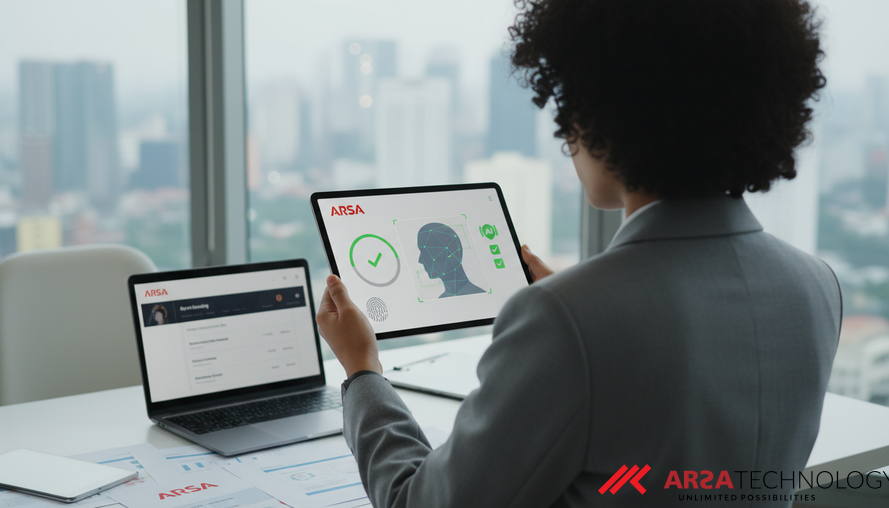

Fintech in 2026: How AI Is Reshaping the Stack
The financial technology (fintech) landscape is evolving at an unprecedented pace, driven by innovations in artificial intelligence and a relentless demand for enhanced security. As digital transactions become the norm, the need for robust identity verification solutions has never been more critical. At the forefront of this evolution is understanding how active liveness detection challenge response works to differentiate real users from sophisticated spoofing attempts. This technology is not just a feature; it’s a fundamental layer of trust in the digital economy, crucial for preventing fraud and ensuring regulatory compliance across global markets.
In the dynamic world of fintech, where the speed of innovation often outpaces security measures, the deployment of advanced biometric solutions like ARSA’s Face Recognition & Liveness API is becoming indispensable. These tools empower financial institutions to secure their digital channels, streamline customer onboarding, and maintain integrity in an increasingly complex threat environment.
The Imperative for Advanced Liveness Detection in Fintech
Fraudsters are constantly developing new methods to bypass security protocols, from static image presentation attacks to deepfake videos. Traditional liveness detection methods, which might rely on simple blinking or smiling, are no longer sufficient. This is where active liveness detection, particularly with a challenge-response mechanism, proves its value. It introduces an interactive element that is significantly harder for attackers to replicate, ensuring that the person being verified is physically present and alive.
The stakes are high. Financial institutions face stringent regulatory obligations under frameworks like PSD2, eIDAS, and FinCEN, which mandate robust customer identification and anti-money laundering (AML) protocols. Failing to implement effective fraud prevention measures can lead to significant financial losses, reputational damage, and severe penalties. ARSA Technology, with its seven years of expertise in AI and IoT solutions, understands these challenges and engineers systems that work in the real world, at scale, and under real industrial constraints.
How Active Liveness Detection Challenge Response Works
Active liveness detection with a challenge-response mechanism requires the user to perform specific, randomized actions during the verification process. Unlike passive liveness detection, which analyzes subtle physiological cues without user interaction, active liveness directly engages the user. This interactive approach significantly elevates the security posture against various presentation attacks.
Typically, a user might be prompted to perform an active liveness head movement challenge, such as turning their head left, right, up, or down, or perhaps nodding. The system then analyzes the video stream in real-time to confirm that these movements are natural and correspond to the prompts. This process involves several key steps:
1. Prompt Generation: The system generates a random, unique challenge for the user. This randomness is crucial to prevent pre-recorded video attacks.
2. User Interaction: The user performs the requested action, captured by their device’s camera.
3. Real-time Analysis: The AI engine processes the video based liveness detection API stream, analyzing facial movements, depth, texture, and other biometric indicators. It looks for consistency between the user’s actions and the generated prompt, as well as signs of spoofing.
4. Liveness Confirmation: If the movements are verified as legitimate and no spoofing indicators are found, the system confirms liveness.
ARSA’s Face Recognition & Liveness API offers both active and passive liveness detection, providing a comprehensive defense against fraud. The active liveness detection includes challenge-response based verification that effectively prevents photo and video replay attacks, enforcing a medium difficulty by default for optimal user experience and security. For a deeper dive into related concepts, you can explore understanding how challenge-response liveness detection works and the intricacies of passive liveness detection.
Building a Secure Liveness Check Video Flow
For fraud prevention engineers, understanding how to build a liveness check video flow is paramount. ARSA’s Face Recognition & Liveness API simplifies this process, allowing developers to integrate robust liveness detection into their applications quickly. The API provides a complete identity layer, not just a single comparison endpoint, making it ideal for identity verification platforms, digital onboarding, and e-KYC solutions.
The typical usage flow involves enrolling a user’s face into a secure collection, performing a liveness check during onboarding or login, and then identifying or verifying the user during access. The API returns confidence scores and structured results, enabling informed decision-making. This streamlined approach allows fintech companies to launch face login in days, not months, significantly accelerating time-to-market for new features.
Advanced Features for Robust Fraud Prevention
ARSA’s Face Recognition & Liveness API goes beyond basic liveness checks, offering a suite of features designed to combat sophisticated fraud:
- Random Head Pose Liveness Verification: This advanced technique employs unpredictable head movement challenges, making it extremely difficult for fraudsters to use pre-recorded videos or masks. The system dynamically generates unique sequences, ensuring that each verification is distinct and secure.
- 1:1 Face Verification: Confirms whether two faces belong to the same person, crucial for login and step-up authentication with configurable similarity thresholds.
- 1:N Face Recognition: Identifies a person against a face database, designed for access control and monitoring. This is essential for managing large user bases and detecting duplicate accounts.
- Face Database Management: Enroll, update, and remove identities from secure, per-account isolated databases, ensuring data privacy and tenant separation.
- Age & Gender Estimation and Expression Detection: While not directly for liveness, these features can provide additional data points for risk assessment and user profiling, detecting expressions like neutral, happy, sad, surprise, or anger.
The API supports JPEG/PNG image formats and MP4/WebM video for active liveness challenges, providing flexibility for various integration scenarios. With simple `x-key-secret` API key authentication and comprehensive Face Recognition API documentation, developers can get started with their first API call in under 5 minutes.
Business Outcomes and Compliance Readiness
Deploying ARSA’s Face Recognition & Liveness API delivers tangible business outcomes for fintech organizations:
- Prevent Presentation Attacks and Synthetic Identity Fraud: By accurately detecting liveness, the API acts as a critical barrier against fraudsters attempting to use photos, videos, or 3D masks. For more on this, consider strategies for combating deepfake fraud.
- Meet KYC and AML Obligations: The robust identity verification capabilities help organizations comply with strict Know Your Customer (KYC) and Anti-Money Laundering (AML) regulations, including those under PSD2, eIDAS, and FinCEN. This is vital for maintaining operational integrity and avoiding costly fines.
- Cost Efficiency: As a cloud SaaS solution, there’s no infrastructure to manage, reducing operational overhead. Organizations pay only for what they use, with transparent Face API pricing plans.
- Enhanced User Experience: A quick and reliable liveness check improves the user journey, reducing friction during onboarding and authentication.
- Data Privacy and Security: With isolated per-account face databases and adherence to international standards like GDPR, ARSA ensures that sensitive biometric data remains secure and private.
ARSA offers flexible pricing tiers, including a Basic free 30-day trial with 100 calls/month and 100 face IDs, requiring no credit card to start. Paid plans scale from Pro ($29/mo for 5,000 calls) to Mega ($1,290/mo for 500,000 calls), with all features included across every plan. This allows fintech startups and large enterprises alike to scale their security solutions effectively. Developers also benefit from a dedicated developer dashboard with usage analytics and support for multiple images per face ID for higher accuracy.
The Future of Fintech Security with ARSA Technology
As fintech continues its rapid expansion, the need for intelligent, adaptable security solutions will only intensify. ARSA Technology is committed to providing production-ready AI systems that empower businesses to navigate this future with confidence. Our Face Recognition & Liveness API represents a critical component of this vision, offering unparalleled accuracy and reliability in identity verification.
Ready to fortify your fintech platform against evolving threats and ensure seamless, secure digital experiences for your users? Explore the ARSA Face Recognition & Liveness API today or contact ARSA solutions team to discuss how our advanced AI capabilities can transform your security stack. You can also create a free Face API account to experience the power of ARSA’s liveness detection firsthand. For a broader view of our offerings, visit all ARSA products.
—
FAQ Section
Q: What is the primary benefit of an active liveness head movement challenge?
A: The primary benefit is enhanced security against spoofing attacks. By requiring users to perform specific, randomized head movements, it becomes significantly harder for fraudsters to use static images, videos, or masks to bypass verification, ensuring the user is physically present and alive.
Q: How does a video based liveness detection API integrate into existing fintech applications?
A: A video based liveness detection API, like ARSA’s, integrates via a simple REST API. Developers can incorporate a few lines of code to capture video streams, send them to the API for analysis, and receive real-time liveness verification results, streamlining digital onboarding and authentication processes.
Q: What makes random head pose liveness verification more secure than simpler methods?
A: Random head pose liveness verification is more secure because it introduces unpredictability. Instead of fixed movements, the system generates unique, randomized prompts, making it nearly impossible for attackers to anticipate or pre-record the required actions, thereby thwarting sophisticated presentation attacks.
Stop Guessing, Start Optimizing.
Discover how ARSA Technology drives profit through intelligent systems.