
Optimizing Safety: AI Restricted Area Monitoring for Oil and Gas Facilities
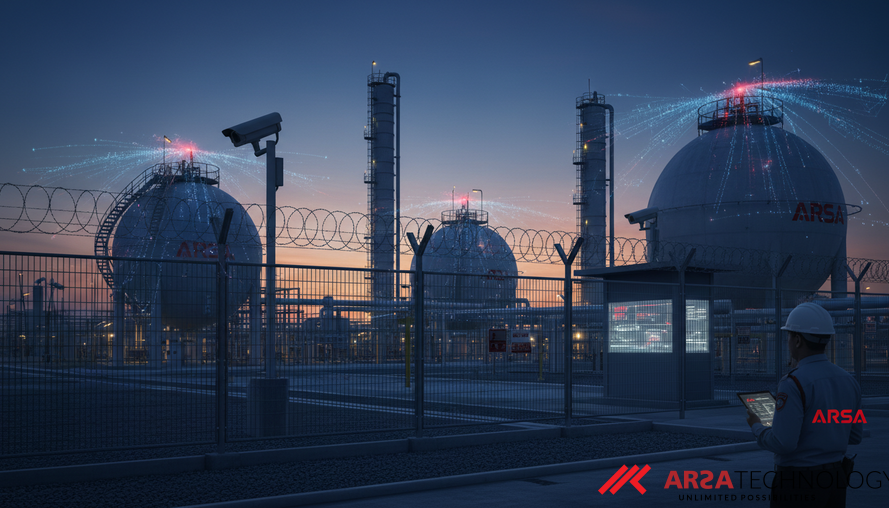
In the high-stakes environment of oil and gas facilities, ensuring stringent safety protocols and preventing unauthorized access is paramount. Traditional security measures, while foundational, often fall short in providing the real-time, intelligent insights needed to manage vast, complex sites effectively. This is where AI restricted area monitoring for oil and gas facilities emerges as a transformative solution, offering unparalleled precision and proactive threat detection. For HSE Directors navigating the complexities of operational safety and regulatory compliance, understanding the capabilities and deployment models of advanced AI is crucial.
ARSA Technology specializes in delivering production-ready AI and IoT solutions designed for mission-critical environments. Our approach upgrades passive surveillance into active intelligence, enabling organizations to achieve superior security, optimize operations, and ensure compliance without compromising data sovereignty.
The Imperative for Advanced AI Restricted Area Monitoring in Oil and Gas
Oil and gas operations inherently involve hazardous zones, volatile materials, and critical infrastructure. Any unauthorized entry or deviation from safety protocols can lead to catastrophic consequences, including environmental damage, severe injuries, and significant financial losses. The sheer scale of these facilities, often spread across remote or expansive terrains, makes comprehensive human-led monitoring impractical and prone to error.
This challenge is compounded by the need for continuous, 24/7 surveillance in varying weather conditions and lighting. An effective intrusion detection system for hazardous zones must not only identify unauthorized presence but also differentiate between legitimate personnel and potential threats, detect specific safety violations, and trigger immediate, precise alerts. Legacy systems frequently generate false positives, leading to alert fatigue and delayed responses, undermining their effectiveness.
Key Challenges in Securing Hazardous Zones
Securing oil and gas facilities presents unique hurdles:
- Vast Perimeters: Miles of fencing and diverse terrain make physical patrolling inefficient.
- Harsh Environments: Extreme temperatures, dust, rain, and corrosive atmospheres challenge hardware reliability.
- Complex Operations: Multiple contractors, varied equipment, and dynamic work zones complicate access control.
- Regulatory Compliance: Strict industry standards and government regulations demand meticulous record-keeping and rapid incident response.
- Data Privacy and Sovereignty: Sensitive operational data and security footage must remain within the organization’s control, especially in critical national infrastructure.
These challenges necessitate a robust, intelligent solution that can adapt to the environment, integrate with existing infrastructure, and provide actionable insights without constant human oversight.
How ARSA Basic Safety Guard Delivers Superior Perimeter Protection
ARSA Technology’s ARSA Basic Safety Guard (Software) is specifically engineered to address these demands. As part of our comprehensive AI Video Analytics Software overview, Basic Safety Guard transforms standard CCTV feeds into an intelligent, proactive security system. It is deployed on-premise, leveraging your existing servers to deliver real-time analysis directly at the source.
This software solution excels in:
- Restricted Area Monitoring: Precisely defines and monitors designated zones, immediately alerting when unauthorized entry occurs.
- PPE Detection: Automatically identifies if personnel are wearing required Personal Protective Equipment (PPE) like helmets, vests, and masks, ensuring compliance.
- Safety Violation Alerts: Detects specific unsafe behaviors or conditions, such as loitering in dangerous areas or unauthorized vehicle movement.
- Compliance Reporting: Generates detailed event logs and reports, crucial for audits and demonstrating adherence to safety regulations.
- Event Logging: All detected incidents are meticulously recorded with timestamps and video clips for forensic review and training.
By centralizing safety monitoring across sites and providing full data ownership, ARSA empowers HSE Directors with the tools to significantly reduce risks and enhance operational efficiency.
Evaluating an Intrusion Detection System for Hazardous Zones
When considering an intrusion detection system for hazardous zones, HSE Directors should evaluate several critical factors beyond basic detection:
1. Accuracy and Reliability: False alarms are costly. The system must offer high accuracy in diverse conditions to prevent alert fatigue and ensure legitimate threats are never missed. ARSA’s AI models are trained on extensive datasets, achieving high precision even in challenging industrial environments.
2. Deployment Flexibility: Can it integrate with your existing CCTV infrastructure? ARSA’s AI Video Analytics Software is hardware-agnostic, meaning it works with your current cameras, eliminating the need for costly replacements. It deploys on existing servers, minimizing new hardware investment.
3. Real-time Actionable Insights: Detection is only useful if it leads to immediate action. The system should provide real-time alerts to relevant personnel, enabling rapid response to incidents.
4. Data Sovereignty and Security: For sensitive oil and gas operations, data must remain on-site. ARSA’s on-premise deployment ensures no video streams or analytical data leave your network, adhering to strict data privacy and compliance requirements.
5. Scalability: Can the solution grow with your facility? Our software is scalable by compute resources, allowing you to expand monitoring capabilities as needed, from a single restricted zone to an entire multi-site operation.
The Advantages of On-Premise AI Perimeter Protection for Mining Sites and O&G
While the primary focus is on oil and gas, the benefits of on-premise AI perimeter protection for mining sites and similar industrial environments are equally compelling. The core advantage lies in data control. In sectors dealing with critical national infrastructure and proprietary operational data, cloud-based solutions often introduce unacceptable risks related to data transfer, storage, and potential vulnerabilities.
ARSA’s on-premise software deployment ensures:
- Full Data Ownership: Your data stays within your infrastructure, under your direct control.
- Enhanced Security: Reduced exposure to external cyber threats inherent in cloud environments.
- Regulatory Compliance: Easier adherence to local and international data protection laws (e.g., Indonesia PDPA, EU GDPR for international operations).
- Low Latency: Processing at the edge or on local servers minimizes delays, crucial for real-time threat response.
- Operational Independence: The system functions reliably even without constant internet connectivity, vital for remote or isolated facilities.
This model provides the peace of mind that comes with complete control over your security infrastructure and sensitive information.
Achieving Compliance and Operational Efficiency with Automated Restricted Zone Alerts Edge Computing
Implementing automated restricted zone alerts edge computing solutions significantly boosts both compliance and operational efficiency. By processing video streams at the edge—either on your existing servers or dedicated edge hardware like ARSA’s AI Box series—the system can detect events and trigger alerts almost instantaneously. This real-time capability is invaluable for:
- Proactive Incident Prevention: Alerts enable security teams to intervene before a minor breach escalates into a major incident.
- Streamlined Compliance: Automated reporting provides an auditable trail of all detected safety violations and intrusions, simplifying regulatory compliance.
- Reduced Manual Workload: AI takes over the tedious task of continuous video monitoring, freeing up security personnel for higher-value tasks and rapid response.
- Optimized Resource Allocation: By identifying high-risk areas and patterns, resources can be deployed more effectively.
While ARSA’s Basic Safety Guard is a software-only solution for existing servers, our ARSA Traffic Monitor (AI Box) demonstrates the power of edge computing for other applications, highlighting ARSA’s expertise across deployment models.
Ensuring Safety Zone Monitoring Without Internet Dependency
A critical requirement for many oil and gas facilities, especially those in remote locations or with strict cybersecurity policies, is the ability to perform safety zone monitoring without internet connectivity. ARSA’s AI Video Analytics Software, including Basic Safety Guard, is designed for fully offline operation.
This means:
- Air-Gapped System Capability: The core AI processing and alerting functions do not require an internet connection, making it suitable for air-gapped or highly isolated networks.
- Reliability in Remote Areas: Operations continue uninterrupted even if external network access is compromised or unavailable.
- Enhanced Security Posture: Eliminates potential attack vectors associated with cloud connectivity.
This robust offline capability ensures that your critical safety and security systems remain operational and secure under all circumstances.
Implementing ARSA’s AI Video Analytics Software
Deploying ARSA’s AI Video Analytics Software is a straightforward process designed for minimal disruption:
1. Assessment: Our team collaborates with you to understand your specific facility layout, existing CCTV infrastructure, and safety requirements.
2. Installation: The software is installed on your designated servers, integrating seamlessly with your current video management system.
3. Configuration: Analytics modules are configured for your specific needs, defining restricted zones, PPE requirements, and alert protocols.
4. Training & Support: Your team receives comprehensive training, and ARSA provides ongoing support to ensure optimal performance and continuous improvement.
Our solutions are built with a REST API for flexible integration with your existing IT infrastructure, dashboards, and reporting tools, ensuring a cohesive security ecosystem. You can explore all ARSA products to see our full range of AI capabilities.
Conclusion
For HSE Directors in the oil and gas sector, the transition from reactive surveillance to proactive, intelligent security is no longer an option but a necessity. AI restricted area monitoring for oil and gas facilities offers the precision, reliability, and data control required to safeguard personnel, protect assets, and ensure stringent compliance. By choosing an on-premise, hardware-agnostic solution like ARSA Basic Safety Guard, organizations can leverage their existing investments while gaining a powerful, future-proof security advantage.
Ready to transform your facility’s safety and security? Contact ARSA solutions team today for a consultation and discover how our AI Video Analytics Software can be tailored to your unique operational challenges.
—
Stop Guessing, Start Optimizing.
Discover how ARSA Technology drives profit through intelligent systems.
