
Parking in 2026: How an AI Vehicle Counting System for Smart City Traffic Management Is Changing the Game
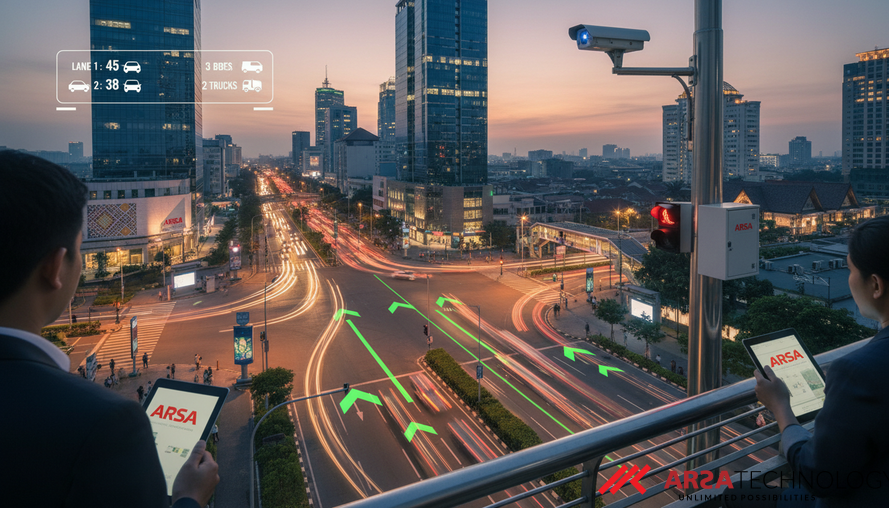
The urban landscape is constantly evolving, and with it, the challenges of managing traffic and parking. As we look towards 2026 and beyond, city planners and transportation authorities are increasingly turning to advanced technologies to alleviate congestion, optimize resource allocation, and enhance urban mobility. At the forefront of this transformation is the AI vehicle counting system for smart city traffic management, a revolutionary approach that promises to turn passive infrastructure into intelligent decision engines. This technology is not just about counting cars; it’s about understanding the intricate dynamics of urban traffic in real-time, enabling proactive interventions and sustainable development.
Historically, traffic data collection relied on manual observations, pneumatic tubes, or induction loops – methods often costly, labor-intensive, and prone to inaccuracies. These traditional systems provided snapshots, not a continuous, granular understanding of traffic flow. However, the advent of AI-powered video analytics has completely reshaped this paradigm, offering unprecedented levels of detail and efficiency.
The Evolution of Traffic Intelligence: Beyond Basic Counting
Modern smart cities demand more than just simple vehicle counts. They require sophisticated intelligence to manage complex traffic patterns, predict congestion, and respond to incidents swiftly. This is where AI video analytics truly shines. By leveraging existing CCTV infrastructure, an advanced AI vehicle counting system for smart city traffic management can deliver a comprehensive suite of insights.
One of the most significant advancements is automated vehicle classification using CCTV. Instead of merely registering a vehicle’s presence, AI can distinguish between cars, motorcycles, trucks, and buses. This capability is crucial for understanding the composition of traffic, which directly impacts road wear, emission levels, and the effectiveness of lane assignments or tolling strategies. For instance, a high percentage of heavy vehicles might indicate a need for dedicated truck lanes or alternative routing to protect residential areas.
Beyond classification, these systems provide detailed metrics on speed, direction, and occupancy. This granular data allows city transport planners to identify bottlenecks before they become critical, optimize traffic light timings dynamically, and even inform future infrastructure projects with concrete, data-backed evidence. The shift from reactive management to predictive optimization is a cornerstone of smart city development, leading to more efficient commutes and reduced environmental impact.
Real-Time Traffic Flow Analytics with Edge Computing
The effectiveness of any traffic management system hinges on its ability to deliver insights in real-time. Delays in data processing can render information obsolete, leading to missed opportunities for intervention. This is precisely why real-time traffic flow analytics edge computing is a game-changer. Edge computing processes data directly at the source – in this case, at the intersection or monitoring point – rather than sending it to a centralized cloud server.
This localized processing offers several critical advantages:
- Minimal Latency: Decisions can be made almost instantaneously, allowing for dynamic adjustments to traffic signals or immediate alerts for incidents like accidents or illegal parking.
- Enhanced Data Privacy: With data processed on-device, sensitive video streams and inference results remain within the local network, addressing growing concerns about data sovereignty and compliance. ARSA Technology prioritizes this, offering solutions that keep data secure and local.
- Reduced Bandwidth Costs: Transmitting raw video footage to the cloud is bandwidth-intensive and expensive. Edge computing significantly reduces this burden by sending only metadata or actionable insights, not entire video streams.
- Operational Reliability: Systems can operate autonomously even during network outages, ensuring continuous monitoring and management.
ARSA Technology’s ARSA Traffic Monitor (AI Box) exemplifies this edge computing philosophy. It’s a plug-and-play device designed for rapid deployment, transforming existing CCTV cameras into intelligent sensors within minutes. This means cities don’t need to overhaul their entire surveillance infrastructure; they can simply augment it with smart AI capabilities.
AI Traffic Monitoring Without Cloud Dependency
For many government agencies and critical infrastructure operators, cloud dependency is a significant concern. Data security, compliance with local regulations (like Indonesia’s PDPA or Europe’s GDPR), and the need for air-gapped systems often necessitate on-premise or edge solutions. This is where the capability for AI traffic monitoring without cloud becomes indispensable.
ARSA’s AI Box Series, including the Traffic Monitor, is engineered precisely for these requirements. The system performs all AI processing locally, ensuring that video streams and sensitive traffic data never leave the network unless explicitly configured by the user. This full data ownership is paramount for public sector entities and enterprises handling sensitive information, providing peace of mind and robust security. The AI Box Series overview highlights how these devices are built for environments where privacy and reliability are non-negotiable.
This approach not only enhances security but also simplifies IT management by reducing reliance on external cloud services. For city transport planners, it means greater control over their data and infrastructure, aligning with strategic goals for digital sovereignty and resilience.
A Smart Traffic Counting Device for Intersections and Beyond
Intersections are the arteries of urban traffic, and their efficient management is critical to overall city mobility. A smart traffic counting device for intersections powered by AI can analyze multiple lanes and directions simultaneously, providing a holistic view of traffic dynamics. ARSA Traffic Monitor, for example, can process up to three camera streams, offering comprehensive data on:
- Vehicle Counting and Classification: Accurate counts and categorization of vehicles passing through.
- Traffic Flow Analysis: Understanding movement patterns, average speeds, and potential bottlenecks.
- Congestion Detection: Real-time identification of traffic jams and slow-moving areas.
- Lane Utilization: Insights into how effectively different lanes are being used.
- Incident Detection: Automated alerts for accidents, stalled vehicles, or unusual activities.
The insights generated by such a system are invaluable for data-driven urban planning. By understanding peak hours, common congestion points, and the impact of specific events, city planners can make informed decisions to optimize traffic flow by up to 40%, leading to reduced commute times, lower fuel consumption, and decreased emissions. This automation of vehicle counting also frees up human resources, allowing personnel to focus on more complex tasks.
The benefits extend beyond just traffic. Imagine integrating this data with smart parking systems, guiding drivers directly to available spots, further reducing cruising time and congestion. The possibilities for creating truly intelligent urban environments are vast, touching upon every aspect of city life, from public safety to environmental sustainability. While our focus here is on traffic, ARSA’s broader product portfolio, such as the ARSA Self-Check Health Kiosk, demonstrates our commitment to leveraging AI and IoT for diverse public and enterprise needs.
The ARSA Advantage: Practical AI for Real-World Challenges
ARSA Technology has been at the forefront of deploying practical AI solutions for over seven years, with a proven track record across government and enterprise clients. Our commitment to accuracy, scalability, privacy, and operational reliability is embedded in every product. The ARSA Traffic Monitor (AI Box) is a testament to this philosophy, offering a robust, easy-to-deploy solution that delivers tangible business outcomes.
By choosing ARSA, city transport planners gain:
- Optimized Traffic Flow: Achieve significant reductions in congestion and improve journey times.
- Data-Driven Urban Planning: Make informed decisions based on accurate, real-time, and historical data.
- Cost Efficiency: Automate manual counting processes and reduce operational expenses.
- Enhanced Safety: Faster incident detection and response times.
- Future-Proof Infrastructure: A scalable solution that grows with your city’s needs.
The future of urban mobility in 2026 and beyond will be defined by intelligent systems that work seamlessly with existing infrastructure. An AI vehicle counting system for smart city traffic management is not just a technological upgrade; it’s a strategic investment in the efficiency, sustainability, and liveability of our cities.
Frequently Asked Questions
What are the key benefits of an AI vehicle counting system for smart city traffic management?
An AI vehicle counting system provides real-time insights into traffic flow, vehicle classification, and congestion, enabling city planners to optimize traffic light timings, reduce congestion by up to 40%, and make data-driven decisions for urban planning. It also enhances safety through faster incident detection and reduces operational costs by automating manual counting.
How does automated vehicle classification using CCTV improve traffic management?
Automated vehicle classification using CCTV allows systems to differentiate between various vehicle types (cars, trucks, buses, motorcycles). This detailed understanding helps in tailoring traffic management strategies, such as optimizing lane usage, managing heavy vehicle routes, and assessing environmental impact more accurately than simple vehicle counts.
What are the advantages of real-time traffic flow analytics edge computing?
Real-time traffic flow analytics edge computing processes data directly at the source, minimizing latency for immediate decision-making. It also enhances data privacy by keeping sensitive video streams within the local network, reduces bandwidth costs by transmitting only metadata, and ensures operational reliability even during network outages.
Can ARSA’s AI traffic monitoring solutions operate without cloud dependency?
Yes, ARSA’s AI traffic monitoring solutions, like the ARSA Traffic Monitor (AI Box), are designed for AI traffic monitoring without cloud dependency. All AI processing occurs locally on the edge device, ensuring full data ownership, compliance with privacy regulations, and robust security for sensitive government and enterprise environments.
To learn more about how ARSA Technology can transform your city’s traffic management, explore all ARSA products or contact ARSA solutions team today for a consultation.
Stop Guessing, Start Optimizing.
Discover how ARSA Technology drives profit through intelligent systems.