

Revolutionizing Retail: How Customer Heatmap Analytics for Store Layout Optimization Drives Mall Success
In the dynamic world of retail and hospitality, understanding customer behavior is no longer a luxury but a necessity. Mall property managers, in particular, face the constant challenge of optimizing tenant performance, enhancing visitor experience, and ensuring operational efficiency. The key to unlocking these improvements lies in granular data insights, and increasingly, this is being achieved through advanced AI solutions. One such transformative technology is customer heatmap analytics for store layout optimization, which provides an unparalleled view into how shoppers interact with physical spaces.
Hospitality leaders are now strategically investing in on-premise AI analytics to gain a competitive edge. These solutions, like those offered by ARSA Technology, empower businesses to process sensitive data locally, ensuring privacy and compliance while delivering real-time, actionable intelligence. By analyzing visitor flow and engagement, malls can make data-driven decisions that directly impact their bottom line and tenant satisfaction.
The Evolving Landscape of Hospitality and Retail Analytics
For decades, mall management relied on anecdotal evidence, manual observations, and basic people counting to gauge performance. While these methods provided some insight, they lacked the precision and depth required to truly understand complex customer journeys. The advent of AI video analytics has fundamentally changed this. Modern malls are now leveraging existing CCTV infrastructure, transforming passive security cameras into powerful sensors that capture rich behavioral data. This shift allows for a more scientific approach to retail strategy, moving beyond simple footfall to detailed engagement metrics.
Unlocking Insights with Customer Heatmap Analytics for Store Layout Optimization
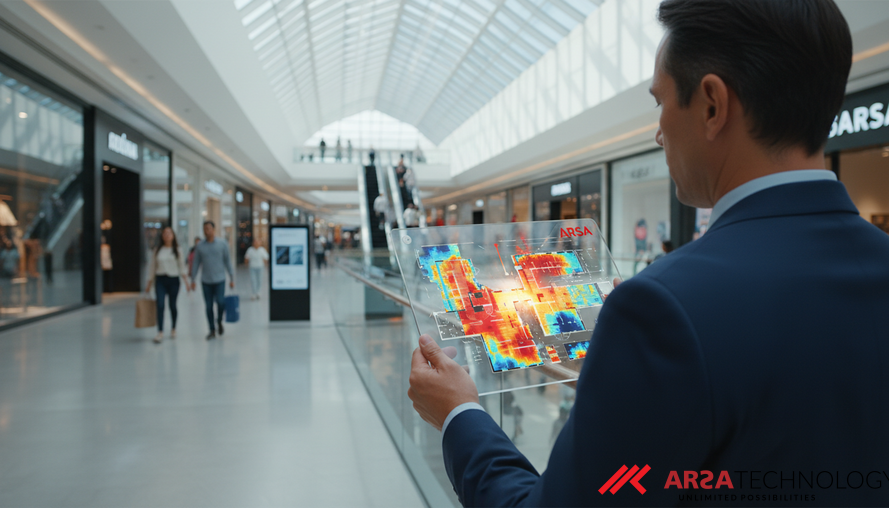
At its core, customer heatmap analytics for store layout optimization visualizes visitor density and movement patterns within a retail environment. Imagine a digital overlay on your mall’s floor plan, where vibrant colors highlight areas with high foot traffic and prolonged engagement, while cooler tones indicate less frequented spots. This visual representation is invaluable for mall property managers seeking to refine their space.
These heatmaps are generated by sophisticated AI algorithms that process video feeds from existing CCTV cameras, performing customer movement pattern analysis CCTV. By tracking individuals (anonymously, if preferred) as they navigate the mall, the system identifies popular pathways, bottlenecks, and areas where customers tend to linger. This data can reveal:
- Which entrances are most used.
- The most effective routes customers take between anchor stores.
- Areas where promotional displays capture significant attention.
- Underutilized spaces that could be repurposed or offered to new tenants.
Such insights are critical for strategic planning, enabling managers to position high-value tenants in optimal locations, design more intuitive wayfinding, and even adjust common area layouts to improve comfort and flow.
Beyond Foot Traffic: AI Dwell Time Analysis for Shopping Malls
While foot traffic is a primary indicator, true engagement is measured by how long customers stay in a particular area. This is where AI dwell time analysis for shopping malls becomes indispensable. Dwell time refers to the duration a person spends in a specific zone, in front of a storefront, or interacting with a display. High dwell times often correlate with increased interest and a higher likelihood of conversion.
For mall property managers, understanding dwell time offers several strategic advantages:
- Tenant Performance: Identify which stores or displays are successfully capturing attention. This data can support tenant negotiations, highlight successful marketing strategies, and provide actionable feedback to underperforming retailers.
- Common Area Optimization: Assess the effectiveness of seating areas, food courts, and entertainment zones. If dwell times are low in these areas, it might indicate a need for improved amenities or layout adjustments.
- Promotional Effectiveness: Measure how long visitors engage with digital signage or pop-up kiosks, providing concrete data on the ROI of marketing initiatives.
ARSA’s AI Video Analytics Software, specifically the ARSA Smart Retail Counter (Software), provides these capabilities, offering detailed metrics on people counting, queue analysis, and dwell time tracking, all from a centralized dashboard.
Strategic Advantages of On-Premise AI Analytics for Mall Management
The decision to invest in on-premise AI analytics is often driven by critical business considerations, particularly for large enterprises and government entities in the hospitality sector. Unlike cloud-based solutions that send data off-site for processing, on-premise deployments ensure that all video streams, inference results, and metadata remain entirely within the organization’s infrastructure.
This approach offers several distinct advantages:
- Full Data Ownership and Privacy: For mall property managers dealing with sensitive customer data, maintaining full control over information is paramount. On-premise solutions guarantee that no biometric or behavioral data leaves your network, aligning with stringent privacy regulations like GDPR and Indonesia PDPA.
- Enhanced Security: By keeping data local, the risk of external cyber threats and data breaches is significantly reduced. This is crucial for maintaining trust with tenants and visitors.
- Low Latency and Real-time Processing: Edge and on-premise processing minimize the delay between data capture and analysis, enabling truly real-time alerts and insights. This is vital for immediate operational responses, such as managing crowd density or responding to security incidents.
- No Cloud Dependency or Recurring Costs: Eliminating reliance on cloud infrastructure means no ongoing cloud subscription fees for data processing or storage, leading to predictable operational costs and better long-term ROI.
- Customization and Integration: On-premise software, like ARSA’s AI Video Analytics Software overview, can be more easily customized and integrated with existing IT systems, security protocols, and business intelligence platforms via a REST API, providing a seamless operational experience.
Optimizing Retail Floor Plan with Heatmap Data and ARSA Smart Retail Counter
To truly optimize retail floor plan with heatmap data, mall property managers need a robust and reliable analytics platform. The ARSA Smart Retail Counter (Software) is specifically designed for this purpose. Deployed on existing servers, it transforms your current CCTV cameras into intelligent sensors without requiring new hardware.
The Smart Retail Counter offers a suite of powerful analytics modules:
- People Counting: Accurately track entry and exit numbers, providing precise occupancy data for individual stores or entire zones.
- Heatmaps and Dwell Time: Generate detailed heatmaps showing high-traffic areas and analyze how long visitors spend in specific locations. This helps identify popular product displays, effective promotional zones, and areas needing improvement.
- Queue Analysis: Monitor queue lengths and waiting times at cash registers or customer service desks, allowing for real-time staffing adjustments and improved customer satisfaction.
- Conversion Analytics: By integrating with POS systems via its REST API, the software can help correlate foot traffic and dwell time with actual sales, providing a clearer picture of conversion rates.
This centralized processing capability allows mall managers to oversee multiple stores and common areas from a single, intuitive dashboard, gaining chain-wide retail intelligence. The privacy-first design ensures that all analytics are conducted responsibly, protecting individual identities while providing aggregated insights.
Maximizing Tenant Performance with Foot Traffic Analytics
Effective foot traffic analytics for tenant performance is a game-changer for mall property managers. By providing tenants with accurate data on visitor numbers, engagement levels, and demographic estimations (where applicable and privacy-compliant), managers can foster stronger relationships and help retailers improve their strategies.
This data can be used to:
- Justify Rent and Lease Renewals: Presenting tenants with clear data on the traffic their location receives can support rental agreements and demonstrate the value of their space within the mall.
- Identify Growth Opportunities: Pinpoint areas of the mall that are underperforming in terms of traffic, prompting strategic interventions or re-evaluation of the tenant mix.
- Support Marketing Initiatives: Help tenants understand the impact of mall-wide promotions on their store’s traffic and engagement.
- Benchmarking: Allow tenants to compare their performance against anonymized averages within the mall, encouraging healthy competition and data-driven improvements.
Beyond retail, ARSA’s broader all ARSA products portfolio includes solutions like the ARSA Traffic Monitor (AI Box), which can further enhance overall mall infrastructure management by optimizing vehicle flow and parking.
Conclusion
The integration of advanced AI video analytics, particularly customer heatmap analytics for store layout optimization, represents a significant leap forward for mall property managers. By embracing on-premise solutions like the ARSA Smart Retail Counter (Software), hospitality leaders can gain deep, actionable insights into customer behavior, enhance security, ensure data privacy, and drive measurable improvements in operational efficiency and tenant profitability. This strategic investment not only optimizes physical spaces but also cultivates a more engaging and successful environment for both visitors and retailers.
Ready to transform your mall’s operational intelligence? Contact ARSA solutions team today to explore how our on-premise AI video analytics can empower your business.
—
FAQ
What is customer movement pattern analysis CCTV?
Customer movement pattern analysis CCTV uses AI algorithms to process video footage from existing surveillance cameras, identifying and tracking the paths customers take within a retail space. This data helps visualize popular routes, bottlenecks, and areas of interest, providing insights for layout optimization and operational planning.
How can AI dwell time analysis for shopping malls improve tenant performance?
AI dwell time analysis measures how long visitors spend in specific areas or in front of storefronts. By identifying high-dwell zones, mall managers can pinpoint successful tenant locations, evaluate the effectiveness of displays, and provide data-backed recommendations to tenants for improving engagement and potential sales.
What are the benefits of using heatmap data to optimize retail floor plan?
Using heatmap data to optimize retail floor plans allows managers to visually identify high-traffic and high-engagement areas, as well as underutilized spaces. This enables strategic decisions on tenant placement, common area design, and promotional display locations, ultimately improving customer flow, enhancing visitor experience, and boosting overall mall profitability.
Why choose on-premise AI analytics for a shopping mall instead of cloud-based?
On-premise AI analytics, such as ARSA’s solutions, offer full data ownership, enhanced security, and compliance with privacy regulations by keeping all video streams and analytics data within your local infrastructure. This minimizes latency for real-time insights and eliminates recurring cloud processing costs, providing greater control and predictable expenses for mall property managers.
—
Stop Guessing, Start Optimizing.
Discover how ARSA Technology drives profit through intelligent systems.
