
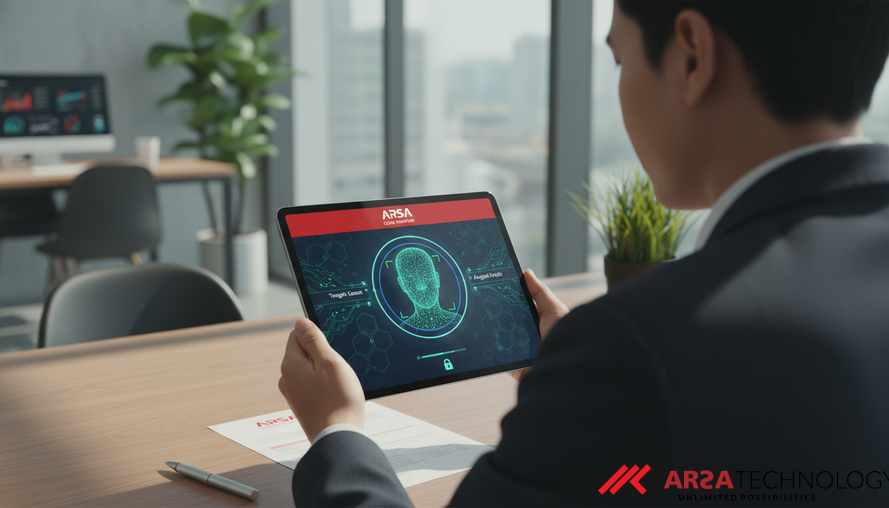

Securing Digital Banking: Understanding How Active Liveness Detection Challenge Response Works
In the rapidly evolving landscape of digital banking, the integrity of identity verification is paramount. As financial transactions increasingly move online, the threat of sophisticated fraud, including deepfakes and presentation attacks, escalates. For fraud prevention engineers, understanding advanced security measures is not just an advantage—it’s a necessity. This article will delve into a critical technology: how active liveness detection challenge response works to safeguard digital identities and transactions.
The shift to digital platforms has brought unprecedented convenience but also new vulnerabilities. Traditional authentication methods are often insufficient against determined fraudsters employing tactics like printed photos, video replays, or even 3D masks to bypass biometric checks. This is where liveness detection becomes indispensable, ensuring that the person attempting to authenticate is a real, live individual present at the time of verification, not an imposter.
The Mechanics of Active Liveness Detection Challenge Response
Active liveness detection is a dynamic method that requires the user to perform specific actions, proving their physical presence. Unlike passive methods that analyze subtle cues without user interaction, active liveness directly engages the user in a challenge-response protocol. This typically involves a series of randomized prompts that are difficult for spoofing attempts to replicate in real-time.
At its core, an active liveness head movement challenge might instruct the user to turn their head left, right, up, or down, or to blink, smile, or speak a random phrase. The system then analyzes the video stream for these specific, natural movements. The key to its effectiveness lies in the unpredictability of these challenges. A robust system will employ random head pose liveness verification, presenting different sequences of movements each time, making it nearly impossible for a fraudster to pre-record or mimic the exact required actions.
When considering how to build a liveness check video flow, the process typically involves:
1. Instruction Display: The system presents clear, concise instructions to the user.
2. Video Capture: The user’s device camera captures a short video segment.
3. Challenge Execution: The user performs the requested actions (e.g., specific head turns, blinks).
4. AI Analysis: An AI engine analyzes the video for natural human movement, 3D depth, and consistency with the challenge. It looks for signs of artificiality that would indicate a spoofing attempt.
5. Result: The system returns a liveness score or a pass/fail determination.
ARSA Technology’s Face Recognition & Liveness API provides a sophisticated, cloud-based solution that incorporates both active and passive liveness detection. This API is designed for rapid integration, allowing digital banking platforms to launch secure face login in days, not months. It offers a comprehensive identity layer, not just a simple comparison endpoint, making it ideal for robust fraud prevention.
Why Active Liveness is Critical for Digital Banking Security
The primary advantage of active liveness detection is its formidable defense against presentation attacks (PAs) and synthetic identity fraud. PAs involve presenting a fabricated biometric sample to the sensor, such as a photo, video, or mask. Active liveness, especially with its challenge-response mechanism, significantly raises the bar for fraudsters.
For digital banking, this translates directly into enhanced security and compliance. Financial institutions must meet stringent KYC (Know Your Customer) and AML (Anti-Money Laundering) obligations under regulations like PSD2, eIDAS, and FinCEN. A reliable video based liveness detection API is crucial for verifying customer identities during onboarding and high-value transactions, ensuring that the person opening an account or authorizing a payment is indeed who they claim to be.
ARSA’s Face Recognition & Liveness API provides a robust set of features to meet these demands:
- 1:1 Face Verification: Confirming whether two faces belong to the same person, essential for login and step-up authentication.
- 1:N Face Recognition against a database: Identifying a person against a collection of enrolled identities, useful for access control and monitoring.
- Face Database Management: Securely enrolling, updating, and removing identities within isolated, per-account databases, ensuring data privacy and tenant separation.
- Active and Passive Liveness Detection: Combining the strengths of both methods to offer comprehensive anti-spoofing capabilities. Our active liveness detection includes challenge-response based verification, specifically designed to prevent photo and video replay attacks.
- Additional Features: Face detection with bounding boxes, age estimation, gender classification, and expression detection (neutral, happy, sad, surprise, anger) provide richer insights.
For organizations looking to integrate such advanced capabilities, ARSA Technology offers a production-ready Face Recognition & Liveness overview that is easy to deploy. The cloud SaaS model means there’s no infrastructure to manage, and with a simple x-key-secret API key authentication, the first API call can be made in under 5 minutes. Developers can explore the Face Recognition API documentation which includes cURL, Python, and JavaScript code examples.
Furthermore, ARSA’s API supports JPEG/PNG images and MP4/WebM video for active liveness, allowing for multiple images per face ID to achieve higher accuracy. This commitment to accuracy and ease of integration is why enterprises choose ARSA for critical identity verification needs. For a deeper dive into preventing sophisticated attacks, consider reading about Combating Synthetic Threats: How to Prevent Deepfake Fraud with Face Liveness Detection.
Business Outcomes and ROI
Implementing a sophisticated liveness detection solution like ARSA’s Face Recognition & Liveness API delivers tangible business outcomes:
- Reduced Fraud Losses: By effectively preventing presentation attacks and synthetic identity fraud, financial institutions protect their assets and customer trust.
- Streamlined Compliance: Meeting regulatory requirements (PSD2, eIDAS, FinCEN) becomes more manageable, avoiding hefty fines and reputational damage. For more on this, see Choosing the Best Face Recognition API for KYC Under FinCEN and BSA in the United States.
- Improved Customer Experience: A quick, intuitive liveness check enhances the user journey during onboarding and authentication, reducing friction.
- Cost Efficiency: The pay-as-you-go pricing model, with tiers from Basic Free (100 calls/month, 100 face IDs) to Mega ($1,290/mo for 500,000 calls, 500,000 face IDs), ensures you only pay for what you use. All features are included on every plan, with PayPal monthly subscription billing.
- Operational Simplicity: No infrastructure to manage means IT teams can focus on core banking innovations rather than system maintenance.
Fraud prevention engineers can monitor usage analytics through a dedicated developer dashboard, gaining insights into API performance and potential areas for optimization. For those exploring different liveness detection approaches, understanding What is Passive Liveness Detection and How Does It Work? can provide valuable context.
Conclusion
The future of digital banking hinges on robust, adaptable security measures. Understanding how active liveness detection challenge response works is fundamental for any organization committed to preventing fraud and ensuring regulatory compliance. ARSA Technology’s Face Recognition & Liveness API offers a powerful, scalable, and developer-friendly solution to integrate these critical capabilities. By leveraging advanced AI and a flexible cloud-based platform, digital banking providers can secure their ecosystems, build customer trust, and drive innovation. Ready to enhance your digital banking security? Create a free Face API account today and explore the possibilities. You can also review the Face API pricing plans or contact ARSA solutions team for tailored enterprise solutions.
FAQ
What is the purpose of an active liveness head movement challenge?
An active liveness head movement challenge requires a user to perform specific, randomized head movements (e.g., turn left, right, up, down) or other actions like blinking. This dynamic interaction proves the user’s physical presence in real-time, making it extremely difficult for fraudsters using photos, videos, or masks to spoof the system.
How does a video based liveness detection API prevent spoofing attacks?
A video based liveness detection API analyzes a live video stream for signs of genuine human interaction and subtle biometric cues. It uses AI to detect natural movements, 3D depth, and the absence of artifacts common in spoofing attempts (like screen reflections or flat images), thereby preventing presentation attacks.
What are the benefits of using random head pose liveness verification in digital banking?
Random head pose liveness verification enhances security by introducing unpredictability into the liveness check. By requiring varied, non-scripted head movements, it makes it nearly impossible for fraudsters to prepare pre-recorded videos or static images that can bypass the system, significantly reducing the risk of identity fraud in sensitive digital banking operations.
How can I integrate a liveness check video flow into my existing application?
Integrating a liveness check video flow typically involves using a robust API like ARSA’s Face Recognition & Liveness API. This cloud-based solution provides clear documentation and code examples (cURL, Python, JavaScript) to guide developers through capturing video, sending it to the API for analysis, and processing the liveness detection results, often with a simple API key authentication.
Stop Guessing, Start Optimizing.
Discover how ARSA Technology drives profit through intelligent systems.