
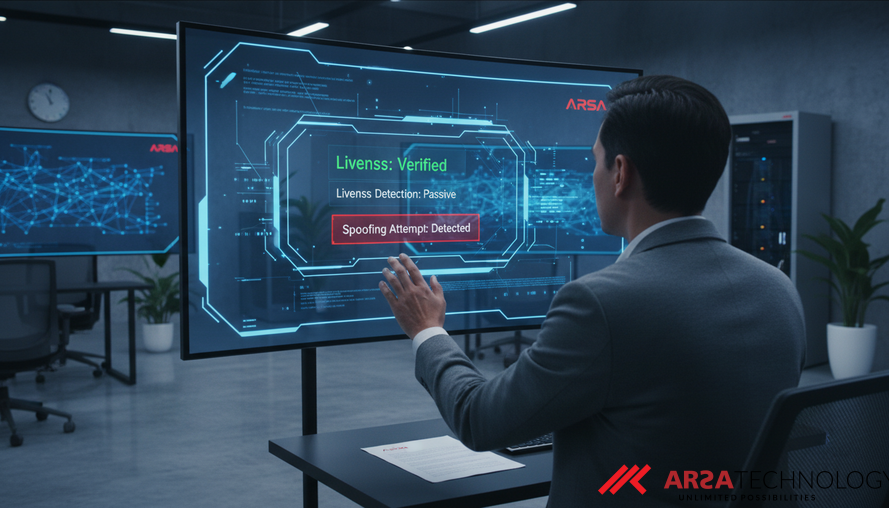

What is Passive Liveness Detection and How Does It Work? A Comprehensive Guide for Security Engineers
In the rapidly evolving landscape of digital identity verification, especially within the financial sector, ensuring that a user is a real, live person and not an imposter is paramount. This is precisely where the critical technology of passive liveness detection comes into play. Understanding what is passive liveness detection and how it works is no longer a niche concern but a fundamental requirement for security engineers building robust e-KYC (Know Your Customer) and digital onboarding systems, particularly for neobanks where security and user experience must coexist seamlessly.
Passive liveness detection is an advanced anti-spoofing technique that verifies the presence of a live human being during a biometric capture, typically a selfie, without requiring any explicit user action. Unlike active liveness, which asks users to perform specific movements like blinking or turning their head, passive liveness operates in the background, analyzing a single image or a short video stream to determine authenticity. This method significantly enhances user experience by removing friction, making the onboarding process faster and more intuitive, while still providing a formidable defense against presentation attacks.
The Critical Need for Anti-Spoofing in Digital Identity
Digital onboarding has revolutionized how neobanks acquire customers, offering unparalleled convenience. However, this convenience also opens doors for sophisticated fraudsters. Presentation attacks, where an attacker attempts to impersonate a legitimate user using photos, videos, masks, or even deepfakes, pose a significant threat. Without robust anti-spoofing measures, these systems are vulnerable, leading to financial losses, reputational damage, and non-compliance with stringent regulations like PSD2, eIDAS, and FinCEN.
ARSA Technology’s ARSA Face Recognition & Liveness API provides enterprise-grade solutions to combat these threats. It offers both passive and active liveness detection, ensuring comprehensive protection against various spoofing attempts. For a deeper dive into the complementary approach, you can read our guide on understanding how active liveness detection challenge response works.
What is Passive Liveness Detection and How Does It Work?
Passive liveness detection operates by analyzing subtle, inherent characteristics of a live human face that are incredibly difficult to replicate with a spoofing artifact. The process typically involves several sophisticated steps:
1. Image Capture: The user submits a single selfie image or a very short video clip (often just a few frames) through their device’s camera. The key here is the *lack* of user interaction beyond simply presenting their face.
2. Feature Extraction: The AI system, such as the ARSA Face Recognition & Liveness API, processes the input to extract a multitude of features. This goes beyond basic face detection with bounding boxes. It analyzes:
- Texture Analysis: Real skin has microscopic pores, wrinkles, and blemishes that differ significantly from printed photos or digital screens. The AI looks for these micro-textures.
- Reflectance and Specular Highlights: A live face reflects light differently than a flat image or a screen. The system analyzes how light interacts with the skin, looking for natural specular highlights and variations in reflectance across the face.
- Depth Cues: Even from a 2D image, advanced algorithms can infer depth. A live face has a natural 3D structure, whereas a photo or video replay on a screen is inherently flat.
- Subtle Movements (Micro-expressions): While the user isn’t actively moving, a live person exhibits minute, involuntary movements, blood flow changes, and micro-expressions that are absent in static or replayed images.
- Environmental Consistency: The system can also analyze the surrounding environment for inconsistencies that might indicate a spoofing attempt, such as unnatural lighting patterns or reflections from a screen.
3. Anti-Spoofing Face API Analysis: The extracted features are then fed into a highly trained machine learning model within the Face Recognition & Liveness overview. This model has been trained on vast datasets of both genuine live captures and various spoofing attacks (photos, videos, masks, etc.). It identifies patterns indicative of a live person versus an artifact. This is how anti-spoofing face API works at its core – by discerning the genuine from the fraudulent based on complex biometric and environmental signatures.
4. Liveness Score and Decision: The API returns a liveness score, indicating the probability that the presented face is live. Based on pre-defined thresholds, the system makes a decision: “Live” or “Spoof.” If a spoof is detected, the transaction is flagged or rejected, preventing a potential photo replay attack prevention.
Passive vs. Active Liveness Explained
While both passive and active liveness detection aim to prevent spoofing, their methodologies and user experiences differ significantly:
- Passive Liveness:
- User Experience: Seamless, frictionless. Requires no explicit user actions.
- Input: Single image or short, passive video clip.
- Mechanism: Analyzes intrinsic properties of the face and image for signs of life.
- Advantages: High user conversion rates, faster onboarding.
- Disadvantages: Can be more computationally intensive, requires highly sophisticated AI.
- Active Liveness:
- User Experience: Interactive. Requires the user to perform specific actions (e.g., blink, turn head, read numbers).
- Input: Video stream with guided actions.
- Mechanism: Verifies liveness by observing responses to challenges.
- Advantages: Can be easier to implement for basic spoofing, provides clear user feedback.
- Disadvantages: Can introduce friction, lower conversion rates if not designed well, susceptible to sophisticated video injection attacks if not combined with other measures.
Many robust identity verification platforms, like ARSA’s, offer both options, allowing businesses to choose the best fit for their specific risk appetite and user journey. For instance, a neobank might use passive liveness for low-risk transactions and active liveness for high-value account openings. To understand more about preventing identity fraud, especially in fintech, consider reading how to prevent identity fraud with face liveness detection API in fintech.
Implementing Single Image Liveness Detection with ARSA Face API
ARSA Technology’s Face Recognition & Liveness API is a cloud SaaS solution designed for rapid integration and deployment. Security engineers can launch face login and e-KYC solutions in days, not months. The API is built for developers, offering a simple REST API with `x-key-secret` API key authentication.
Here’s a simplified step-by-step overview of how to integrate passive liveness detection using ARSA’s API:
1. Create an Account: Start by visiting ARSA’s developer portal to create a free Face API account. The Basic free tier offers 100 API calls per month and supports up to 100 face IDs, with no credit card required for the 30-day trial.
2. Obtain API Keys: Once registered, you’ll get your unique `x-key-secret` API key.
3. Capture Image: Integrate your application to capture a high-quality selfie image (JPEG/PNG) from the user. Remember, for passive liveness, no specific user action is needed beyond the capture itself.
4. Send Request to API: Make a simple API call to the ARSA endpoint, sending the captured image. The API documentation provides clear cURL, Python, and JavaScript code examples for easy integration.
5. Process Response: The API will return a JSON response containing a liveness score and a verdict (e.g., “live,” “spoof”). You can then use this information to proceed with the identity verification or flag the transaction.
Beyond passive liveness, the ARSA Face API offers a full suite of features:
- 1:N Face Recognition against Database: Identify a person against a database of up to 500,000 face IDs.
- 1:1 Face Verification: Confirm if two faces belong to the same person, crucial for login and step-up authentication.
- Face Detection with Bounding Boxes: Pinpoint faces in an image.
- Active Liveness with Head Movement Challenges: For scenarios requiring higher assurance.
- Age Estimation, Gender Classification, Expression Detection: (neutral, happy, sad, surprise, anger) for enhanced analytics.
- Face Database Management: Easily enroll, update, and remove identities.
- Per-Account Isolated Databases: Ensures data privacy and tenant separation, critical for compliance with GDPR and other data protection regulations.
All these features are included on every plan, from the free tier up to the Mega Enterprise Tier ($1,290/month for 500,000 calls and 500,000 face IDs), providing predictable pricing and scalability. For detailed information on pricing, visit the Face API pricing plans page.
Business Outcomes and Compliance for Neobanks
For neobanks, leveraging a robust passive liveness detection solution like ARSA’s translates directly into significant business advantages:
- Enhanced Security & Fraud Prevention: Effectively prevents presentation attacks, including sophisticated photo replay attacks and synthetic identity fraud, safeguarding customer accounts and financial assets. This is vital for meeting stringent compliance obligations under frameworks like ISO 30107-3 (Biometric presentation attack detection).
- Superior User Experience & Higher Conversion: The frictionless nature of single image liveness detection reduces abandonment rates during onboarding, leading to higher customer acquisition.
- Cost Efficiency: With a cloud SaaS model, there’s no infrastructure to manage, reducing IT overhead. Neobanks pay only for what they use, making it a scalable and cost-effective solution.
- Regulatory Compliance: ARSA’s API helps neobanks meet critical KYC and AML obligations under international regulations such as PSD2, eIDAS, and FinCEN, ensuring operational integrity and avoiding hefty fines. The isolated per-account face database also supports data privacy requirements.
- Rapid Time-to-Market: The first API call can be made in under 5 minutes, allowing neobanks to quickly integrate and deploy advanced identity verification features.
Choosing the right deployment model is also crucial for neobanks. While ARSA’s Face API is cloud-based, we also offer on-premise solutions for organizations with specific data sovereignty requirements. You can explore the considerations between deployment models in our article on Edge AI vs. Cloud: Choosing the Best Face Recognition API with Liveness Detection for e-KYC.
Conclusion
Passive liveness detection is an indispensable technology for modern digital identity verification, offering a powerful blend of security and user convenience. For security engineers at neobanks and other enterprises, understanding what is passive liveness detection and how it works is key to building resilient systems that protect against fraud while delivering a seamless customer experience.
ARSA Technology’s Face Recognition & Liveness API provides a production-ready, scalable, and compliant solution for integrating this vital anti-spoofing capability. With its comprehensive features, flexible pricing, and commitment to data privacy, it empowers businesses to secure their digital channels and accelerate growth.
Ready to enhance your identity verification processes with cutting-edge passive liveness detection? Contact ARSA solutions team today to discuss your specific needs or explore all ARSA products. You can also dive deeper into the technical aspects by reviewing the Face Recognition API documentation or visiting the Face Recognition API blog for more insights.
—
FAQ
What is the difference between passive and active liveness detection?
Passive liveness detection verifies a user’s authenticity from a single image or short video without requiring any user actions, focusing on subtle biometric cues. Active liveness, conversely, prompts the user to perform specific movements like blinking or head turns to prove they are live.
How does ARSA’s Face API prevent photo replay attacks?
ARSA’s Face Recognition & Liveness API employs advanced passive liveness detection algorithms that analyze intricate details like skin texture, light reflections, and micro-movements in a single image or video frame. This sophisticated analysis allows the API to distinguish a live human from a printed photo or a screen-based replay, effectively preventing photo replay attack prevention.
Is single image liveness detection reliable for e-KYC?
Yes, when implemented with robust AI, single image liveness detection (passive liveness) is highly reliable for e-KYC. It offers a frictionless user experience while providing strong anti-spoofing capabilities, making it suitable for meeting compliance standards like PSD2 and eIDAS for digital onboarding.
What are the benefits of using a cloud-based anti-spoofing Face API for neobanks?
Cloud-based anti-spoofing Face APIs offer neobanks benefits such as rapid deployment, no infrastructure management, scalable pricing (pay-as-you-go), enhanced security against presentation attacks, and compliance with regulations like FinCEN. This allows neobanks to focus on their core business while ensuring secure and seamless digital onboarding.
—
Stop Guessing, Start Optimizing.
Discover how ARSA Technology drives profit through intelligent systems.