
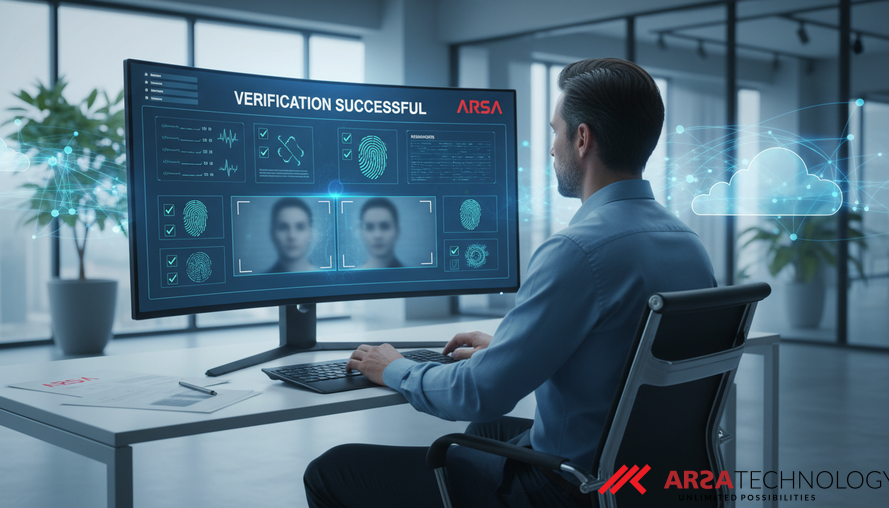
What to Evaluate When Choosing the Best Face Recognition API with Liveness Detection for E-KYC
In today’s rapidly digitizing world, particularly within the telecommunications sector, the demand for secure, efficient, and user-friendly identity verification solutions is paramount. Companies are constantly searching for the best face recognition API with liveness detection for e-KYC to streamline their digital onboarding processes, combat sophisticated fraud, and meet stringent regulatory requirements. For developers tasked with integrating these critical systems, understanding the nuances of available technologies is key to selecting a solution that delivers both robust security and seamless user experience.
The shift to digital-first services, from activating new SIM cards to managing online accounts, has made traditional, in-person verification methods obsolete or impractical. This necessitates advanced biometric solutions that can accurately verify identities remotely while simultaneously protecting against increasingly sophisticated spoofing attacks. A reliable face verification API is no longer a luxury but a fundamental component of a secure digital ecosystem.
The Critical Role of 1:1 Face Verification in E-KYC
Electronic Know Your Customer (e-KYC) processes are the backbone of secure digital transactions and customer onboarding. At its core, e-KYC aims to verify a customer’s identity remotely, ensuring they are who they claim to be. A crucial element of this is 1:1 face verification, where a live selfie or video feed is compared against a photo ID (like a passport or national ID card) provided by the user. This comparison confirms that the person presenting the ID is indeed the legitimate owner.
For telecommunications providers, implementing a robust face verification API for digital onboarding can dramatically reduce activation times for new services, enhance customer satisfaction, and significantly lower operational costs associated with manual checks. However, the effectiveness of this process hinges on the underlying technology’s ability to be highly accurate and resistant to fraud.
Why Liveness Detection is Non-Negotiable for Secure Digital Onboarding
The rise of deepfakes, printed photos, and video replays has made sophisticated spoofing attacks a significant threat to digital identity verification. Without adequate protection, a fraudster could easily bypass a basic face recognition system using a static image or a manipulated video. This is where liveness detection becomes indispensable.
Liveness detection technology ensures that the person attempting verification is a real, live individual present at the time of the interaction, not a static image, a mask, or a digital fabrication. There are two primary types:
- Active Liveness Detection: This involves challenge-response mechanisms, where the user is prompted to perform specific actions (e.g., turn their head, blink, speak a phrase). While highly secure, it can sometimes introduce friction into the user experience.
- Passive Liveness Detection: This more advanced method analyzes subtle cues from the video stream, such as micro-movements, skin texture, and light reflections, to determine liveness without requiring explicit user actions. It offers a smoother, more intuitive user experience, making it ideal for high-volume applications like digital onboarding in telecommunications.
An effective anti-spoofing face recognition REST API must incorporate robust liveness detection, ideally combining both active and passive methods for maximum security without compromising user experience.
Key Evaluation Criteria for the Best Face Recognition API with Liveness Detection for E-KYC
When selecting a face recognition solution, developers and businesses must look beyond basic functionality. The choice impacts security, user experience, compliance, and ultimately, the bottom line. Here are the critical factors to consider:
1. Accuracy and Reliability
The foundation of any biometric system is its accuracy. Look for providers that demonstrate high accuracy rates (e.g., 99.67% on industry benchmarks like Labeled Faces in the Wild – LFW). False acceptance rates (FAR) and false rejection rates (FRR) are crucial metrics. A low FAR is essential to prevent fraudsters from gaining access, while a low FRR ensures legitimate users aren’t unnecessarily frustrated. ARSA Technology’s ARSA Face Recognition & Liveness API boasts industry-leading accuracy, ensuring reliable identity verification.
2. Robust Anti-Spoofing Capabilities
As discussed, liveness detection is paramount. Ensure the API offers both active and passive liveness detection to counter various spoofing attempts. The ability to detect sophisticated attacks like deepfakes, 3D masks, and high-resolution printouts is a must. A strong face liveness detection API for fintech apps or telecommunications will continuously evolve its anti-spoofing algorithms to stay ahead of emerging threats.
3. Deployment Flexibility and Scalability
Consider how the API is deployed. For many digital services, a cloud face recognition with built-in database offers speed, scalability, and ease of maintenance. ARSA’s API is cloud-hosted, providing instant integration and scalability up to 500,000 API calls per month, ensuring it can handle the demands of growing user bases in the telecommunications industry. For highly regulated environments or those requiring complete data sovereignty, ARSA also offers an on-premise SDK.
4. Ease of Integration
A developer-friendly solution is vital. Look for a well-documented REST API that allows for quick and seamless integration into existing applications and workflows. Availability on platforms like RapidAPI can further simplify the integration process, offering clear documentation, code snippets, and a free tier for initial testing. This reduces development time and accelerates time-to-market for new features or services.
5. Data Security and Compliance
Biometric data is highly sensitive. The chosen API must adhere to strict data protection regulations such as GDPR (General Data Protection Regulation) and Indonesia’s PDPA (Personal Data Protection Act). Look for features like end-to-end encryption, secure data storage, and clear data retention policies. Providers that offer options for full data ownership, even with cloud solutions, demonstrate a strong commitment to privacy and trust.
6. Performance and User Experience
Speed is critical for digital onboarding. The API should deliver sub-second response times for verification, minimizing user waiting periods and reducing abandonment rates. A smooth, intuitive user experience, especially with passive liveness detection, is key to customer satisfaction. ARSA’s Face Recognition & Liveness overview highlights its focus on both performance and user experience.
7. Cost-Effectiveness and Measurable ROI
While initial investment is a factor, focus on the long-term ROI. A high-quality face recognition API can significantly reduce manual verification costs (by up to 80%), prevent costly fraud, and improve operational efficiency. Look for transparent pricing models, including free tiers for testing and scalable plans that align with your business growth.
ARSA Technology’s Edge in Face Verification for Telecommunications
ARSA Technology brings over seven years of expertise in AI and IoT solutions, trusted by government and enterprise clients across Southeast Asia. Our ARSA Face Recognition & Liveness API is engineered specifically to address the complex identity verification needs of industries like telecommunications.
Our cloud-hosted solution offers:
- Unrivaled Accuracy: With 99.67% accuracy on LFW, ARSA ensures precise 1:1 face verification and 1:N face identification.
- Advanced Anti-Spoofing: Both active and passive liveness detection are integrated to provide robust protection against all forms of identity fraud, from printed photos to sophisticated deepfakes.
- Seamless Integration: Available as a REST API on RapidAPI, developers can quickly integrate our solution, benefiting from a free tier for initial exploration and scaling up to 500,000 API calls per month.
- Built-in Face Database: Our cloud face recognition with built-in database simplifies management of user identities, ensuring secure and efficient storage.
- Business Outcomes: Telecommunications companies can automate their e-KYC onboarding processes, prevent identity fraud, and achieve significant cost reductions in manual verification, all with sub-second response times.
By leveraging ARSA’s proven technology, telecommunications providers can enhance security, improve customer experience, and accelerate their digital transformation journey.
Beyond E-KYC: Broader Applications of Face Recognition Technology
While e-KYC and digital onboarding are critical applications, the utility of face recognition technology extends far beyond. In other sectors, face recognition can power secure access control systems, enhance public safety, and even personalize customer experiences. For instance, combining face recognition with other IoT solutions, like ARSA’s ARSA Self-Check Health Kiosk, can enable seamless user identification for health screenings, demonstrating the versatility of this technology across various domains. The core principles of accuracy, liveness detection, and data security remain paramount across all these applications.
Frequently Asked Questions
What is the primary benefit of using a face verification API for digital onboarding?
The primary benefit is automating and securing the identity verification process for new customers, especially in industries like telecommunications. This significantly reduces manual effort, speeds up onboarding, enhances customer experience, and effectively prevents identity fraud.
How does an anti-spoofing face recognition REST API protect against fraud?
An anti-spoofing face recognition REST API uses advanced liveness detection techniques (both active and passive) to ensure that the person being verified is a real, live individual. It analyzes subtle cues and user interactions to detect and reject attempts using photos, videos, masks, or deepfakes, thereby preventing fraudulent access.
Can a cloud face recognition with built-in database be scaled for large user bases?
Yes, cloud-based face recognition solutions with a built-in database are designed for scalability. They leverage cloud infrastructure to handle high volumes of verification requests and manage extensive user databases efficiently. ARSA’s API, for example, can scale to 500,000 API calls per month, making it suitable for large enterprises.
Is a face liveness detection API for fintech apps also suitable for telecommunications?
Absolutely. The security and accuracy requirements for a face liveness detection API in fintech are very similar to those in telecommunications. Both industries handle sensitive customer data and require robust identity verification to prevent fraud and ensure regulatory compliance. Solutions proven in fintech are typically well-suited for telecommunications.
Conclusion
Choosing the best face recognition API with liveness detection for e-KYC is a strategic decision that impacts an organization’s security posture, operational efficiency, and customer trust. For developers in the telecommunications industry, a solution that offers high accuracy, advanced anti-spoofing, seamless integration, and robust data security is indispensable. ARSA Technology’s Face Recognition & Liveness API stands out as a proven, production-grade solution that meets these stringent demands, enabling businesses to automate e-KYC, prevent fraud, and deliver superior digital experiences.
Ready to transform your digital onboarding and identity verification processes? Contact ARSA solutions team today to discuss how our AI capabilities can empower your business, or explore all ARSA products to see our full range of innovative solutions.
Stop Guessing, Start Optimizing.
Discover how ARSA Technology drives profit through intelligent systems.