
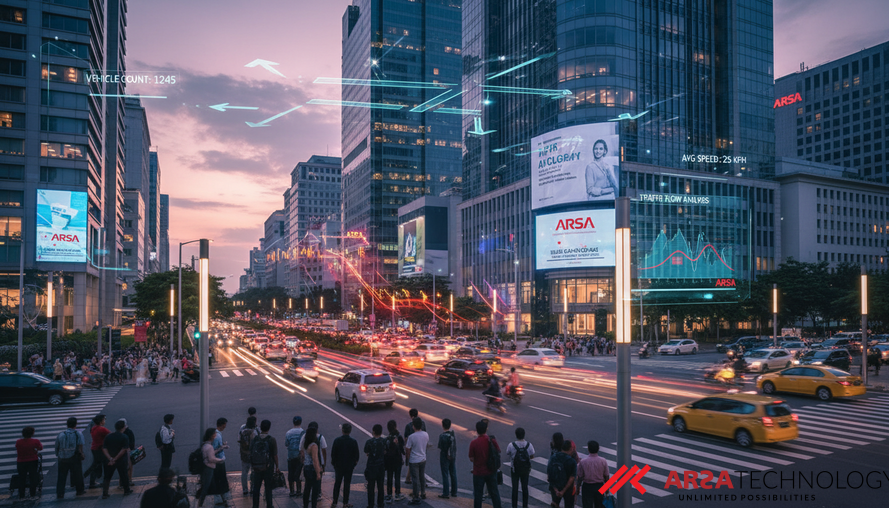

A Complete Guide to AI Vehicle Counting System for Smart City Traffic Management
In the rapidly evolving landscape of urban development, city transport planners face the persistent challenge of managing ever-increasing traffic volumes, reducing congestion, and ensuring efficient mobility. The traditional methods of traffic monitoring, often reliant on manual observation or outdated sensor technologies, struggle to provide the granular, real-time data needed for truly responsive urban planning. This is where an AI vehicle counting system for smart city traffic management emerges as a transformative solution, offering unparalleled precision and actionable insights. By leveraging advanced artificial intelligence, cities can move beyond reactive measures to proactive, data-driven strategies that enhance urban flow and improve the quality of life for residents.
The adoption of AI-powered solutions represents a paradigm shift, enabling authorities to gain a comprehensive understanding of traffic dynamics across their entire network. From optimizing signal timings to predicting congestion hotspots, these systems are foundational for building truly smart, resilient cities.
The Limitations of Traditional Traffic Management
For decades, traffic management has relied on a combination of inductive loops, pneumatic road tubes, and occasional human surveys. While these methods have served their purpose, they come with significant drawbacks in a modern urban context:
- Limited Data Granularity: Traditional sensors often provide only basic vehicle counts, lacking crucial details like vehicle type, speed, or specific behavioral patterns.
- High Installation and Maintenance Costs: Installing physical sensors requires road closures and ongoing maintenance, leading to significant operational expenses and disruption.
- Lack of Real-time Insights: Data collection can be slow and batch-processed, making it difficult for city planners to respond to dynamic traffic conditions in real-time.
- Scalability Challenges: Expanding traditional sensor networks across an entire city is prohibitively expensive and complex, limiting comprehensive coverage.
- Vulnerability to Damage: Physical sensors are susceptible to wear and tear from traffic, weather, and roadworks, leading to frequent repairs and data gaps.
These limitations highlight the urgent need for a more intelligent, flexible, and scalable approach to traffic monitoring and management.
Introducing the AI Vehicle Counting System for Smart City Traffic Management
An AI vehicle counting system for smart city traffic management harnesses the power of computer vision and machine learning to analyze video feeds from existing CCTV cameras. Instead of relying on new, expensive infrastructure, it transforms passive surveillance cameras into intelligent data collection points. This system can accurately detect, count, and classify vehicles, providing a rich stream of data that forms the backbone of modern traffic intelligence.
At its core, the system utilizes sophisticated algorithms to identify different types of vehicles (cars, trucks, motorcycles, buses) and track their movement patterns. This goes beyond simple counting, enabling detailed analysis of traffic flow, speed, dwell times, and even anomalous behaviors. For city transport planners, this means moving from guesswork to precise, evidence-based decision-making.
How AI Video Analytics Powers Smart Traffic Counting
The efficacy of an AI vehicle counting system lies in its advanced video analytics capabilities. ARSA Technology, for instance, offers robust solutions like the ARSA Traffic Monitor (Software), which is specifically designed for this purpose. This software-only solution integrates seamlessly with existing CCTV infrastructure, eliminating the need for costly hardware upgrades.
Automated Vehicle Classification Using CCTV
One of the key features is the ability for automated vehicle classification using CCTV. The AI processes video streams to not only count vehicles but also categorize them by type. This is invaluable for understanding the composition of traffic, which can inform decisions on lane usage, heavy vehicle restrictions, and targeted infrastructure improvements. For example, a high percentage of heavy vehicles might indicate a need for dedicated truck lanes or alternative routes to protect road surfaces and reduce emissions in residential areas.
Real-Time Traffic Flow Analytics and Congestion Detection
The system provides real-time traffic flow analytics edge computing capabilities, even without constant cloud connectivity. By processing data at the source or on local servers, it delivers immediate insights into traffic density, average speeds, and potential bottlenecks. This allows city operators to detect congestion as it forms, rather than after it has become a major issue. With ARSA’s AI Video Analytics Software overview, these analytics are presented on intuitive dashboards, offering a single pane of glass view of the entire city’s traffic network.
AI Traffic Monitoring Without Cloud Dependency
For many government and public sector entities, data sovereignty and security are paramount. ARSA’s solutions emphasize AI traffic monitoring without cloud dependency. This means all video streams, inference results, and metadata remain entirely within the city’s own infrastructure, ensuring full data ownership and compliance with local regulations. This on-premise deployment model is crucial for sensitive applications where external data transfer is not permissible.
Smart Traffic Counting Device for Intersections
While ARSA’s primary offering for traffic management is software-based, the underlying AI can also power a smart traffic counting device for intersections if an edge hardware approach is preferred. The ARSA Traffic Monitor software, when deployed on existing servers, acts as a centralized brain, analyzing feeds from multiple intersections simultaneously. This allows for a holistic view of traffic patterns and enables coordinated responses across different parts of the city.
Key Benefits for City Transport Planners
Implementing an AI vehicle counting system offers a multitude of benefits that directly address the pain points of modern urban traffic management:
1. Enhanced Traffic Flow and Reduced Congestion: By providing real-time data on vehicle counts, classification, and movement, the system enables dynamic signal optimization, intelligent rerouting, and proactive incident management. This leads to smoother traffic flow and significantly reduces travel times.
2. Data-Driven Urban Planning: Access to comprehensive historical and real-time traffic data empowers planners to make informed decisions about infrastructure development, public transport routes, and policy changes. This ensures that investments are targeted where they will have the greatest impact.
3. Cost Efficiency and ROI: Leveraging existing CCTV infrastructure minimizes initial investment costs. The operational efficiencies gained from reduced congestion, optimized resource allocation, and automated monitoring translate into substantial long-term savings and a strong return on investment.
4. Improved Public Safety: Real-time monitoring helps identify traffic incidents, accidents, and even potential security threats more quickly, enabling faster emergency response and improved public safety. For instance, the same underlying AI technology can be adapted for safety monitoring, similar to how ARSA Basic Safety Guard (AI Box) monitors PPE compliance in industrial settings.
5. Environmental Impact Reduction: Optimized traffic flow reduces idling time and stop-and-go traffic, leading to lower fuel consumption and decreased carbon emissions, contributing to a greener smart city.
6. Scalability and Flexibility: A software-based approach allows cities to scale their analytics capacity by simply allocating more compute resources, rather than installing new physical devices at every location. This flexibility supports phased rollouts and future expansion.
ARSA Technology’s Approach to Smart City Traffic Management
ARSA Technology provides an enterprise-grade solution that transforms existing CCTV networks into powerful traffic intelligence platforms. Our ARSA Traffic Monitor, part of our broader AI Video Analytics Software suite, is designed with the unique needs of government and enterprise clients in mind.
Key features and advantages include:
- Self-Hosted, On-Premise Deployment: Full data ownership and no cloud dependency, ideal for sensitive government data and compliance requirements.
- Hardware-Agnostic: Deploy on your existing servers or private data centers, maximizing current infrastructure investments.
- Real-time Dashboards and Reporting: Intuitive web-based dashboards provide live traffic insights, historical trends, and customizable reports for in-depth analysis. You can even try our live dashboard demo to see the power of real-time analytics firsthand.
- REST API Integration: Seamlessly integrate traffic data with existing city management platforms, alerting systems, and data pipelines for a unified operational view.
- Scalable Architecture: Designed to handle multiple concurrent camera streams, allowing for city-wide coverage and future expansion.
By choosing ARSA Technology, city transport planners gain a reliable partner with proven expertise in deploying mission-critical AI solutions. Our commitment to accuracy, privacy, and operational reliability ensures that your smart city traffic management initiatives deliver tangible, measurable results.
Frequently Asked Questions
What is automated vehicle classification using CCTV?
Automated vehicle classification using CCTV is an AI-powered technology that analyzes video feeds from surveillance cameras to identify and categorize different types of vehicles (e.g., cars, trucks, motorcycles, buses) in real-time. This provides more detailed traffic composition data than simple vehicle counts.
How does ARSA enable AI traffic monitoring without cloud dependency?
ARSA Technology’s AI Video Analytics Software, including the Traffic Monitor, is designed for fully on-premise deployment. This means all video processing, data storage, and analytics occur within your organization’s own servers or private data centers, eliminating the need for external cloud services and ensuring complete data ownership and privacy.
Can a smart traffic counting device for intersections integrate with existing city infrastructure?
Yes, ARSA’s AI Video Analytics Software is hardware-agnostic and features a REST API, allowing for seamless integration with existing CCTV cameras, traffic signal controllers, and other city management platforms. This minimizes the need for new hardware and leverages current investments.
What are the main business outcomes of implementing an AI vehicle counting system?
Implementing an AI vehicle counting system leads to significant business outcomes such as reduced traffic congestion, optimized urban mobility, lower operational costs, improved public safety, data-driven urban planning, and a reduced environmental footprint through more efficient traffic flow.
Conclusion
The future of urban mobility hinges on intelligent infrastructure, and an AI vehicle counting system for smart city traffic management is a cornerstone of this transformation. For city transport planners, embracing this technology means unlocking unprecedented levels of insight, efficiency, and responsiveness. By converting passive CCTV feeds into active intelligence, cities can proactively manage traffic, enhance safety, and build more sustainable and livable environments. ARSA Technology stands ready to empower your city with robust, on-premise AI solutions that deliver practical, proven, and profitable outcomes.
Ready to transform your city’s traffic management? Explore all ARSA products or contact ARSA solutions team today to discuss how our AI Video Analytics Software can meet your specific needs.
Stop Guessing, Start Optimizing.
Discover how ARSA Technology drives profit through intelligent systems.