
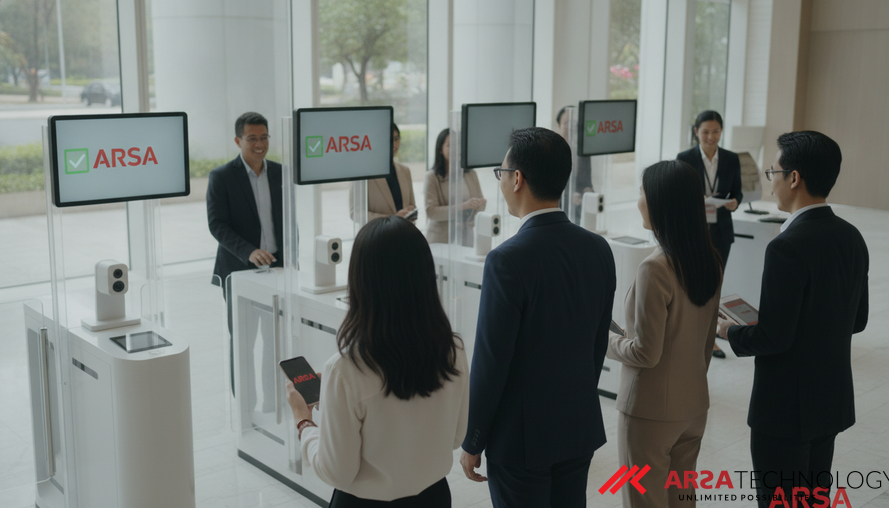

Elevate Event Entry: Choosing a Face Recognition API for Event Check-in and Ticket Validation
Event organizers and e-commerce platforms face a constant challenge: how to ensure smooth, secure, and efficient attendee entry while combating ticket fraud and enhancing the overall experience. The answer lies in advanced biometric solutions, specifically a robust face recognition API for event check-in and ticket validation. As the global stadium biometric ticketing validation market is projected to reach an estimated USD 5.01 billion by 2033, growing at a CAGR of 17.2% from 2025, the adoption of facial recognition is rapidly accelerating, driven by the need for seamless fan experiences and heightened security.
For event tech product managers, selecting the right biometric solution is a critical decision. This guide explores the key considerations when evaluating a face recognition API, highlighting how ARSA Technology’s cloud-based Face Recognition & Liveness API provides a powerful, scalable, and secure platform for modern event management.
Why Implement a Face Recognition API for Event Check-in and Ticket Validation?
Traditional event entry methods, such as paper tickets or QR code scans, are often prone to bottlenecks, long queues, and various forms of fraud. These inefficiencies not only frustrate attendees but also create security vulnerabilities and operational headaches. Implementing a `face recognition API for event check-in and ticket validation` transforms this experience by:
- Accelerating Entry: Attendees can pass through checkpoints in seconds, significantly reducing wait times and improving crowd flow.
- Enhancing Security: Biometric verification ensures that only the legitimate ticket holder gains entry, combating ticket scalping, fraudulent resales, and unauthorized access.
- Improving User Experience: A touchless, frictionless entry process aligns with modern consumer expectations for convenience and safety.
- Providing Actionable Data: Real-time analytics on attendee flow, demographics, and engagement can inform future event planning and personalization.
The demand for advanced security solutions at large-scale venues is escalating due to rising incidents of ticket fraud and unauthorized entry. Biometric validation is increasingly adopted to ensure only legitimate ticket holders gain access, offering rapid and accurate validation that minimizes bottlenecks at entry points and improves crowd management. This shift is also supported by advancements in AI and machine learning, enabling more sophisticated and user-friendly biometric solutions.
Key Features to Look for in a Biometric Event Check-in Software
When evaluating a `biometric event check-in software` solution, particularly one powered by a face recognition API, consider the following core capabilities:
1. Accurate and Fast Face Recognition:
The API should offer both 1:1 face verification (comparing a live scan to a single enrolled face) and 1:N face recognition against a database (identifying an individual from a larger pool of enrolled attendees). This allows for flexible check-in flows, whether verifying against a pre-registered photo or identifying an attendee upon arrival. ARSA’s Face Recognition & Liveness API provides these core functions with high precision, ensuring reliable identification.
2. Robust Liveness Detection:
In 2026, liveness detection is paramount to prevent presentation attacks (spoofing with photos, videos, or masks). A comprehensive API should offer both passive liveness detection (detecting spoofing without user interaction) and active liveness with head movement challenges. It’s crucial to understand that while presentation-attack detection (PAD) helps prevent physical spoofs, it does not cover injection attacks or deepfakes that bypass the camera feed itself. As biometric fraud continues to rise, with cybercriminals finding ways to bypass face recognition and liveness checks, robust multi-layered security is essential. ARSA’s API is designed to protect against these evolving threats, ensuring the person presenting their face is a live individual. For more details on this, you can read our article on active liveness detection and passive liveness detection.
3. Comprehensive Face Analytics:
Beyond basic recognition, the API should provide additional insights like face detection with bounding boxes, age estimation, gender classification, and expression detection (neutral, happy, sad, surprise, anger). These analytics can be invaluable for understanding attendee demographics and sentiment, helping event organizers tailor experiences and marketing efforts.
4. Scalable and Secure Infrastructure:
For large-scale events, the API must be able to handle high volumes of requests with minimal latency. A cloud SaaS deployment model, like the ARSA Face Recognition & Liveness API, offers inherent scalability and a 99.9% uptime target, ensuring reliability even during peak check-in times. Data privacy is also crucial; look for isolated per-account face databases for tenant separation and compliance readiness.
5. Developer-Friendly Integration:
Ease of integration is key for event tech product managers. The API should offer clear documentation, simple API key authentication (e.g., x-key-secret), and code examples in popular languages like cURL, Python, and JavaScript. ARSA’s Face Recognition API documentation provides all these resources to enable a first API call in under 5 minutes.
The ARSA Advantage: Your Face ID Ticket Validation API Partner
ARSA Technology brings over 7 years of experience in AI video analytics and face recognition, partnering with NVIDIA and Intel to deliver production-ready solutions. Our Face Recognition & Liveness API is specifically engineered to meet the demanding requirements of event check-in and ticket validation in the e-commerce sector.
With ARSA, you gain:
- Rapid Deployment: Launch face login in days, not months. Our cloud-based API is designed for quick integration, allowing you to enhance your event platforms without extensive development cycles.
- Fraud Prevention: Leverage active and passive liveness detection to prevent presentation attacks and synthetic identity fraud. Our API supports multiple images per face ID for higher accuracy, further bolstering security.
- Compliance Support: While ARSA does not claim specific certifications, our API is designed to help you meet stringent regulatory obligations such as those under GDPR, PSD2, eIDAS, FinCEN, and RBI V-CIP, particularly for identity verification processes that may extend beyond event entry, such as for VIP access or age-restricted events. For more on this, explore our insights on face recognition API for KYC.
- Cost-Effective Scalability: Pay only for what you use with our transparent pricing plans. From a Basic free tier (100 calls/month, 100 face IDs) to Pro ($29/mo), Ultra ($149/mo), and Mega ($1,290/mo) plans, all features are included, allowing you to scale as your event needs grow without managing any infrastructure. You can view our Face API pricing plans for more details.
- Full Data Control (Cloud-Optional): While the API is cloud-based, ARSA ensures isolated per-account face databases, providing robust data privacy and tenant separation. For highly regulated environments requiring air-gapped deployments, ARSA also offers an on-premise Face Recognition & Liveness SDK.
Event technology is rapidly evolving, and embracing solutions like ARSA’s Face Recognition & Liveness API allows you to stay ahead of the curve. Imagine attendees effortlessly gliding through entry points, their faces serving as their secure `face ID ticket validation API`. This not only creates a memorable experience but also significantly reduces operational overhead and the risk of fraud.
Frequently Asked Questions
What is `face verification for event entry`?
Face verification for event entry uses biometric technology to confirm an attendee’s identity by comparing their live facial scan to a pre-registered image in a database. This ensures that the person entering is the legitimate ticket holder, preventing fraud and unauthorized access.
How does `face recognition for conference registration` improve efficiency?
Face recognition for conference registration dramatically improves efficiency by enabling rapid, touchless check-in. Attendees no longer need to present physical tickets or IDs, reducing queues and allowing staff to focus on more value-added interactions. This also provides real-time data on attendance.
What security measures are in place to prevent fraud with `biometric event check-in software`?
Robust biometric event check-in software includes advanced liveness detection (both passive and active) to prevent spoofing attempts using photos, videos, or masks. It also typically involves secure, encrypted databases for facial templates and may integrate with other security protocols to create a multi-layered defense against fraud.
Can ARSA’s Face Recognition API be integrated with existing event platforms?
Yes, ARSA’s Face Recognition & Liveness API is designed for seamless integration with existing event management platforms. It provides a REST API, clear documentation, and code examples in cURL, Python, and JavaScript, allowing developers to quickly embed face recognition capabilities into their applications.
Ready to Transform Your Event Experience?
The future of event check-in is here, and it’s powered by intelligent `face recognition API for event check-in and ticket validation`. By choosing ARSA Technology, you’re not just adopting a new technology; you’re investing in a proven solution that delivers enhanced security, unparalleled efficiency, and a superior attendee experience.
Explore the capabilities of the ARSA Face Recognition & Liveness API today. You can create a free Face API account to get started with 100 calls per month and 100 face IDs, no credit card required. For a deeper dive into how ARSA can tailor solutions for your specific event needs, don’t hesitate to contact ARSA solutions team.
Stop Guessing, Start Optimizing.
Discover how ARSA Technology drives profit through intelligent systems.