
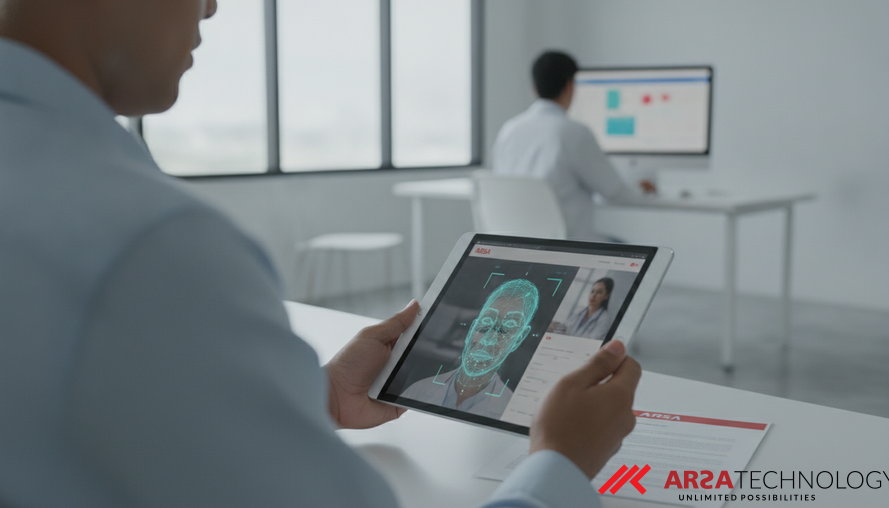

The rapid expansion of telemedicine has brought unprecedented convenience and accessibility to healthcare. However, this digital transformation also introduces critical challenges, particularly around ensuring the legitimate identity of patients. Implementing a robust face recognition API for telemedicine patient verification is no longer a luxury but a necessity for healthtech developers aiming to build secure, compliant, and user-friendly telehealth platforms. ARSA Technology offers a cloud-based solution designed to meet these evolving demands, allowing for quick integration and reliable identity assurance.
The Imperative for Secure Patient Identity Verification in Telemedicine
In the digital realm, verifying a patient’s identity at each interaction is paramount. The stakes are high, ranging from preventing medical identity theft and prescription fraud to ensuring compliance with stringent healthcare regulations. As of 2026, regulatory bodies like the DEA are moving towards stricter patient verification requirements for telemedicine, especially concerning controlled substances, emphasizing the need for robust systems that can prove who is on the call at multiple points in the care journey. Similarly, HIPAA guidelines for telehealth explicitly mandate verifying patient identity at every virtual visit, often suggesting visual confirmation as a key method.
Traditional verification methods, such as asking for date of birth or security questions, can be vulnerable to social engineering or compromised data. This is where advanced biometric solutions, specifically a patient identity verification face API, become indispensable. They offer a higher level of assurance, streamlining the user experience while fortifying security.
How ARSA’s Face Recognition API Secures Telemedicine Workflows
ARSA Technology’s ARSA Face Recognition & Liveness API provides a comprehensive, cloud-based solution for integrating advanced biometric identity verification into any healthtech application. Designed for developers, it offers a powerful suite of features to ensure secure and seamless patient interactions.
Key Features for a HIPAA-Aware Face Verification Workflow:
- 1:1 Face Verification: Confirm whether two faces belong to the same person, ideal for secure login or step-up authentication during a consultation.
- 1:N Face Recognition against Database: Identify a patient against an existing face database, crucial for initial onboarding and subsequent access control. ARSA’s API allows for managing face collections and supports multiple images per face ID for enhanced accuracy.
- Face Detection with Bounding Boxes: Accurately locate faces within an image or video stream, a foundational step for any biometric process.
- Active + Passive Liveness Detection: Crucially, ARSA’s API employs both passive liveness detection and active liveness with head movement challenges. This is vital for preventing presentation attacks (spoofing using photos, videos, or masks). It’s important to note that while presentation-attack detection (PAD) helps mitigate common spoofing attempts, it does not address injection attacks or deepfakes that bypass the camera entirely. Liveness is a necessary layer of security, but in 2026, a multi-layered approach is always recommended. For more insights into preventing fraud, consider reading A Complete Guide to Prevent Identity Fraud with Face Liveness Detection API.
- Age Estimation, Gender Classification, Expression Detection: These analytics (neutral, happy, sad, surprise, anger) can provide additional context, though their primary use in telemedicine is often for demographic analysis rather than direct verification.
- Face Database Management: Securely enroll, update, and remove identities with per-account isolated databases, ensuring data privacy and tenant separation critical for multi-provider platforms.
Streamlining Telehealth Login with Face ID for Healthcare Apps
Integrating face recognition for telehealth login transforms the patient experience. Instead of remembering complex passwords or navigating multi-factor authentication codes, patients can simply use their face to securely access their healthcare app. This not only enhances convenience but also significantly reduces friction, leading to higher patient engagement and adherence to care plans.
The ARSA Face Recognition & Liveness API is built for rapid integration, with developers able to make their first API call in under 5 minutes. It supports JPEG/PNG images and MP4/WebM video for active liveness, with cURL/Python/JavaScript code examples available in the Face Recognition API documentation. This ease of use means healthtech companies can launch face login capabilities in days, not months.
Achieving Compliance and Operational Efficiency
For healthtech developers, navigating the complex landscape of healthcare regulations is a constant challenge. ARSA’s API is designed to support organizations in meeting their obligations under various frameworks, including HIPAA, GDPR, FinCEN, and RBI V-CIP. By providing robust identity verification and liveness detection, the API helps prevent synthetic identity fraud and ensures that patient data is handled with the utmost care, with isolated per-account face databases for enhanced privacy.
The operational benefits extend beyond compliance. With a 99.9% uptime target, ARSA ensures reliable service delivery. The cloud SaaS deployment model means there is no infrastructure for healthtech companies to manage, reducing IT overhead and allowing teams to focus on core product development. Pricing is based on API usage, allowing businesses to pay only for what they use, with transparent Face API pricing plans ranging from a Basic free tier (100 calls/month, 100 face IDs) to Mega enterprise plans (500,000 calls/month, 500,000 face IDs), all with full feature access. A free 30-day trial is available with no credit card required to create a free Face API account.
The DEA’s ongoing focus on patient verification, as evidenced by its extension of telemedicine flexibilities to 2026, underscores the critical need for robust identity solutions. The proposed Special Registration rule, which may require government-issued photo ID capture and Prescription Drug Monitoring Program (PDMP) checks, highlights the evolving landscape. ARSA’s API, with its capabilities for rigorous identity proofing and audit-ready documentation, can be a key component in building systems that address these future requirements. For broader identity verification strategies, especially in regulated sectors, exploring resources like Choosing the Best Face Recognition API for KYC and Digital Onboarding in Europe can provide valuable context.
Conclusion
The future of telemedicine hinges on trust and security. For healthtech developers, integrating a reliable face recognition API for telemedicine patient verification is a strategic move that addresses both regulatory demands and user experience expectations. ARSA Technology’s cloud-based Face Recognition & Liveness API offers a powerful, scalable, and developer-friendly solution to enhance patient identity verification, prevent fraud, and ensure compliance in the rapidly evolving digital health landscape. By choosing ARSA, you empower your platform with enterprise-grade biometric security, allowing you to focus on delivering exceptional patient care.
Ready to secure your telemedicine platform and streamline patient verification? Contact ARSA solutions team today to discuss how our Face Recognition API can transform your digital health services.
FAQ Section
What is a HIPAA-aware face verification workflow?
A HIPAA-aware face verification workflow integrates biometric technology, such as a face recognition API, to securely confirm a patient’s identity while adhering to the privacy and security regulations outlined by HIPAA. This includes ensuring data encryption, proper consent, and robust access controls to protect Protected Health Information (PHI) during telehealth interactions.
How does face recognition for telehealth login improve patient experience?
Face recognition for telehealth login significantly improves the patient experience by offering a seamless and convenient authentication method. Patients can access their healthcare applications quickly and securely using their face, eliminating the need to remember complex passwords or navigate multi-factor authentication steps, thereby reducing friction and enhancing engagement.
Can ARSA’s Face Recognition API help meet DEA patient verification requirements for controlled substances?
Yes, ARSA’s Face Recognition API can support healthtech companies in meeting evolving DEA patient verification requirements, especially for controlled substances. By enabling rigorous identity proofing at onboarding and re-verification at critical points like prescription requests and refills, the API helps establish a verifiable audit trail, which is crucial for demonstrating compliance with anticipated stricter regulations.
What is the difference between presentation attack detection and deepfake detection in face liveness?
Presentation attack detection (PAD), which ARSA’s API provides, focuses on detecting attempts to spoof a biometric system using physical artifacts like photos, videos, or masks presented to the camera. Deepfake detection, on the other hand, addresses more sophisticated synthetic media generated by AI that can bypass the camera entirely. While PAD is essential, it’s crucial to understand that it does not cover injection attacks or deepfakes that don’t involve a physical presentation to the camera.
Stop Guessing, Start Optimizing.
Discover how ARSA Technology drives profit through intelligent systems.