
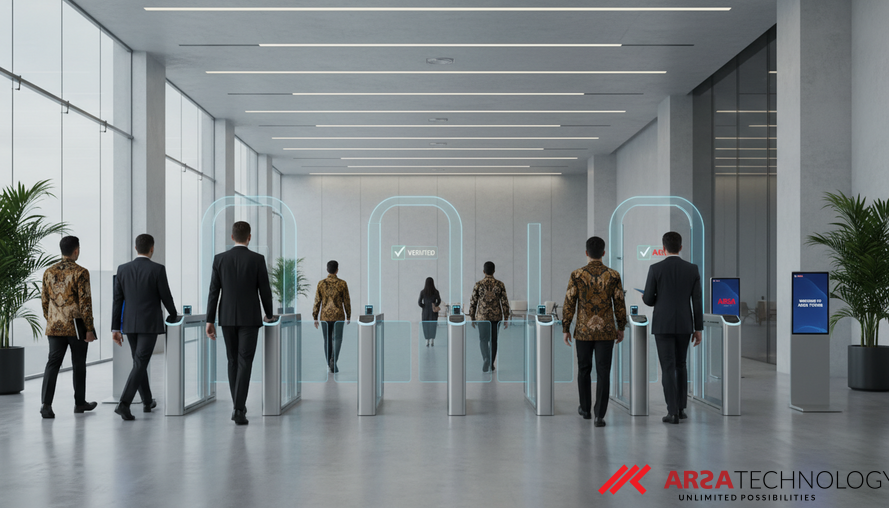

How a Face Recognition API for Building Access Control Systems Delivers Measurable ROI
In the rapidly evolving PropTech landscape, smart building developers are constantly seeking innovative solutions to enhance security, streamline operations, and improve user experience. One technology proving to be a game-changer is the face recognition API for building access control systems. Far from being a mere novelty, this advanced biometric solution offers tangible, measurable Return on Investment (ROI) by optimizing everything from tenant entry to visitor management, fundamentally transforming how people interact with physical spaces.
Traditional access methods, such as key cards or PINs, are often cumbersome, prone to loss or theft, and can introduce significant security vulnerabilities. Implementing a robust face ID API for door access, like the ARSA Face Recognition & Liveness API, addresses these challenges head-on. It provides a secure, efficient, and user-friendly alternative that not only bolsters security postures but also delivers substantial operational savings and enhanced user satisfaction.
The Business Case for Biometric Access Control
Integrating biometric access control REST API solutions into smart buildings is a strategic move for any PropTech developer aiming for efficiency and future-proofing. The ARSA Face Recognition & Liveness API offers a comprehensive identity layer, not just a simple comparison endpoint, making it ideal for sophisticated building management. With features such as 1:N face recognition against a database for rapid identification and 1:1 face verification for secure authentication, buildings can achieve unparalleled levels of security and convenience.
This cloud-based SaaS solution is designed for rapid deployment, allowing developers to make their first API call in under 5 minutes. This speed to market is a critical factor for PropTech apps, enabling quick iteration and deployment of new features. The API supports face detection with bounding boxes, passive liveness detection, and active liveness with head movement challenges, ensuring robust anti-spoofing capabilities that prevent presentation attacks and synthetic identity fraud. This is crucial for meeting stringent compliance obligations under frameworks like PSD2, eIDAS, and FinCEN, which demand strong customer authentication and fraud prevention.
Optimizing Operations with a Visitor Management Face Verification API
Visitor management often presents a significant bottleneck in commercial and residential buildings. Manual sign-ins, temporary passes, and lengthy verification processes can lead to frustration and inefficiencies. A dedicated visitor management face verification API streamlines this entire process. Visitors can pre-register, and their facial biometrics can be quickly verified upon arrival, granting seamless entry. This not only improves the visitor experience but also frees up security personnel to focus on more critical tasks, leading to substantial labor cost savings.
The ARSA Face Recognition & Liveness API provides per-account isolated databases, ensuring data privacy and robust tenant separation—a vital consideration for multi-tenant buildings and co-working spaces. This architectural design aligns with global data protection regulations like GDPR and CCPA, giving both building operators and occupants peace of mind regarding their biometric data.
Enhanced Security and Compliance
Security is paramount in any building, and the ability to prevent unauthorized access is non-negotiable. A face recognition API for building access control systems significantly elevates security protocols. The ARSA API’s active and passive liveness detection capabilities are particularly important, protecting against sophisticated spoofing attempts using photos, videos, or even 3D masks. This level of anti-spoofing is critical for high-security environments and ensures that only live, authorized individuals gain entry.
Beyond preventing fraud, the API also aids in compliance. For instance, in certain industrial or regulated environments, monitoring access to restricted areas is a legal requirement. By accurately identifying individuals and logging their entry and exit, the system provides an immutable audit trail, simplifying compliance audits and demonstrating adherence to safety standards like ISO 45001. To understand the financial implications, it’s worth exploring What a Face Recognition API for Building Access Control Systems Actually Costs in 2026.
Scalability and Cost-Effectiveness for PropTech Developers
For PropTech developers, scalability and cost-effectiveness are key. Cloud-based solutions like the ARSA Face Recognition & Liveness API offer unparalleled scalability, allowing systems to grow seamlessly with building occupancy or portfolio expansion. Developers only pay for what they use, eliminating the need for heavy upfront investment in hardware or complex infrastructure management. This “pay-as-you-go” model, with transparent pricing plans ranging from a Basic free tier (100 API calls/month, 100 face IDs) to a Mega Enterprise Tier ($1,290/month for 500,000 calls and 500,000 face IDs), makes it an attractive option for startups and large enterprises alike. All features, including age estimation, gender classification, and expression detection, are included across all plans, providing full functionality regardless of scale.
The API supports standard image formats like JPEG/PNG and video formats like MP4/WebM for active liveness, ensuring broad compatibility. With robust Face Recognition API documentation and cURL/Python/JavaScript code examples, integration is straightforward, enabling developers to launch face login features in days, not months. This agility is a significant competitive advantage in the fast-paced PropTech market. For a deeper dive into choosing the right solution, consider reading Cloud API vs. On-Premise SDK: Choosing the Right Face Recognition API for Building Access Control Systems.
Beyond Access: The Future of Face Recognition for PropTech Apps
The utility of face recognition for PropTech apps extends beyond simple door access. It can be integrated into broader smart building ecosystems to personalize experiences, optimize resource allocation, and gather valuable insights (with appropriate privacy safeguards). For example, knowing the general demographics or sentiment (via expression detection) of people in common areas can help building managers tailor services or adjust environmental controls.
The ARSA Face Recognition & Liveness API’s ability to manage multiple images per face ID for higher accuracy ensures reliable performance in diverse conditions. This robust performance, combined with the ease of integration and the absence of infrastructure to manage, makes it an ideal choice for developers looking to build next-generation smart building solutions. For those evaluating providers, understanding What to Evaluate When Choosing a 1:N Face Recognition API for Building Access Control Systems Provider is essential.
Conclusion
The adoption of a face recognition API for building access control systems represents a significant leap forward for the mobility and PropTech sectors. By offering enhanced security, streamlined operations, and a superior user experience, solutions like the ARSA Face Recognition & Liveness API deliver clear and measurable ROI. PropTech developers can leverage this powerful cloud SaaS AI to create more intelligent, secure, and efficient buildings, all while maintaining full control over data privacy through isolated databases and flexible deployment options.
Ready to transform your building access control with cutting-edge AI? Explore the Face Recognition & Liveness overview, check out the Face API pricing plans, or create a free Face API account to get started. For tailored solutions, feel free to contact ARSA solutions team.
FAQ Section
Q: How does a face ID API for door access improve building security?
A: A face ID API enhances security by providing highly accurate biometric authentication, making it extremely difficult for unauthorized individuals to gain entry. Features like active and passive liveness detection prevent spoofing attempts using photos or videos, ensuring only live, authorized persons are granted access.
Q: What are the key benefits of using a visitor management face verification API for PropTech applications?
A: For PropTech, a visitor management face verification API streamlines visitor entry, reduces administrative overhead, and improves the overall visitor experience. It also provides a secure, auditable record of all entries and exits, enhancing building safety and compliance.
Q: Can a face recognition for proptech app integrate with existing building systems?
A: Yes, modern face recognition APIs, like ARSA’s, are designed with REST API integration, allowing them to seamlessly connect with existing building management systems, security platforms, and other PropTech applications. This ensures a cohesive and integrated smart building ecosystem.
Q: What data privacy considerations are important when implementing a biometric access control REST API?
A: When implementing a biometric access control REST API, it’s crucial to choose a solution that offers features like per-account isolated databases and strong encryption to ensure data privacy and tenant separation. Compliance with regulations such as GDPR, CCPA, and ISO 30107-3 for anti-spoofing is also essential.
Stop Guessing, Start Optimizing.
Discover how ARSA Technology drives profit through intelligent systems.