
The Complete Buyer’s Guide to Self-Check Health Kiosk for Building Management
In today’s dynamic work environment, building management faces increasing pressure to ensure employee well-being while optimizing operational expenditures. For CFOs and plant managers, a critical challenge is how to effectively reduce occupational health costs with AI health kiosk solutions. This guide explores the strategic advantages of deploying advanced self-service health technology, focusing on its impact on cost efficiency, early detection of health issues, and overall workforce productivity.
Traditional occupational health programs often involve significant overhead, from staffing medical personnel for routine checks to managing vast amounts of paperwork. These methods can be slow, prone to human error, and costly, ultimately impacting a company’s bottom line. However, the integration of AI and IoT into health screening offers a transformative approach, allowing organizations to streamline processes and achieve measurable returns on investment.
The Strategic Imperative to Reduce Occupational Health Costs with AI Health Kiosk
For building management, maintaining a healthy workforce is paramount. Unforeseen health issues can lead to absenteeism, reduced productivity, and increased insurance premiums. An AI-powered health kiosk provides a proactive solution, shifting from reactive care to preventive health monitoring for industrial workers and office staff alike. This paradigm shift is not just about employee welfare; it’s a strategic financial decision.
According to OHS Online, artificial intelligence is becoming a central tool in occupational health and safety (OHS), enabling organizations to move from an after-the-fact response to early prediction and prevention. This approach enhances human judgment by providing clearer visibility into how risks evolve, ultimately leading to reduced incident rates, improved productivity, and lower costs.
Unpacking the ROI of Employee Health Screening Kiosks
The financial benefits of deploying an advanced employee health screening kiosk are substantial and multifaceted. One of the most significant impacts is the reduction in labor costs. Routine vital sign checks, traditionally performed by medical staff, consume valuable healthcare personnel time. Automating these checks through a self-service health check reduces clinic visits and the need for constant medical supervision for basic screenings.
Industry data suggests that automating patient intake processes, which can be analogous to employee health screening, can significantly reduce administrative burden. For instance, some reports indicate potential annual savings of over $76,000 by automating tasks equivalent to two or more full-time employees in front-desk administrative roles, primarily through labor reallocation and increased throughput. This demonstrates a clear path to a strong ROI of employee health screening kiosk investments.
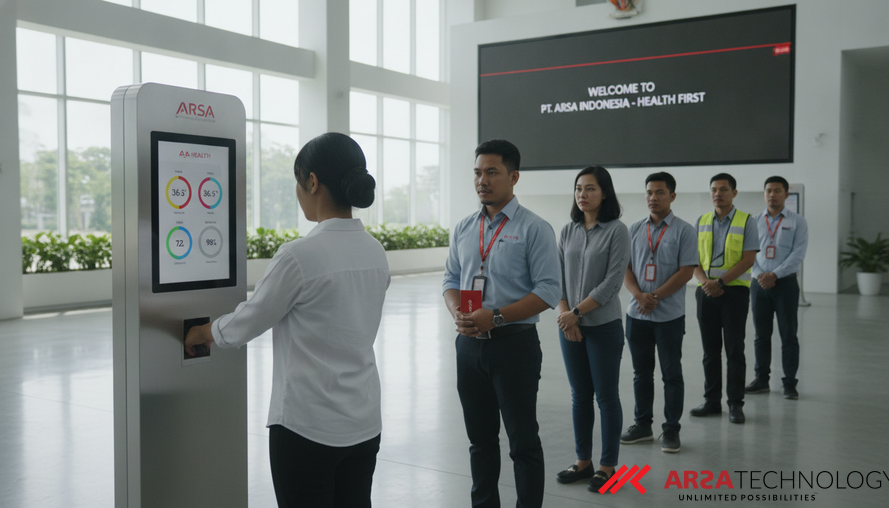
ARSA Technology’s Self-Check Health Kiosk is designed to deliver precisely these outcomes. By enabling employees to conduct their own vital sign measurements, it frees up valuable staff time, allowing them to focus on more critical tasks. The kiosk measures multiple parameters in approximately 90 seconds, including blood pressure monitoring, blood oxygen measurement, and heart rate monitoring, all with medical-grade sensors.
Early Detection: A Cornerstone of Proactive Health Management
Beyond immediate cost savings, the long-term value of an AI health kiosk lies in its capacity for early detection employee health issues technology. Regular, convenient screenings encourage employees to monitor their health more consistently. This continuous data collection allows for the identification of subtle changes or emerging health concerns before they escalate into serious conditions requiring extensive medical intervention.
For example, the ARSA Self-Check Health Kiosk includes an AI-powered Romberg balance test, which can help assess neurological function and balance, potentially identifying early signs of certain conditions. The ability to track trends in blood pressure, SpO2, and heart rate over time provides invaluable insights for both individual employees and overall population health management. This proactive approach can lead to:
- Reduced absenteeism: Health issues caught early are often easier to manage, minimizing sick days.
- Improved productivity: Healthier employees are more engaged and productive.
- Lower long-term healthcare costs: Preventing severe conditions is far less expensive than treating them.
The kiosk’s ability to flag critical readings automatically and, if configured, route alerts to on-call physicians, significantly reduces emergency response times. This smart triage system is crucial for managing potential health crises within a large facility.
Key Features to Evaluate in an AI Health Kiosk
When considering an AI health kiosk for your building management needs, several features are critical for maximizing both operational efficiency and employee engagement:
- Comprehensive Health Parameters: Look for a kiosk that offers a wide range of measurements, such as blood pressure, heart rate, SpO2, body temperature, and even advanced tests like the AI Romberg balance test. Optional modules for weight, height, BMI, glucose, and cholesterol further enhance its utility.
- Medical-Grade Accuracy: Ensure the sensors are FDA/CE-certified, providing reliable and precise readings. For instance, ARSA’s kiosk boasts ±3mmHg BP accuracy and ±0.2°C temperature precision.
- Self-Service and User Experience: An intuitive, multi-language UI with voice guidance is essential to encourage widespread adoption and ensure ease of use for all employees. The Self-Check Health Kiosk overview highlights its guided interface for seamless user interaction.
- Secure Identity Verification: Features like face recognition identification or QR-based authentication, coupled with robust data encryption (e.g., GDPR/HIPAA encryption), are vital for protecting sensitive health information.
- Data Management and Integration: A local dashboard with data export capabilities and REST API integration allows for seamless integration with existing corporate wellness platforms or HR systems. This ensures full data ownership and supports compliance requirements like EU GDPR and Indonesia PDPA.
- Deployment Flexibility: The kiosk should be suitable for on-site installation in various controlled environments, such as factory floors, offices, or public facilities.
- Scalability and Maintenance: A solution that can manage multiple kiosks from a single dashboard, with centralized firmware updates and remote troubleshooting, ensures long-term operational reliability and minimizes downtime.
Beyond Health: Enhancing Building Safety and Operations
While the primary focus is on employee health, the underlying AI and IoT technology of ARSA’s solutions can extend to other building management functions. For instance, ARSA also offers products like the ARSA Traffic Monitor (AI Box), demonstrating the versatility of AI video analytics in optimizing various operational aspects within a facility. This broader capability underscores ARSA Technology’s expertise in deploying practical AI solutions across diverse enterprise needs.
By implementing an IoT kiosk, building managers can also integrate health screening with access control systems, ensuring that employees meet certain health parameters before entering specific areas, further enhancing workplace safety.
Conclusion: A Smart Investment for Future-Proof Building Management
The decision to invest in an AI health kiosk is a forward-thinking move for any building management team looking to reduce occupational health costs with AI health kiosk technology. By embracing solutions like the ARSA Self-Check Health Kiosk, organizations can achieve significant cost efficiencies through automation, foster a healthier and more productive workforce through early detection employee health issues technology, and ensure compliance with data privacy regulations.
The shift towards preventive health monitoring for industrial workers and office staff is not just a trend; it’s a strategic necessity for sustainable business operations in 2026 and beyond. A self-service health check reduces clinic visits, streamlines operations, and empowers employees to take charge of their well-being.
To explore how ARSA Technology can tailor a solution for your specific needs and provide a detailed ROI analysis, we encourage you to contact ARSA solutions team today. Discover the full range of all ARSA products and how they can transform your operational intelligence.
—
FAQ Section
How can an AI health kiosk help in the early detection of employee health issues?
An AI health kiosk facilitates regular, convenient health screenings, capturing vital signs like blood pressure, heart rate, and SpO2. This continuous data collection allows for trend analysis and the identification of subtle changes or emerging health concerns, enabling early detection employee health issues technology before they become severe.
What is the typical ROI of an employee health screening kiosk for a large facility?
The ROI of employee health screening kiosk solutions is realized through reduced labor costs by automating routine checks, decreased absenteeism due to early health interventions, and lower long-term healthcare expenses. Many organizations report significant savings, often equivalent to reallocating multiple full-time administrative roles, with a typical ROI achieved within 14-18 months.
How does a self-service health check reduce clinic visits and improve efficiency?
A self-service health check reduces clinic visits by empowering employees to perform their own basic vital sign screenings quickly and accurately on-site. This automation minimizes the need for medical personnel for routine checks, streamlines the screening process, reduces wait times, and allows healthcare staff to focus on more complex cases, significantly improving overall operational efficiency.
What are the privacy considerations for preventive health monitoring for industrial workers using AI kiosks?
For preventive health monitoring for industrial workers with AI kiosks, privacy is paramount. Solutions like the ARSA Self-Check Health Kiosk are designed with robust security features such as AES-256 encryption, role-based access control, and options for on-premise or hybrid cloud deployment to ensure data sovereignty and compliance with regulations like GDPR and Indonesia PDPA. Biometric data, such as face recognition for ID, is handled with strict encryption and data ownership protocols.
—
Stop Guessing, Start Optimizing.
Discover how ARSA Technology drives profit through intelligent systems.