
How AI Health Kiosks Reduce Occupational Health Costs with AI Health Kiosk in 2026
In the demanding landscape of modern manufacturing, operational efficiency and employee well-being are inextricably linked. For CFOs and plant managers, the challenge of managing and reducing occupational health costs is a persistent concern. Traditional approaches often involve significant overheads, from clinic visits to lost productivity due to undetected health issues. However, the advent of advanced AI and IoT solutions, particularly self-check health kiosks, is revolutionizing how industries approach workforce health. These innovative systems are proving to be a strategic investment that can significantly reduce occupational health costs with AI health kiosk technology, delivering tangible ROI through proactive, accessible, and data-driven preventive health monitoring.
The Hidden Costs of Traditional Occupational Health Management
Manufacturing environments, by their nature, can expose workers to various health risks, from physical strain to environmental factors. Managing these risks traditionally incurs substantial costs:
- Clinic Congestion & Staffing: Routine health checks often require dedicated medical personnel, leading to high labor costs and potential bottlenecks that disrupt workflow.
- Delayed Detection: Without regular, accessible screening, early detection employee health issues technology is often lacking, allowing minor conditions to escalate into serious, costly problems requiring extensive treatment and prolonged absenteeism.
- Inconsistent Data: Manual health records can be prone to human error and fragmentation, making it difficult to track trends, identify patterns, and implement targeted wellness programs effectively.
- Productivity Loss: Unscheduled medical appointments, sick leave, and reduced performance due to undiagnosed health conditions all contribute to significant productivity drains.
These factors underscore the need for a more efficient, scalable, and data-driven solution to safeguard employee health and, in turn, protect the company’s bottom line.
How Self-Check Health Kiosks Drive Cost Reduction
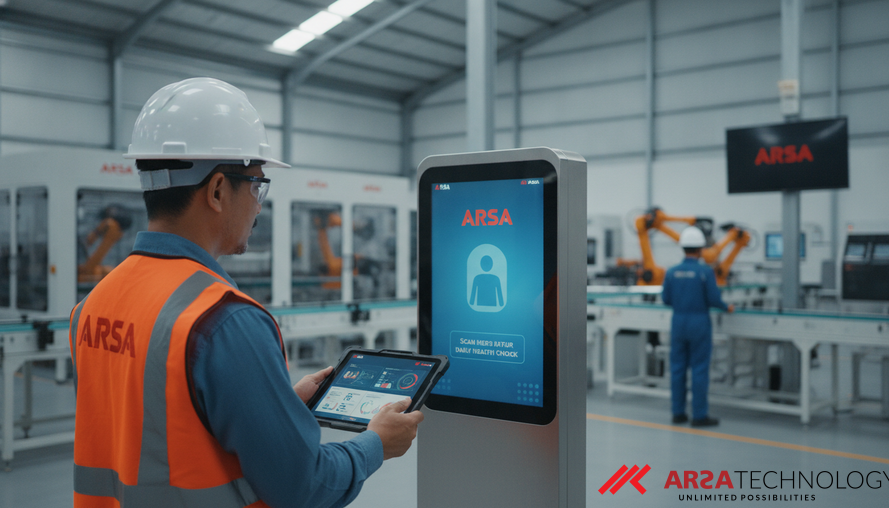
ARSA Technology’s Self-Check Health Kiosk offers a powerful answer to these challenges. This AI & IoT-powered digital health station provides autonomous health screening, allowing employees to measure vital signs quickly and accurately without the need for medical personnel. By integrating seamlessly into the workplace, these kiosks provide a convenient and private way to conduct regular health assessments.
The core functionality of the ARSA Self-Check Health Kiosk includes:
- Comprehensive Vital Sign Measurement: Medical-grade sensors accurately capture blood pressure, blood oxygen (SpO2), and heart rate.
- AI-Powered Balance Assessment: An AI-powered Romberg balance test helps assess neurological function and fall risk, crucial in industrial settings.
- Secure Identification: Face recognition identification or QR-based authentication ensures accurate record-keeping while maintaining privacy.
- Automated Data Management: All vital user data is recorded and displayed on a web-based dashboard, supporting data export and API integration for seamless record management.
This self-service approach directly translates into significant cost savings. By automating routine checks, the kiosk can free up valuable healthcare staff time, potentially replacing the need for 2-3 full-time equivalent (FTE) nurses per shift, as detailed on the Self-Check Health Kiosk overview page. This labor reallocation alone can lead to an impressive ROI, often achieved within 14-18 months.
The ROI of Employee Health Screening Kiosk Technology
Investing in an employee health screening kiosk is not just about cost reduction; it’s about strategic investment in human capital. The ROI of employee health screening kiosk technology becomes evident through several key outcomes:
1. Reduced Absenteeism and Presenteeism:
Regular, accessible health checks encourage employees to monitor their well-being. This proactive approach leads to the early detection of potential health issues, allowing for timely intervention before conditions worsen and lead to extended sick leave or reduced productivity (presenteeism). According to a 2023 study by the American Journal of Health Promotion, companies with comprehensive wellness programs, including accessible screening, reported a 28% reduction in sick leave and a 26% reduction in healthcare costs over five years. American Journal of Health Promotion
2. Proactive Risk Management:
For manufacturing, preventive health monitoring for industrial workers is paramount. The ARSA kiosk’s ability to flag critical readings (e.g., hypertension, fever, low SpO2) and auto-route alerts to on-call physicians reduces emergency response time by up to 73%. This smart triage capability can prevent severe health incidents, minimizing the associated costs of emergency medical care, worker’s compensation claims, and operational disruptions.
3. Enhanced Compliance and Safety Culture:
A visible commitment to employee health through accessible screening tools contributes to a stronger safety culture, aligning with international workplace safety standards like ISO 45001. While ARSA does not claim certification, its solutions are designed to support organizations in meeting their obligations for employee well-being. This proactive stance can also lead to reduced insurance premiums and fewer regulatory penalties.
4. Data-Driven Wellness Programs:
The aggregated, de-identified health data from the kiosks provides valuable insights for population health management. This data allows plant managers and HR to identify common health trends within the workforce, enabling the development of targeted corporate wellness programs that address specific needs and further reduce occupational health costs with AI health kiosk initiatives.
Self-Service Health Check Reduces Clinic Visits and Boosts Efficiency
The convenience of a self-service health check reduces clinic visits significantly, saving both employee time and company resources. Instead of scheduling off-site appointments or waiting in queues at an on-site clinic, workers can complete their screening in minutes at the kiosk, minimizing disruption to their work schedule. This efficiency is particularly valuable in fast-paced manufacturing environments where every minute counts.
Furthermore, the kiosk’s multi-language UI with voice guidance makes it accessible to a diverse workforce, ensuring consistent and accurate data capture regardless of language barriers. This ease of use encourages higher participation rates in health screening programs, leading to more comprehensive data and better overall health outcomes.
ARSA Technology: A Partner in Industrial Health Transformation
ARSA Technology has a proven track record of deploying practical AI solutions in demanding environments. Our all ARSA products are engineered for accuracy, scalability, privacy, and operational reliability. For manufacturing facilities, the Self-Check Health Kiosk is a critical tool for modernizing occupational health.
Beyond the kiosk, ARSA offers a range of AI video analytics solutions that can further enhance safety and efficiency in industrial settings. For instance, while distinct from health screening, our ARSA Smart Retail Counter (Software) demonstrates our capability in people counting and behavior analytics, a core competency that underpins the efficiency of our health kiosk’s usage tracking.
Frequently Asked Questions
What is the primary benefit of using an AI health kiosk to reduce occupational health costs?
The primary benefit is the significant reduction in operational overheads associated with traditional health screening, achieved through automation, early detection of health issues, and improved employee productivity. This directly helps to reduce occupational health costs with AI health kiosk technology.
How does an employee health screening kiosk provide a return on investment (ROI)?
An employee health screening kiosk delivers ROI by reducing healthcare staff time, preventing minor health issues from escalating into costly problems, decreasing absenteeism, and enabling data-driven wellness programs that improve overall workforce health and productivity.
Can self-service health check technology truly reduce clinic visits for industrial workers?
Yes, self-service health check technology significantly reduces the need for routine clinic visits by providing convenient, on-site screening. This minimizes disruption to work schedules and encourages more frequent monitoring, leading to better preventive health monitoring for industrial workers.
What kind of health issues can be detected early with this technology?
The ARSA Self-Check Health Kiosk can help with the early detection employee health issues technology by monitoring vital signs like blood pressure, heart rate, and blood oxygen saturation, as well as assessing balance. Critical readings are flagged for immediate attention, allowing for timely intervention.
Conclusion
For CFOs and plant managers in the manufacturing sector, the imperative to reduce occupational health costs with AI health kiosk solutions is clear. The ARSA Self-Check Health Kiosk represents a strategic investment that not only streamlines health screening processes but also fosters a healthier, more productive workforce. By embracing this advanced IoT and AI technology, organizations can achieve substantial cost savings, enhance employee well-being, and build a more resilient operational future. To explore how ARSA Technology can tailor a solution for your facility, we invite you to contact ARSA solutions team for a consultation.
Stop Guessing, Start Optimizing.
Discover how ARSA Technology drives profit through intelligent systems.