
How an AI Health Kiosk Can Drastically Reduce Occupational Health Costs in 2026
In today’s dynamic business environment, managing employee health is not just a matter of welfare; it’s a critical component of operational efficiency and financial stability. For CFOs and plant managers, the challenge lies in finding solutions that genuinely reduce occupational health costs with AI health kiosk technology, offering a clear return on investment (ROI) while enhancing workforce well-being. Traditional health screening methods are often resource-intensive, leading to bottlenecks, delays, and significant expenses. However, the advent of AI and IoT-powered self-check health kiosks is transforming this landscape, providing a scalable, accurate, and cost-effective alternative.
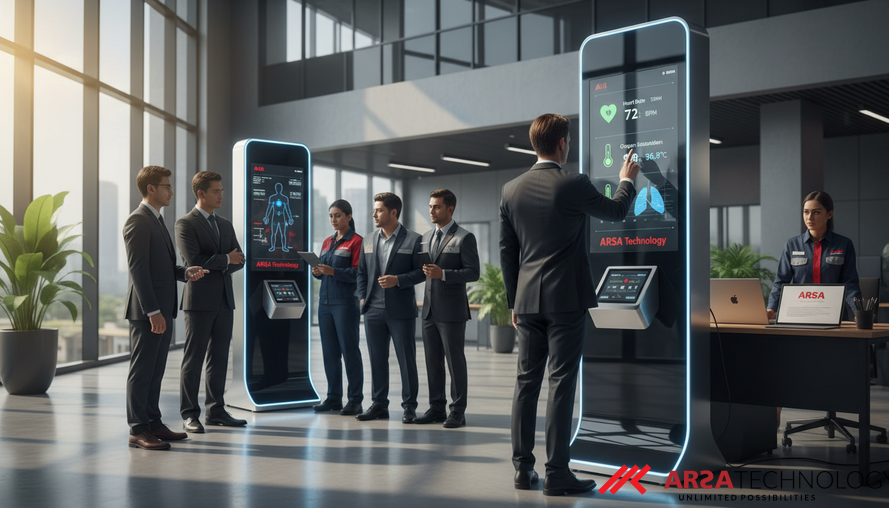
ARSA Technology’s Self-Check Health Kiosk stands at the forefront of this revolution, offering an autonomous, medical-grade solution designed to streamline preventive health monitoring for industrial workers and corporate employees alike. By enabling self-service vital sign capture, these kiosks address key pain points, from clinic congestion to inconsistent manual measurements, directly impacting your bottom line.
The Hidden Costs of Traditional Occupational Health Programs
Before delving into the savings, it’s crucial to understand the expenditures associated with conventional occupational health. These often include:
- Staffing Costs: Employing nurses or medical personnel for routine vital checks, which can consume 40-60% of healthcare staff time.
- Lost Productivity: Employees spending time traveling to and waiting at clinics, leading to reduced work hours.
- Delayed Interventions: Slower detection of health issues, allowing minor conditions to escalate into costly chronic illnesses or emergencies.
- Administrative Overhead: Managing paper records, scheduling appointments, and ensuring compliance.
- Inconsistent Data: Manual measurements prone to human error and fragmented data, hindering effective trend analysis.
These factors contribute to substantial, often unquantified, occupational health costs that erode profitability and operational efficiency.
Driving Down Expenses: The ROI of Employee Health Screening Kiosk
Implementing an AI-powered self-check health kiosk offers a compelling financial proposition. The ROI of ARSA Self-Check Health Kiosk is driven by several factors, making it an attractive investment for organizations looking to optimize their health and safety budgets.
- Labor Cost Reduction: A single ARSA Health Kiosk can effectively replace the need for 2-3 full-time equivalent (FTE) nurses per shift for routine screenings. This reallocation of labor allows medical staff to focus on critical care, complex cases, or other high-value tasks, leading to an estimated ROI achievement within 14-18 months.
- Increased Throughput: With multi-parameter measurements completed in as little as 90 seconds, these kiosks significantly increase the volume of screenings that can be performed daily. This reduces queues and waiting times, improving patient flow in clinics or enabling rapid pre-shift screenings in industrial settings.
- Preventive Health and Early Detection: The kiosk’s ability to provide early detection employee health issues technology is paramount. By continuously monitoring key vital signs such as blood pressure, blood oxygen, and heart rate, and conducting AI-powered Romberg balance tests, it can flag critical readings (e.g., hypertension, fever, low SpO2) automatically. This proactive approach allows for timely interventions, preventing minor health concerns from escalating into serious, expensive medical conditions.
- Reduced Clinic Visits: For routine checks, the self-service health check reduces clinic visits, freeing up valuable time for both employees and healthcare providers. This not only saves on direct medical consultation costs but also minimizes travel expenses and lost work hours.
- Enhanced Compliance and Data Management: The ARSA Self-Check Health Kiosk integrates seamlessly with existing systems via API, providing instant digital records and aggregated, de-identified analytics for population health management. This supports compliance audits (e.g., ISO 45001 for occupational health and safety) and provides data-backed insights for corporate wellness programs, potentially leading to reduced insurance premiums. Data sovereignty is maintained with on-premise or hybrid cloud deployment options, ensuring full compliance with international regulations like GDPR and Indonesia PDPA.
Key Features of the ARSA Self-Check Health Kiosk
The ARSA Self-Check Health Kiosk is a robust IoT device engineered for accuracy and ease of use. Its core functionalities include:
- Self-Service Vitals Capture: A guided, multi-language interface with voice guidance walks users through an 8-parameter screening, including blood pressure monitoring, blood oxygen measurement (SpO2), heart rate monitoring, and body temperature. Optional modules can add BMI, glucose, and cholesterol measurements.
- AI-Powered Romberg Balance Test: An innovative AI-based Romberg test procedure assesses a person’s balance, a crucial indicator for certain occupational safety contexts.
- Secure Identity Verification: Utilizes face recognition identification or QR-based authentication with GDPR/HIPAA encryption to ensure accurate record-keeping for each individual.
- Smart Triage Alerts: AI flags critical readings and can auto-route alerts to on-call physicians, significantly reducing emergency response time.
- Health Dashboard Integration: All vital user data is recorded and displayed on a secure, web-based dashboard, allowing for comprehensive health screening records, data export, and API integration with existing HR or health management systems.
This blend of AI and IoT technology, coupled with medical-grade sensors, makes the Self-Check Health Kiosk overview a powerful tool for proactive health management.
Real-World Impact and Business Outcomes
For organizations, the benefits extend beyond mere cost savings. The deployment of an ARSA Health Kiosk supports:
- Automated Pre-Shift Health Screening: Especially vital in industrial or logistics sectors, ensuring workers are fit for duty before starting their shifts, thereby enhancing safety and reducing accident risks.
- Robust Corporate Wellness Programs: Providing accessible, consistent health monitoring encourages employees to take an active role in their health, fostering a healthier, more productive workforce.
- Strategic Health Data: Aggregated, de-identified data offers valuable insights into population health trends, enabling targeted wellness initiatives and resource allocation. This data can be leveraged to negotiate better insurance rates, demonstrating a tangible commitment to employee well-being.
- Operational Resilience: By minimizing health-related disruptions and enabling rapid response to potential issues, businesses can maintain operational continuity and reduce unforeseen expenses.
Consider the example of a manufacturing plant. With hundreds of employees, manual pre-shift checks are time-consuming and prone to inconsistencies. An ARSA Health Kiosk automates this, ensuring every worker undergoes a quick, accurate screening, identifying potential risks before they enter the production floor. This proactive measure not only safeguards employees but also prevents costly incidents and downtime. For more insights into optimizing workplace safety, explore Streamlining Safety: Automated Employee Health Screening for Workplace Compliance.
Understanding the Investment: What Self-Check Health Kiosk Actually Costs in 2026
While specific pricing requires a direct consultation due to customization options, we can outline the typical cost components and value proposition for an ARSA Self-Check Health Kiosk in 2026.
The initial investment for a medical-grade AI & IoT health kiosk typically ranges from USD 10,000 to USD 30,000, depending on the configuration, optional modules (like weight scale, height sensor, glucose/cholesterol measurement), and software integration requirements. This cost covers the hardware, pre-installed ARSA AI software, medical-grade sensors, and basic on-site installation.
Beyond the upfront hardware, ongoing costs are primarily subscription-based for software licenses, cloud integration (if chosen), data storage, and maintenance. ARSA offers a flexible per-screening SaaS model, which can range from USD 1 to USD 5 per screening, depending on volume and service level agreements. This model ensures scalability and aligns operational costs with actual usage. Annual software maintenance and support packages typically fall between 10-15% of the initial hardware cost.
When evaluating these figures, it’s crucial to consider the total cost of ownership (TCO) against the substantial savings generated by reducing occupational health costs. The ROI achieved through labor reallocation, increased patient throughput, and the prevention of costly health incidents far outweighs the investment. For a deeper dive into the financial benefits, read about Automated Employee Health Screening for Workplace Compliance: Driving ROI with ARSA Health Kiosks.
ARSA Technology, with over seven years of experience delivering production-ready AI and IoT systems, ensures that every solution is engineered for accuracy, scalability, privacy, and operational reliability. Our commitment to E-E-A-T (Experience, Expertise, Authority, Trust) is reflected in our robust solutions and adherence to global standards.
Conclusion
The integration of AI health kiosks into occupational health strategies is no longer a futuristic concept but a present-day necessity for organizations aiming to optimize their health budgets. By embracing advanced technology, businesses can significantly reduce occupational health costs with AI health kiosk solutions, foster a healthier workforce, and enhance overall operational resilience. The ARSA Self-Check Health Kiosk offers a proven path to achieving these goals, delivering measurable ROI and a comprehensive approach to employee well-being.
To explore how ARSA Technology can tailor a health kiosk solution for your specific needs and receive a detailed quotation, please contact ARSA solutions team today. You can also explore all ARSA products, including our ARSA DOOH Audience Meter (AI Box) which showcases our diverse AI capabilities.
FAQ
- How does an AI health kiosk contribute to the ROI of employee health screening?
An AI health kiosk significantly improves ROI by reducing reliance on medical staff for routine checks, increasing screening throughput, enabling early detection of health issues, and providing digital records for better data analysis and compliance. This leads to substantial savings in labor costs, reduced clinic visits, and prevention of costly advanced medical treatments.
- What specific technologies enable early detection of employee health issues with these kiosks?
ARSA’s Self-Check Health Kiosk leverages AI and IoT with medical-grade sensors to measure vital signs like blood pressure, SpO2, and heart rate, alongside an AI-powered Romberg test. Its smart triage alerts automatically flag critical readings, facilitating prompt medical attention and proactive health management.
- Can a self-service health check truly reduce clinic visits for a large workforce?
Yes, for routine health monitoring and initial screenings, a self-service health check kiosk can drastically reduce the need for in-person clinic visits. This frees up clinic resources for more complex cases and saves employees time and travel, making health checks more accessible and efficient.
Stop Guessing, Start Optimizing.
Discover how ARSA Technology drives profit through intelligent systems.