
How to Automate PPE Compliance Monitoring with AI: A Guide for Logistics Safety
In the fast-paced world of logistics, ensuring workplace safety is paramount. Manual inspections, while necessary, are often reactive, time-consuming, and prone to human error, leaving gaps in critical safety protocols. For EHS managers seeking proactive solutions, understanding how to automate PPE compliance monitoring with AI is no longer a luxury but a strategic imperative. This guide explores the transformative power of artificial intelligence in enhancing safety, reducing risks, and streamlining operations across logistics facilities.
The logistics industry, characterized by large operational footprints, heavy machinery, and constant movement of goods and personnel, presents unique safety challenges. Personal Protective Equipment (PPE) such as hard hats, safety vests, and eye protection are non-negotiable for preventing injuries. However, consistently enforcing PPE compliance across vast and dynamic environments can be a monumental task. This is where AI-powered video analytics steps in, offering a robust, real-time solution to safeguard workers and operations.
The Growing Need for Automated Safety in Logistics
Traditional safety monitoring in logistics often relies on human observation, periodic audits, and incident reports. While these methods have their place, they fall short in providing continuous, objective oversight. The consequences of non-compliance can be severe, ranging from minor injuries to fatalities, significant financial penalties, increased workers’ compensation insurance premiums, and reputational damage.
Regulatory bodies worldwide, including OSHA in the United States and EU-OSHA in Europe, along with international standards like ISO 45001 for occupational health and safety management, emphasize the employer’s responsibility to provide a safe working environment. Automating compliance monitoring helps logistics companies not only meet these stringent requirements but also proactively exceed them, fostering a culture of safety that protects both people and profits.
How to Automate PPE Compliance Monitoring with AI for Enhanced Workplace Safety
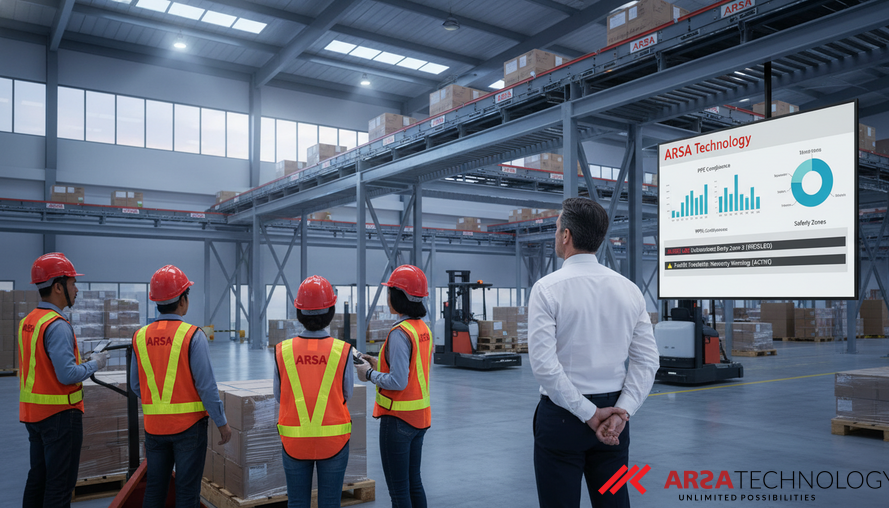
Automating PPE compliance monitoring with AI involves deploying intelligent video analytics systems that can identify and track individuals, detect the presence or absence of required PPE, and flag safety violations in real-time. These systems leverage existing CCTV infrastructure, transforming passive surveillance into an active safety intelligence platform.
At its core, an effective AI PPE detection system for industrial and logistics sites works by:
1. Video Stream Ingestion: Connecting to existing CCTV cameras (compatible with ONVIF and RTSP standards).
2. AI Model Processing: Running advanced computer vision algorithms on video feeds to identify objects (people, vehicles) and specific PPE items (hard hats, safety vests, gloves, masks).
3. Real-time Analysis: Continuously analyzing frames to determine if individuals in designated areas are wearing the correct PPE.
4. Anomaly Detection: Identifying instances where PPE is missing or improperly worn, or when individuals enter restricted zones without authorization.
5. Alert Generation: Triggering immediate alerts to EHS personnel, supervisors, or even directly to the individual via audio warnings.
6. Data Logging & Reporting: Recording all events, including timestamps, images, and video clips, for compliance reporting, incident investigation, and trend analysis.
This automated approach provides an unprecedented level of oversight, ensuring that safety protocols are consistently followed, even in the busiest and most complex logistics operations.
Beyond Manual Checks: The Power of AI PPE Detection Systems
The capabilities of an AI PPE detection system extend far beyond simply identifying hard hats. Modern systems offer a comprehensive suite of features designed to address various safety challenges in logistics:
- Automated Hard Hat Detection Using CCTV: This is a foundational capability. The system can accurately identify if a worker is wearing a hard hat in areas where it’s mandatory, minimizing the risk of head injuries.
- Safety Vest and Other PPE Detection: Beyond hard hats, AI can detect safety vests, gloves, eye protection, and even specialized equipment like fall arrest harnesses, ensuring full compliance with site-specific PPE requirements.
- Restricted Area Monitoring: AI can define virtual boundaries for restricted zones and immediately alert when unauthorized personnel or vehicles enter, or when authorized personnel enter without proper PPE.
- Intrusion Alerts: Detects and alerts on any unexpected entry into sensitive or dangerous areas, enhancing overall security.
- Safety Compliance Reporting: Automatically generates detailed reports on compliance rates, common violations, and incident frequency, providing valuable data for continuous improvement and audit readiness.
ARSA Technology’s Basic Safety Guard (AI Box) is an excellent example of such a solution. It’s specifically engineered for industrial environments like logistics facilities, offering robust PPE detection, restricted area monitoring, and real-time alerts.
Real-Time Safety Violation Alerts with Edge AI: A Game Changer
One of the most significant advantages of modern AI safety solutions is the integration of edge computing. Unlike cloud-based systems that send all video data to remote servers for processing, edge AI processes data directly on-site, close to the cameras. This offers several critical benefits for logistics:
- Low Latency: Real-time safety violation alerts are genuinely instant, allowing for immediate intervention. In a logistics environment where heavy machinery is involved, seconds can make the difference between a near-miss and a serious accident.
- Data Privacy and Security: All video streams and inference results remain within the facility’s network. This is crucial for compliance with data privacy regulations like GDPR and for organizations with strict data sovereignty requirements.
- Reduced Bandwidth Costs: Only metadata or specific alert images are sent over the network, significantly reducing bandwidth consumption compared to streaming full video feeds to the cloud.
- Offline Operation: Edge AI systems can operate fully offline, making them ideal for remote warehouses, construction sites, or facilities with unreliable internet connectivity.
The ARSA AI Box Series exemplifies this edge computing approach. These pre-configured edge AI systems combine hardware with ARSA’s video analytics software for fast, plug-and-play deployment. With options like the Mini PC model (up to 3 cameras) for distributed deployments or the Server model (up to 30 cameras) for centralized monitoring, the AI Box Series overview caters to diverse operational scales within logistics.
CCTV AI Analytics for Workplace Safety: Business Outcomes and ROI
Implementing CCTV AI analytics for workplace safety delivers tangible business outcomes and a strong return on investment (ROI) for logistics companies:
- Reduced Workplace Injury Rates: By proactively identifying and addressing non-compliance, AI significantly lowers the frequency and severity of accidents. This directly translates to fewer lost workdays and improved employee well-being.
- Automated OSHA / EU-OSHA / ISO 45001 Reporting: The system automatically logs all safety events and compliance data, simplifying the often complex and time-consuming process of generating reports for regulatory bodies and internal audits. This ensures adherence to standards like ISO 45001.
- Lower Workers’ Compensation Insurance Premiums: A demonstrable reduction in workplace incidents and a proactive safety program can lead to lower insurance costs, providing direct financial savings.
- Eliminate Manual Safety Inspections: While human oversight remains vital, AI automates the repetitive task of continuous PPE monitoring, freeing up EHS personnel to focus on higher-value activities like training, risk assessment, and safety culture development.
- Enhanced Operational Efficiency: A safer workplace is a more efficient workplace. Fewer incidents mean less downtime, fewer investigations, and a smoother flow of operations.
- Improved Employee Morale: Workers feel safer and more valued when management invests in advanced safety technologies, leading to higher morale and productivity.
The setup for solutions like the ARSA AI Box is designed for minimal disruption, often taking just 5 minutes to connect, configure, and begin monitoring. This rapid deployment means businesses can start realizing these benefits almost immediately.
Choosing the Right Edge AI Solution for Your Logistics Operations
When evaluating an edge AI solution for automating PPE compliance monitoring, logistics leaders should consider:
- Accuracy and Reliability: The system must deliver high accuracy in PPE detection to avoid false positives and negatives.
- Scalability: Can the solution scale from a single warehouse to multiple distribution centers?
- Ease of Integration: How easily does it integrate with existing CCTV infrastructure and potentially other operational systems (e.g., access control, incident management)? ARSA’s solutions are ONVIF and RTSP compatible, ensuring broad compatibility.
- Deployment Flexibility: Does it offer both edge and software-only options to match your IT infrastructure preferences?
- Data Control: Does the vendor provide full data ownership and on-premise processing capabilities?
- Vendor Experience: Look for providers with a proven track record in enterprise and government deployments, demonstrating expertise and trust. ARSA Technology, with over 7 years of experience, has a strong portfolio in mission-critical environments.
For organizations requiring custom dashboards or specific workflow integrations beyond standard offerings, ARSA also provides Custom Web Application development, ensuring the AI solution perfectly aligns with unique operational needs.
Conclusion
The logistics industry is undergoing a significant transformation, driven by the need for greater efficiency, security, and, crucially, safety. Understanding how to automate PPE compliance monitoring with AI is a critical step for EHS managers looking to future-proof their operations. By leveraging advanced edge AI solutions like the ARSA Basic Safety Guard, logistics companies can move beyond reactive safety measures to a proactive, intelligent system that protects their most valuable assets: their people. The benefits are clear: reduced injury rates, streamlined compliance, significant cost savings, and a safer, more productive workforce.
Ready to transform your logistics safety protocols with cutting-edge AI? Explore all ARSA products or contact ARSA solutions team today to discuss a tailored deployment for your facilities.
—
FAQ
What is an AI PPE detection system for industrial sites?
An AI PPE detection system uses artificial intelligence and computer vision to automatically monitor video feeds from existing CCTV cameras, identifying whether workers are wearing required Personal Protective Equipment (PPE) like hard hats, safety vests, and eye protection in real-time. It then generates alerts for non-compliance.
Can automated hard hat detection using CCTV work in remote logistics facilities?
Yes, solutions leveraging edge AI, like the ARSA AI Box Series, are ideal for remote logistics facilities. They process video data directly on-site, eliminating cloud dependency and high bandwidth requirements, allowing for real-time alerts even with limited or no internet connectivity.
How do real-time safety violation alerts with edge AI benefit logistics operations?
Real-time safety violation alerts with edge AI provide immediate notification of non-compliance or intrusions, enabling rapid intervention to prevent accidents. This low-latency processing directly on-site enhances worker safety, reduces incident response times, and supports continuous operational flow without delays.
What compliance standards can AI-powered PPE monitoring help meet?
AI-powered PPE monitoring systems can help logistics companies meet various international and national safety compliance standards, including OSHA regulations, EU-OSHA directives, and the ISO 45001 standard for occupational health and safety management systems, by providing verifiable data and automated reporting.
—
Stop Guessing, Start Optimizing.
Discover how ARSA Technology drives profit through intelligent systems.