
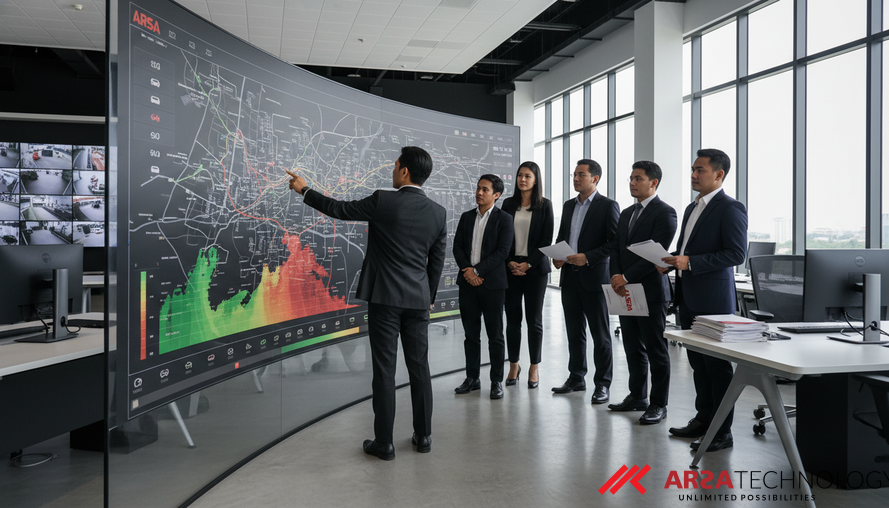

In an era where urban populations are rapidly expanding, efficient traffic management is no longer a luxury but a necessity. Government IT procurement teams are constantly seeking innovative, cost-effective solutions to enhance city infrastructure. The question of how to implement AI traffic analytics with existing CCTV cameras stands out as a critical challenge and opportunity. Leveraging existing surveillance infrastructure with advanced AI offers a pragmatic path to smarter cities, enabling real-time insights into traffic patterns, congestion, and incident detection without the prohibitive cost of entirely new hardware deployments.
Traditional CCTV systems, while effective for security and forensic review, often fall short in providing the dynamic, actionable intelligence required for modern traffic management. They capture vast amounts of video data but lack the inherent ability to automatically interpret and analyze it for operational insights. This is where AI-powered video analytics steps in, transforming passive surveillance into an active, intelligent sensor network. ARSA Technology offers robust solutions, such as the ARSA Traffic Monitor (AI Box), designed specifically to bridge this gap, providing a 5-minute plug-and-play setup that integrates seamlessly with your current CCTV cameras.
The Strategic Advantage of Retrofitting CCTV for Traffic Analytics
For public sector entities, the ability to retrofit CCTV for vehicle classification and counting is a game-changer. It means that significant capital investments in existing camera networks can be preserved, while simultaneously upgrading their functionality to meet contemporary smart city objectives. This approach minimizes disruption, accelerates deployment timelines, and delivers a strong return on investment (ROI) by maximizing the utility of current assets. Instead of replacing hundreds or thousands of cameras, municipalities can deploy edge AI devices that process video streams locally, extracting valuable traffic data. This local processing ensures data privacy and compliance with regulations like GDPR, as sensitive video footage doesn’t need to be streamed to the cloud for analysis.
How to Implement AI Traffic Analytics with Existing CCTV Cameras: A Step-by-Step Guide
Implementing AI traffic analytics involves a clear, structured approach, particularly when integrating with existing infrastructure. ARSA Technology’s AI Box Series simplifies this process significantly.
1. Assessment of Existing Infrastructure: Begin by evaluating your current CCTV camera network. Identify camera locations, coverage areas, and network connectivity. Most IP cameras are compatible, making the transition smooth. The goal is to understand where traffic monitoring is most critical and how existing cameras can best cover those zones.
2. Selection of Edge AI Hardware: Choose an AI Box solution that matches your operational scale. For distributed deployments or areas with fewer cameras, a Mini PC Model processing up to 3 camera streams might be ideal. For centralized monitoring of heavy workloads, a Server Model capable of processing up to 30 camera streams simultaneously, powered by Intel® Processors paired with dedicated NVIDIA® GPUs, offers high-throughput processing. The AI Box Series overview provides detailed options.
3. Plug-and-Play Installation: This is where the ARSA AI Box truly shines. Connect the AI Box to power, your existing network, and the CCTV cameras. The system is designed for rapid deployment, often taking as little as 5 minutes for physical setup. This minimizes installation costs and time, a crucial factor for government projects.
4. Configuration of Analytics Modules: Once connected, configure the specific analytics modules required. This includes defining detection zones for vehicle counting, setting up parameters for vehicle classification (e.g., cars, trucks, motorcycles), and establishing rules for traffic flow analysis and congestion detection. Real-time dashboards become immediately accessible, providing a visual representation of traffic conditions.
5. Monitoring and Data Utilization: Access the real-time dashboards, alerts, and historical reports either locally or remotely. This data is crucial for urban planners to make informed decisions, optimize traffic signal timings, and identify areas prone to congestion. The system can also detect incidents, such as stalled vehicles or accidents, triggering immediate alerts for emergency response.
Key Capabilities and Business Outcomes
By choosing to add AI traffic counting to security cameras and enhance them with advanced analytics, public sector organizations unlock a suite of powerful capabilities:
- Vehicle Counting and Classification: Accurately count vehicles entering or exiting specific zones and classify them by type. This data is fundamental for understanding traffic composition and planning for future infrastructure needs.
- Traffic Flow Analysis: Monitor the movement of traffic across lanes and intersections, identifying bottlenecks and predicting potential congestion points.
- Congestion Detection: Receive real-time alerts when traffic density exceeds predefined thresholds, allowing for proactive intervention.
- Lane Utilization: Understand how different lanes are being used, which can inform decisions on dedicated lanes or reversible traffic flows.
- Incident Detection: Automatically identify unusual events like stopped vehicles, wrong-way driving, or pedestrian incursions, improving public safety and response times.
These capabilities translate directly into significant business outcomes for public sector entities. Cities can achieve optimized traffic flow, leading to reduced travel times and fuel consumption. Data-driven urban planning becomes a reality, allowing for evidence-based decisions on infrastructure development and public transport initiatives. The ability to reduce congestion contributes to improved air quality and supports sustainable mobility programs. Furthermore, the edge computing architecture ensures that data processing occurs locally, adhering to strict data privacy regulations such as GDPR, as only anonymous, aggregated data needs to be shared or stored.
Upgrading Traffic Cameras with Edge AI: The ARSA Technology Difference
ARSA Technology’s approach to traffic analytics emphasizes practical, deployable AI solutions. Our ARSA Traffic Monitor, part of our robust AI Box Series, is engineered for environments where latency, privacy, and operational reliability are non-negotiable. Unlike cloud-dependent solutions, our edge processing model ensures minimal latency for real-time insights and full data ownership, a critical consideration for government and public sector deployments. This means your video streams are analyzed on-device and do not leave your network unless explicitly configured, providing an unparalleled level of security and control.
Our seven years of deep engineering expertise and proven track record with government and enterprise clients underscore our commitment to delivering systems that work in the real world. For example, our solutions have been deployed in critical infrastructure, demonstrating our capability to handle sensitive environments. This commitment extends to our AI video analytics software, which also includes modules like ARSA Basic Safety Guard (Software) for industrial safety, showcasing the breadth of our AI capabilities.
For those looking to convert surveillance cameras to traffic sensors, ARSA Technology provides a clear, efficient, and secure pathway. Our solutions are not experimental; they are production-grade systems trusted by leaders in government and industry. For a deeper dive into practical implementations, you might find our article on How to Implement AI Traffic Analytics with Existing CCTV Cameras: A Practical Guide for Public-Sector Builders particularly insightful. Additionally, a Complete Guide to Implement AI Traffic Analytics with Existing CCTV Cameras offers further comprehensive details.
Frequently Asked Questions
How can I add AI traffic counting to security cameras without replacing them?
You can add AI traffic counting to security cameras by deploying an edge AI device, such as the ARSA AI Box Traffic Monitor. This device integrates with your existing CCTV infrastructure, processing video streams locally to perform vehicle counting, classification, and other analytics without requiring new cameras.
What are the benefits of retrofitting CCTV for vehicle classification?
Retrofitting CCTV for vehicle classification allows public sector entities to leverage existing infrastructure, saving significant costs compared to new deployments. It provides real-time data for urban planning, reduces congestion, improves incident response, and supports data privacy by processing data at the edge.
Is cloud connectivity mandatory to upgrade traffic cameras with edge AI?
No, cloud connectivity is optional for ARSA’s edge AI solutions. The ARSA AI Box processes all video streams locally, ensuring full data ownership and operational reliability even in air-gapped or isolated environments, making it ideal for privacy-sensitive public sector deployments.
What kind of data privacy measures are in place for AI traffic analytics?
ARSA’s AI traffic analytics solutions, particularly the AI Box Series, perform all AI processing locally at the edge. This means video streams are analyzed on-device, and raw footage does not leave your network. Only anonymous, aggregated data is used for reporting, ensuring compliance with strict data privacy regulations like GDPR.
Conclusion
The journey to a smarter, more efficient city begins with intelligent infrastructure. Understanding how to implement AI traffic analytics with existing CCTV cameras is the first step towards transforming urban mobility and public safety. ARSA Technology provides the proven, practical solutions necessary for government IT procurement teams to achieve these goals. By leveraging edge AI, municipalities can unlock real-time insights, make data-driven decisions, and build more resilient and responsive urban environments, all while preserving existing investments and ensuring data privacy.
Ready to transform your city’s traffic management? Explore all ARSA products or contact ARSA solutions team today to discuss how our AI Box Series can empower your smart city initiatives.
Stop Guessing, Start Optimizing.
Discover how ARSA Technology drives profit through intelligent systems.