
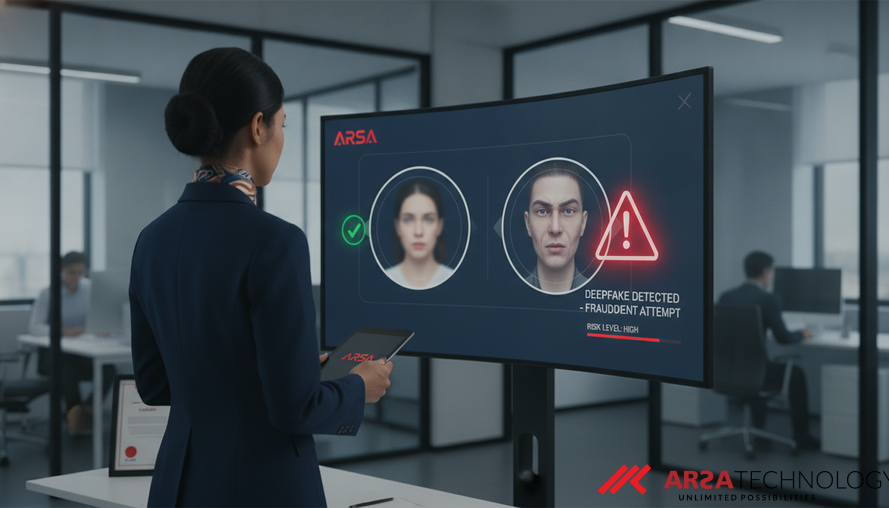

How to Prevent Deepfake Fraud at Onboarding with Advanced Face Verification
In the rapidly evolving landscape of digital identity, financial institutions and fintech companies face an escalating threat: deepfake fraud. As a risk officer, understanding how to prevent deepfake fraud at onboarding with face verification is no longer optional, but a critical imperative for maintaining security and compliance. These sophisticated AI-generated impersonations can bypass traditional Know Your Customer (KYC) processes, leading to significant financial losses and reputational damage.
Deepfake technology, leveraging artificial intelligence to create highly realistic synthetic media, has transitioned from a niche concern to a mainstream fraud tool. According to Sumsub, deepfakes detected worldwide increased fourfold from 2023 to 2024, now accounting for 7% of all fraud attempts on their identity verification platform. In the financial sector, deepfake case growth for fintech alone surged by 533% year-over-year in 2024, highlighting the urgent need for robust deepfake prevention face verification API solutions.
The Evolving Threat: Deepfakes and Synthetic Media
Deepfake KYC attacks involve using AI-generated or AI-manipulated media to impersonate a real person during identity checks. This removes the need for physical forgeries or human accomplices, allowing fraudsters to create photorealistic faces that don’t exist, place them on forged identity documents, and even animate them to satisfy liveness prompts. The Financial Action Task Force (FATF) has identified deepfakes as a direct threat to anti-money laundering (AML) and customer due diligence controls, while the US Financial Crimes Enforcement Network (FinCEN) has issued alerts on related fraud schemes.
The cost to create a KYC-beating AI face can be surprisingly low, reportedly under $20 with about 30 minutes of setup, making these attacks highly accessible to malicious actors. This ease of access contributes to the alarming statistics; for instance, deepfake fraud attempts in contact centers surged by an astounding 1,300% in 2024, as reported by Pindrop.
Why Traditional Face Verification Falls Short Against AI-Generated Spoofing Protection
Many existing identity verification systems were designed to counter simpler forms of fraud, such as presentation attacks where a photo or mask is held up to a camera. However, modern deepfakes introduce new attack vectors that bypass these defenses.
1. Sophisticated Presentation Attacks: Today’s AI-generated face spoofing protection challenges are more complex. Face-swap tools can now reproduce subtle human signals like blinking, head turns, and smiles on command. This means that an active liveness prompt asking a user to perform a specific action can be trivially defeated by synthetic media, as the AI can simply mimic the required movement.
2. Injection Attacks Bypass the Camera: A more insidious threat is the injection attack, which entirely bypasses the physical camera. Instead of presenting fake content to a camera, attackers feed synthetic video directly into the verification pipeline using virtual camera drivers or operating-system level hijacks. iProov’s threat intelligence reports a staggering 2,665% spike in Native Virtual Camera attacks in 2024, and a 741% annual rise in iOS injection attacks in 2025. These attacks leave no physical artifacts like screen glare or bezels, making them incredibly difficult for traditional liveness checks to detect.
3. Human Incapability: Perhaps the most sobering fact is that humans are largely unable to reliably distinguish real media from deepfakes. An iProov study found that only 0.1% of participants could correctly identify every real and fake sample, even when confident in their abilities. This underscores that detection must be integrated into the system, not left to human review.
Gartner projects that by 2026, 30% of enterprises will consider identity verification solutions unreliable in isolation due to deepfake attacks on face biometrics. This highlights the urgent need for a new generation of anti-deepfake API for banking apps and other digital identity platforms.
ARSA Face Recognition & Liveness API: Your Defense Against Synthetic Media
ARSA Technology offers a robust, cloud-based ARSA Face Recognition & Liveness API specifically engineered to combat the evolving threat of deepfake fraud. Designed for identity management, authentication, and secure onboarding, this API provides a complete identity layer, not just a simple comparison endpoint.
Key capabilities that directly address deepfake threats include:
- Active + Passive Liveness Detection: Beyond basic liveness, ARSA’s API incorporates challenge-response based verification, requiring users to perform guided actions. This helps prevent sophisticated photo and video replay attacks.
- 1:1 Face Verification and 1:N Face Identification: The API enables precise 1:1 face matching verification to confirm if two faces belong to the same person, crucial for login and step-up authentication. For broader security, 1:N face recognition identifies a person against a secure face database, designed for access control and monitoring.
- Face Database Management: Securely enroll, update, and remove identities within isolated, per-account face databases. This ensures data privacy and tenant separation, critical for compliance with regulations like GDPR and eIDAS.
- Real-time Detection and Analytics: The API performs face detection with bounding boxes, age estimation, gender classification, and expression detection (neutral, happy, sad, surprise, anger), providing comprehensive data for robust identity verification.
ARSA’s Face Recognition & Liveness overview emphasizes a multi-layered approach to security. The system is designed to help you meet stringent KYC and AML obligations under frameworks like PSD2, eIDAS, FinCEN, and RBI V-CIP, by providing a reliable defense against presentation attacks, injection attacks, and synthetic identity fraud.
Seamless Integration and Scalable Performance
Implementing advanced deepfake prevention doesn’t have to be a complex undertaking. The ARSA Face Recognition & Liveness API is a cloud SaaS solution, meaning you can launch face login and robust fraud prevention in days, not months. With simple x-key-secret API key authentication, developers can achieve their first API call in under 5 minutes. The API supports JPEG/PNG images and MP4/WebM video for active liveness, with cURL/Python/JavaScript code examples available in the Face Recognition API documentation.
ARSA Technology, an NVIDIA Inception and Intel partner with over 7 years of track record, understands the need for reliable, scalable solutions. The API boasts a 99.9% uptime target and a developer dashboard with usage analytics, ensuring transparency and control. You only pay for what you use, with flexible Face API pricing plans ranging from a Basic free 30-day trial (100 calls/month, 100 face IDs, no credit card required) to Pro, Ultra, and Mega tiers, all including every feature.
For further insights into securing digital identities, you might find our article on How to Prevent Deepfake Fraud at Onboarding with Advanced Face Verification particularly helpful. Additionally, for those in the crypto space, Optimizing Crypto Onboarding: A Face Recognition API for Crypto Exchange and Web3 KYC offers valuable strategies.
The Path Forward for Risk Officers
To effectively combat deepfake fraud, risk officers must prioritize solutions that go beyond basic liveness detection. The focus must shift to verifying the authenticity of the capture source and analyzing passive biometric signals that are nearly impossible for AI to perfectly replicate. This includes:
- Capture-Source Validation: Ensuring that video frames originate from a genuine device camera, not a virtual driver or injected stream. This is a critical defense against injection attacks.
- Multi-frame Temporal Analysis: Examining consistency of micro-signals across multiple frames to detect temporal inconsistencies that synthetic media often struggles to maintain.
- Passive Biometric Signals: Leveraging physiological cues like blood-flow-driven color changes and true 3D depth, which are extremely difficult for current generative models to reproduce.
- Biometric Binding: Tying the identity document and the live selfie together in a single, unbroken capture session to close gaps between checks.
By adopting an advanced deepfake prevention face verification API like ARSA’s, fintechs can significantly reduce their exposure to synthetic identity fraud. This not only protects against financial losses, such as the widely reported US$25.6 million Arup Hong Kong deepfake scam, but also strengthens compliance postures and builds greater trust with customers.
Ready to enhance your digital onboarding security? Create a free Face API account today and experience the power of ARSA’s enterprise-grade face verification against synthetic media. For tailored solutions or to discuss your specific needs, don’t hesitate to contact ARSA solutions team.
FAQ
What is the primary risk of deepfake fraud at onboarding for fintechs?
The primary risk is the successful creation of synthetic identities that bypass KYC checks, leading to fraudulent account openings. These accounts can then be used for money laundering, mule activity, or other financial crimes, resulting in significant financial losses and regulatory penalties for fintechs.
How does ARSA’s Face Recognition & Liveness API provide AI generated face spoofing protection?
ARSA’s API offers active and passive liveness detection, which includes challenge-response mechanisms that require users to perform guided actions. This helps to detect and prevent sophisticated presentation attacks, where fraudsters use AI-generated faces or videos to mimic real human behavior.
Can ARSA’s anti-deepfake API for banking apps detect injection attacks?
While ARSA’s API focuses on robust liveness detection to prevent presentation attacks, a comprehensive defense against injection attacks (which bypass the camera entirely) requires validating the capture source. ARSA’s solutions are designed to integrate into a broader security architecture that supports such multi-layered defenses, helping banking apps to verify that media originates from a genuine device camera.
What are the business outcomes of using ARSA’s face verification against synthetic media?
Implementing ARSA’s face verification against synthetic media enables fintechs to launch secure face login in days, not months, meet critical KYC and AML obligations (e.g., under PSD2, eIDAS, FinCEN, RBI V-CIP), prevent presentation and synthetic identity fraud, and benefit from a pay-as-you-use cloud SaaS model without managing infrastructure.
How accurate is ARSA’s face recognition with liveness detection?
ARSA’s Face Recognition API achieves 99.7% accuracy with both active and passive liveness detection to prevent spoofing attacks using photos or videos, as stated in our knowledge base. This high accuracy is crucial for reliable identity verification in high-stakes environments.
Stop Guessing, Start Optimizing.
Discover how ARSA Technology drives profit through intelligent systems.