
How to Reduce False Alarms in AI Safety Video Monitoring for Construction Sites
In the demanding environment of construction, maintaining worker safety is paramount. AI safety video monitoring offers a powerful solution, but its effectiveness can be severely hampered by a deluge of false alarms. Security operations leads often find themselves drowning in alerts, leading to alert fatigue and the risk of missing genuine threats. This article explores practical strategies and advanced technologies designed to how to reduce false alarms in AI safety video monitoring, ensuring that AI systems enhance, rather than hinder, operational safety on construction sites.
Traditional video surveillance, even with basic AI, can generate numerous irrelevant notifications from harmless events like shadows, animals, or non-critical movements. For a construction site, this might mean a bird triggering a “person detected” alert or a piece of equipment being mistaken for a safety violation. Such frequent false positives not only waste valuable time but also desensitize personnel, making them less responsive when a real emergency occurs. The key lies in implementing intelligent systems that are meticulously tuned for accuracy and context.
The Challenge of Alert Fatigue in Construction Safety
Construction sites are dynamic, complex environments. Workers, vehicles, and materials are constantly in motion. This inherent variability makes it particularly challenging for AI systems to distinguish between routine activities and genuine safety violations. When an AI system frequently misidentifies a common occurrence as a threat, it contributes to AI safety alert fatigue reduction. This fatigue can lead to delayed responses, increased operational costs, and, most critically, a higher risk of accidents.
For instance, a system designed for PPE detection might flag a worker momentarily removing their hard hat in a designated safe zone, or a piece of reflective tape on clothing as a missing safety vest. These non-critical events, when repeatedly flagged, erode trust in the system and overwhelm security teams. A 2023 study by IFSEC Global highlighted that false alarms remain a significant challenge in security operations, with many organizations reporting that over 70% of their alerts are non-critical or false, underscoring the urgent need for better filtering and contextual intelligence. IFSEC Global
Strategies to Tune PPE Detection to Cut False Positives
To effectively tune PPE detection to cut false positives, a multi-faceted approach is required, combining advanced AI capabilities with intelligent system configuration.
1. Contextual Awareness and Zone-Based Rules:
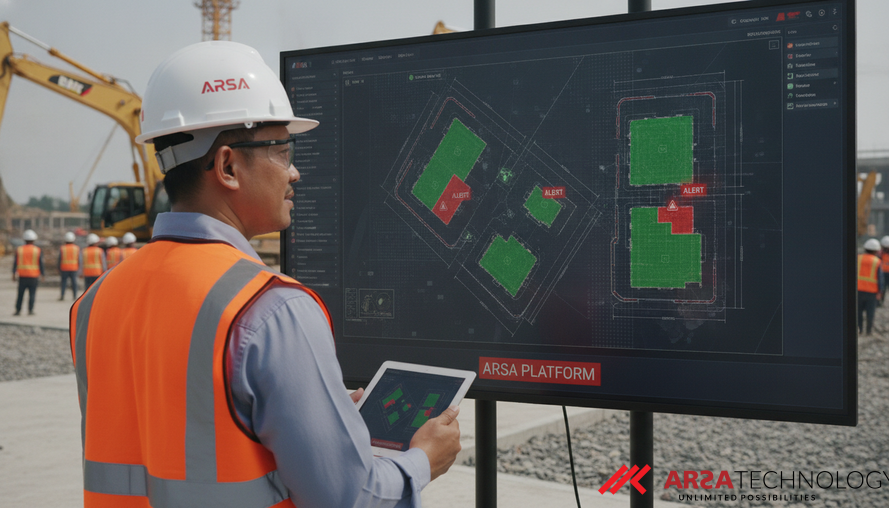
One of the most effective ways to reduce false alarms is by making the AI system context-aware. This involves defining specific “detection zones” where certain rules apply. For example, a “hard hat required” zone will only trigger an alert if a worker is detected without a hard hat within that specific area. Outside this zone, the absence of a hard hat might be ignored. ARSA’s AI Box Series, particularly the ARSA Basic Safety Guard (AI Box), allows for precise configuration of such zones and rules, ensuring that alerts are generated only when relevant to the immediate operational context.
2. Object Classification Refinement:
Advanced AI models are crucial. Instead of generic “object detection,” sophisticated systems can accurately classify specific items like hard hats, safety vests, and other PPE. This reduces instances where non-PPE items are mistaken for violations. ARSA’s solutions leverage robust computer vision to provide accurate safety violation detection, minimizing misidentifications.
3. Environmental Filtering and Anomaly Detection:
AI systems can be trained to filter out common environmental factors that cause false alarms. This includes ignoring shadows, reflections, or even specific weather conditions (e.g., heavy rain causing motion blur). Furthermore, true anomaly detection focuses on identifying deviations from established normal patterns, rather than simply matching against a static rule set. This dynamic learning helps the system adapt to the unique rhythms of a construction site.
Implementing Severity-Tiered Safety Alerts with Edge AI
Not all safety violations carry the same level of urgency. A critical strategy for severity tiered safety alerts edge AI systems is to categorize alerts based on their potential impact. This allows security personnel to prioritize responses, focusing on high-risk situations first.
For example:
- Critical Alert: Intrusion into a live excavation zone without proper fall protection. (Immediate action required)
- High Alert: Worker detected in a restricted area without a safety vest. (Urgent review and intervention)
- Medium Alert: Minor PPE non-compliance in a low-risk zone. (Follow-up investigation)
- Low Alert: Vehicle parked slightly outside a designated area. (Informational, non-urgent)
Edge computing plays a vital role in enabling this real-time, tiered alerting. The AI Box Series overview highlights its ability to process video streams locally, directly at the source. This means alerts are generated and categorized instantly, without the latency associated with cloud-based processing. For a construction site, where seconds can make a difference in preventing an accident, this immediate feedback is invaluable. The ARSA AI Box offers both a Mini PC model (up to 3 cameras) and a Server model (up to 30 cameras), providing flexible edge processing power to suit various site sizes and complexities.
Achieving Accurate Safety Violation Detection with Low False Alarms
The ultimate goal is accurate safety violation detection low false alarm rates. This is achieved through a combination of robust AI models, intelligent system design, and continuous optimization.
ARSA Technology’s Basic Safety Guard, deployed via the AI Box, is specifically engineered for this purpose. It integrates seamlessly with existing CCTV infrastructure (supporting ONVIF and RTSP cameras) and provides:
- Precise PPE Detection: Reliably identifies hard hats, safety vests, and other critical gear.
- Restricted Area Monitoring: Triggers alerts only when unauthorized personnel or objects enter predefined sensitive zones.
- Real-time Alerts: Delivers instant notifications to relevant personnel, allowing for immediate intervention.
- No Cloud Dependency: All AI processing occurs on the edge device, ensuring data privacy and minimal latency, crucial for sensitive construction operations.
By leveraging such a system, construction companies can significantly reduce workplace injury rates, automate compliance reporting for standards like OSHA, EU-OSHA, and ISO 45001, and potentially lower workers’ compensation insurance premiums. The elimination of constant manual safety inspections also frees up valuable human resources, allowing safety officers to focus on proactive measures and training.
The ROI of Reduced False Alarms
Investing in an AI safety video monitoring system that minimizes false alarms delivers a clear return on investment. Beyond the immediate operational efficiencies, there are significant financial and human benefits:
- Cost Savings: Fewer false alarms mean less time wasted by security personnel investigating non-events, reducing labor costs.
- Enhanced Productivity: A reliable system allows workers and supervisors to focus on their tasks without constant distractions from irrelevant alerts.
- Improved Safety Culture: A system that consistently provides accurate, actionable insights builds trust among workers and reinforces a strong safety culture. This can lead to a tangible reduction in accidents and associated costs. A recent report by the National Safety Council indicated that the total cost of work injuries in the US in 2022 was $171 billion, highlighting the immense financial impact of workplace incidents. National Safety Council
- Compliance Assurance: Automated reporting and accurate detection help companies maintain stringent compliance with safety regulations, avoiding costly fines and legal repercussions.
Frequently Asked Questions
How can AI safety alert fatigue reduction be achieved on a busy construction site?
AI safety alert fatigue reduction is achieved through intelligent system configuration, including defining specific detection zones, refining object classification for PPE, and implementing severity-tiered alerts. Edge AI systems, like the ARSA Basic Safety Guard, process data locally to deliver more relevant and timely alerts, reducing the volume of non-critical notifications.
What are the key features to look for in a system to tune PPE detection to cut false positives?
When evaluating systems, look for advanced computer vision capabilities that can accurately distinguish between different types of PPE (hard hats, vests) and non-PPE items. The ability to set up granular, context-aware rules for specific zones on the construction site is also critical for cutting false positives.
How do severity tiered safety alerts edge AI systems improve response times?
Severity-tiered alerts prioritize critical incidents, allowing security teams to focus on the most urgent threats first. Edge AI systems process data locally, eliminating cloud latency and delivering these prioritized alerts in real-time, significantly improving the speed and effectiveness of emergency responses.
Can accurate safety violation detection low false alarm rates truly eliminate manual safety inspections?
While AI systems can drastically reduce the need for constant manual inspections by providing continuous, automated monitoring, they are best seen as a powerful tool to augment human oversight. They free up safety officers to conduct more strategic, in-depth inspections and focus on proactive safety measures, rather than routine surveillance.
Transform Your Construction Site Safety with ARSA Technology
The challenges of managing safety on construction sites are significant, but with the right AI safety video monitoring solution, it’s possible to achieve both robust security and operational efficiency. By focusing on how to reduce false alarms in AI safety video monitoring, organizations can move beyond alert fatigue to a system that provides genuinely actionable intelligence.
ARSA Technology’s Basic Safety Guard (AI Box) offers a proven, edge-based solution designed to deliver accurate safety violation detection with exceptionally low false alarm rates. Its plug-and-play setup, no cloud dependency, and real-time capabilities make it an ideal choice for construction companies seeking to enhance worker safety, streamline compliance, and protect their bottom line. Explore all ARSA products, including the ARSA Self-Check Health Kiosk for comprehensive workforce wellness, or contact ARSA solutions team today to discover how our AI Box Series can transform your safety operations.
Stop Guessing, Start Optimizing.
Discover how ARSA Technology drives profit through intelligent systems.