
How to Reduce Occupational Health Costs with AI Health Kiosk in Manufacturing
In the demanding environment of manufacturing, ensuring employee well-being is not just a moral imperative but a critical business strategy. High occupational health costs can significantly impact a company’s bottom line, stemming from absenteeism, injuries, chronic diseases, and the administrative burden of traditional health screenings. Forward-thinking plant managers and CFOs are actively seeking innovative solutions to address these challenges. One such solution gaining traction is the deployment of AI-powered health kiosks, offering a powerful way to reduce occupational health costs with AI health kiosk technology.
The manufacturing sector faces unique health and safety risks. According to SmartQHSE, manufacturing sees 373 fatalities per year in the US, with contact with objects and equipment being a top cause. Beyond accidents, occupational diseases contribute to a staggering 2.4 million deaths annually worldwide, highlighting the critical need for proactive health management. The total cost of work injuries in the United States alone is estimated at $167 billion annually by the National Safety Council, underscoring the immense financial pressure on businesses.
The Strategic Advantage of AI Health Kiosks in Manufacturing
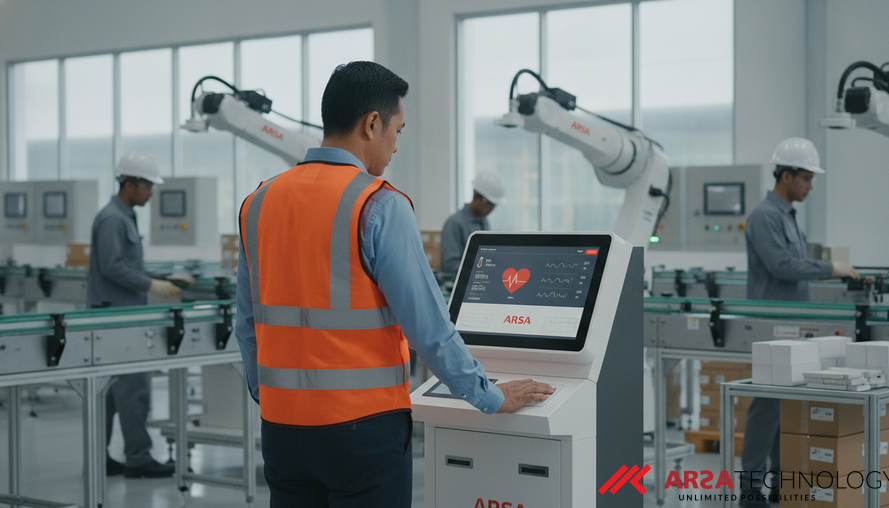
Traditional health screening methods often involve significant time, resources, and potential for human error. They can lead to clinic congestion, delays in patient flow, and inconsistent data collection. This is where a self-service health check reduces clinic visits and streamlines the entire process. ARSA Technology’s Self-Check Health Kiosk offers an autonomous, medical-grade solution designed to integrate seamlessly into industrial environments.
By automating routine vital checks, these IoT kiosks free up valuable healthcare staff time, allowing them to focus on critical cases rather than administrative tasks. This shift directly contributes to a substantial ROI of employee health screening kiosk investments. For instance, one global manufacturing company, utilizing a comprehensive health advocacy program, reported saving $547,425 in health plan savings in just one year, achieving an impressive 293% ROI and saving their HR team 664 hours of work, as detailed in a HealthCheck360 case study. This demonstrates the tangible financial benefits of investing in advanced health screening solutions.
Early Detection: A Cornerstone of Preventive Health Monitoring for Industrial Workers
The ability to identify health issues at their earliest stages is paramount in preventing minor concerns from escalating into costly chronic conditions or severe workplace incidents. ARSA’s Self-Check Health Kiosk provides advanced capabilities for early detection employee health issues technology. Equipped with medical-grade sensors, it accurately measures:
- Blood Pressure: Crucial for identifying hypertension, a silent killer that can lead to heart disease and stroke.
- Blood Oxygen (SpO2): Essential for monitoring respiratory health, particularly relevant in environments with potential air quality concerns.
- Heart Rate: A key indicator of cardiovascular health and overall stress levels.
- AI-Powered Romberg Balance Test: An innovative feature that assesses a person’s balance, which can be vital for workers operating heavy machinery or working at heights.
This comprehensive data collection, performed in approximately 90 seconds, allows for immediate flagging of critical readings against user-defined thresholds. Such proactive alerts can auto-route to on-call physicians, significantly reducing emergency response times and potentially preventing serious health events.
Automating Pre-Shift Health Screening and Supporting Corporate Wellness
For manufacturing plants, pre-shift health screening is a critical component of safety protocols. Manual processes are often time-consuming and prone to inconsistencies. The ARSA Self-Check Health Kiosk automates this process, using face recognition identification or QR-based verification to quickly and securely identify employees. This not only streamlines access control integration but also ensures that every worker begins their shift with an up-to-date health check.
Beyond compliance, these kiosks are powerful tools for supporting broader corporate wellness programs. By providing accessible and consistent health monitoring, they empower employees to take ownership of their health. Aggregated (de-identified) analytics from the local dashboard can offer valuable insights into population health trends, enabling management to tailor wellness initiatives more effectively. This proactive approach aligns with modern occupational health standards, such as those promoted by ISO 45001:2021 for Psychological Health and Safety at Work, which emphasizes addressing psychosocial risks like burnout and excessive hours. Understanding these evolving standards is key for maintaining a healthy and compliant workforce.
Key Features and Business Outcomes
The ARSA Self-Check Health Kiosk is an IoT kiosk designed for robust industrial deployment. Its core functions are driven by AI & IoT technology, ensuring accuracy and reliability. Key features include:
- Self-Service Vitals Capture: A guided interface allows users to perform an 8-parameter screening, including blood pressure, heart rate, SpO2, and temperature, without staff intervention.
- Instant Digital Records: Encrypted health profiles are stored in a cloud dashboard (with on-premise or hybrid cloud deployment options for data sovereignty), and patients receive immediate reports.
- Smart Triage Alerts: AI flags critical readings (e.g., hypertension >140/90, fever >38°C, SpO2 <94%) and can automatically notify medical personnel.
- Local Dashboard with Data Export & API Integration: Provides full control over data, allowing for seamless integration with existing HR or health management systems.
These features translate directly into measurable business outcomes:
- Reduced Occupational Health Costs: By automating screenings, preventing severe health incidents through early detection, and reallocating nursing staff to critical care, organizations can see significant cost savings.
- Improved Employee Productivity and Morale: Healthier employees are more productive. Proactive health management reduces absenteeism and presenteeism.
- Enhanced Compliance: Streamlined, documented health screenings support regulatory compliance and audit readiness.
- Data-Driven Wellness Programs: Aggregated data empowers HR to create targeted wellness initiatives, potentially leveraging insurance premium reductions.
For organizations considering a comprehensive AI-driven solution for their facilities, exploring the full range of ARSA products, including the ARSA Smart Retail Counter (AI Box) for people counting and behavior analytics, can reveal further opportunities for operational intelligence.
Frequently Asked Questions
What is the typical ROI of employee health screening kiosk in a manufacturing setting?
The ROI for an employee health screening kiosk in manufacturing is typically achieved within 14-18 months. This is primarily driven by labor reallocation, increased patient throughput, and the prevention of costly health-related incidents due to early detection, as demonstrated by significant health plan savings and reduced HR workload.
How does early detection employee health issues technology benefit industrial workers?
Early detection technology, such as that found in the ARSA Self-Check Health Kiosk, benefits industrial workers by identifying potential health problems like hypertension, low blood oxygen, or balance issues before they become severe. This proactive approach allows for timely intervention, preventing serious illness or accidents and improving overall worker safety and well-being.
Can a self-service health check reduces clinic visits and staff burden?
Absolutely. By providing an autonomous station for vital sign measurement, a self-service health check kiosk significantly reduces the need for routine clinic visits for basic screenings. This frees up healthcare staff time, reduces clinic congestion, and allows medical professionals to focus on more complex cases, thereby reducing the overall staff burden.
What are the key components of preventive health monitoring for industrial workers using an AI kiosk?
Key components include automated measurement of vital signs (blood pressure, SpO2, heart rate, temperature), an AI-powered Romberg balance test, and secure employee identification (face recognition or QR code). The system also provides instant digital records, smart triage alerts for critical readings, and a local dashboard for data management, all contributing to a robust preventive health strategy.
Conclusion
Investing in an AI health kiosk is a strategic decision for manufacturing companies looking to optimize operational efficiency and safeguard their most valuable asset: their workforce. By embracing advanced solutions like the ARSA Self-Check Health Kiosk overview, organizations can effectively reduce occupational health costs with AI health kiosk technology, ensure early detection of health issues, and foster a culture of proactive wellness. This not only leads to significant financial savings but also creates a safer, healthier, and more productive industrial environment.
Ready to transform your occupational health strategy and realize measurable ROI? Contact ARSA solutions team today for a consultation and discover how our Self-Check Health Kiosk can benefit your manufacturing operations.
Stop Guessing, Start Optimizing.
Discover how ARSA Technology drives profit through intelligent systems.