
How to Reduce Workplace Accidents with AI Video Analytics: Cloud API vs. On-Premise SDK
Workplace safety is paramount, especially in dynamic environments like manufacturing. For Chief Financial Officers (CFOs) tasked with optimizing operational efficiency and mitigating risk, the question isn’t *if* to invest in advanced safety measures, but *how*. Implementing AI video analytics offers a powerful solution to reduce workplace accidents with AI video analytics, transforming passive surveillance into proactive intelligence. However, choosing the right deployment model—Cloud API or On-Premise SDK—is a critical decision that impacts cost, control, and compliance. This guide explores both approaches, highlighting the benefits of an on-premise solution like ARSA’s AI Video Analytics Software for robust safety monitoring.
In an era where regulatory compliance (e.g., ISO 45001) and data sovereignty are non-negotiable, understanding the nuances of AI deployment is essential. The right system can significantly enhance safety protocols, leading to a substantial ROI of AI safety monitoring in manufacturing by preventing incidents, reducing insurance premiums, and avoiding costly downtime.
Understanding AI Video Analytics for Workplace Safety
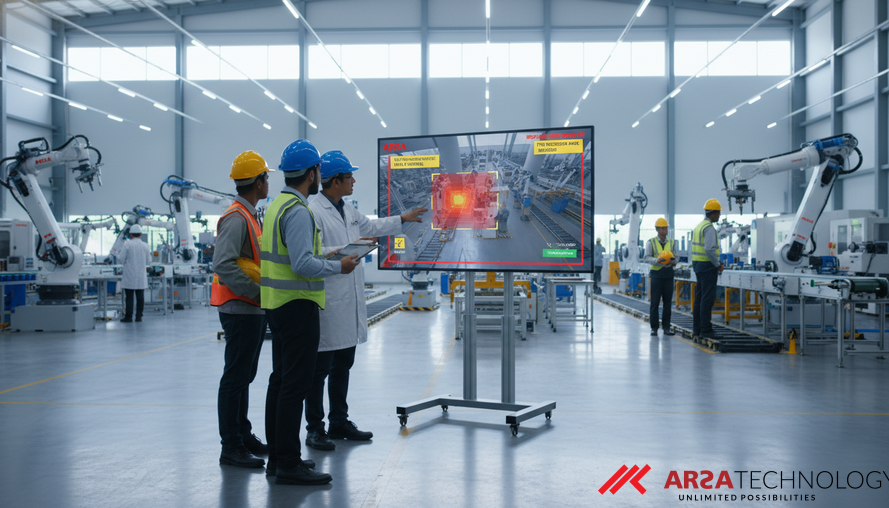
AI video analytics leverages computer vision to automatically detect and analyze events within CCTV footage in real-time. For workplace safety, this translates to capabilities such as:
- PPE detection: Identifying if workers are wearing required personal protective equipment (helmets, vests, masks).
- Restricted area monitoring: Alerting personnel when individuals enter unauthorized zones.
- Safety violation alerts: Detecting unsafe behaviors or conditions.
- Compliance reporting: Generating automated reports for audits.
- Event logging: Creating a detailed record of all detected incidents.
These functions provide an unprecedented level of oversight, allowing organizations to intervene swiftly and prevent accidents before they occur.
Cloud API for Safety Monitoring: Agility with External Dependency
A Cloud API approach for AI video analytics offers quick integration and scalability, often with a pay-as-you-go model. Developers can rapidly integrate PPE detection and other safety features into existing applications by calling an external service. This model typically handles infrastructure management, reducing the immediate IT burden.
- Pros: Fast deployment, minimal upfront infrastructure investment, managed scalability.
- Cons: Data privacy concerns (video streams and inference data leave your network), potential latency issues, ongoing subscription costs, vendor lock-in, and dependency on external service availability. For highly regulated industries or those with strict data governance, the lack of full data ownership can be a significant drawback.
On-Premise SDK for Safety Monitoring: Control, Privacy, and Performance
For enterprises that prioritize data control, security, and customized integration, an On-Premise SDK like ARSA’s AI Video Analytics Software overview is often the superior choice. This model involves deploying the AI software directly on your existing servers or edge infrastructure, keeping all processing and data within your network.
ARSA’s Basic Safety Guard (Software) is specifically designed for such environments. It offers a self-hosted, hardware-agnostic solution that transforms existing CCTV systems into intelligent safety monitoring platforms. All video streams, inference results, and metadata remain entirely within your infrastructure, ensuring full data ownership and compliance with stringent regulations like GDPR, CCPA, and Indonesia PDPA. This is crucial for maintaining data sovereignty and passing internal security and compliance reviews.
- Pros:
- Full Data Ownership: All sensitive safety data stays within your control, addressing privacy concerns and regulatory requirements. This is particularly vital for industries handling sensitive operational data.
- Enhanced Security: No external network dependency for core operations, supporting restricted or air-gapped environments. This significantly reduces exposure to external cyber threats.
- Low Latency: Processing at the edge or on local servers minimizes delays, enabling real-time alerts and rapid response to safety incidents.
- Customization & Integration: A REST API facilitates seamless integration with existing dashboards, alerting systems, and enterprise resource planning (ERP) or SCADA infrastructure. This allows for a truly unified operational intelligence platform.
- Scalability & Cost Efficiency: Scale analytics capacity by allocating compute resources on your existing infrastructure, rather than incurring per-call cloud costs. Over time, the cost benefit analysis AI safety system often favors on-premise solutions for large-scale deployments.
- Reliability: Operate independently of internet connectivity, ensuring continuous safety monitoring even in remote or unstable network conditions.
How AI CCTV Reduces Safety Incidents and Drives ROI
The implementation of advanced AI video analytics, particularly on-premise solutions, provides tangible benefits that directly impact a company’s bottom line. By proactively identifying risks, organizations can significantly reduce workplace accidents with AI video analytics.
Consider the following:
- Reduced Injury Rates: Automated PPE detection and restricted area monitoring lead to fewer accidents and injuries. This directly translates to lower workers’ compensation claims, reduced medical costs, and fewer lost workdays.
- Improved Compliance: Automated reporting and event logs simplify compliance audits, helping organizations avoid hefty fines and legal repercussions associated with safety violations. This also helps in achieving certifications like ISO 45001.
- Operational Efficiency: By freeing up human safety officers from constant manual surveillance, they can focus on higher-value tasks like training, safety program development, and incident investigation.
- Enhanced Productivity: A safer workplace fosters a more confident and productive workforce, reducing absenteeism and improving morale.
- Lower Insurance Premiums: A proven track record of superior safety performance can lead to negotiations for lower insurance premiums, contributing directly to the AI workplace safety system cost savings.
For a deeper dive into the financial advantages, you might find our article on The Best AI Safety Monitoring System for Manufacturing Plants: A Director’s Guide to ROI particularly insightful. Another relevant read is Reducing Workplace Injury Rates: A Logistics Success Story with On-Premise AI Safety Analytics and Full Data Sovereignty, which further illustrates the benefits of on-premise deployments.
ARSA Basic Safety Guard (Software): Your On-Premise Solution
ARSA Technology’s Basic Safety Guard (Software) is an enterprise-grade video intelligence platform designed for manufacturing environments. It offers:
- PPE Detection: Real-time monitoring for helmets, vests, and masks.
- Restricted Area Monitoring: Define zones and receive instant alerts upon intrusion.
- Real-time Alerts & Event Logs: Immediate notifications and comprehensive records for incident analysis.
- Centralized Safety Monitoring: Deploy on your existing servers for a unified view across all your global sites.
- Hardware-Agnostic: Works with your current CCTV infrastructure, eliminating the need for costly hardware upgrades.
- REST API Integration: Seamlessly connect with your existing IT and SCADA systems for a truly integrated safety ecosystem.
This software-only approach ensures that your investment leverages existing infrastructure, providing a clear path to AI workplace safety system cost savings while maintaining the highest standards of data privacy and operational control. For scenarios requiring a plug-and-play edge solution, ARSA also offers the ARSA Basic Safety Guard (AI Box).
Conclusion
The decision between a Cloud API and an On-Premise SDK for AI video analytics in workplace safety ultimately hinges on your organization’s priorities regarding data control, security, and long-term cost efficiency. While Cloud APIs offer convenience, the robust control, superior data privacy, and customizable integration of an On-Premise SDK like ARSA’s Basic Safety Guard (Software) present a compelling case for manufacturing enterprises. By choosing an on-premise solution, you not only enhance safety but also secure your data, streamline operations, and realize significant financial returns. To learn more about how to automate PPE compliance monitoring with AI for enhanced workplace safety, explore our blog.
Ready to transform your manufacturing safety protocols and achieve measurable ROI? Contact ARSA’s solutions team today to discuss a tailored deployment that fits your unique operational needs. Explore all ARSA products to find the right AI solution for your enterprise.
—
FAQ
What is the primary benefit of using AI video analytics to reduce workplace accidents?
The primary benefit is proactive hazard detection and prevention. AI video analytics can identify safety violations, such as missing PPE or unauthorized access to restricted areas, in real-time, allowing for immediate intervention and significantly reducing the likelihood of accidents.
How does an on-premise AI safety system contribute to the ROI of AI safety monitoring in manufacturing?
An on-premise system offers full data ownership, enhanced security, and often lower long-term operational costs compared to cloud solutions. By preventing accidents, reducing insurance claims, avoiding fines, and improving operational efficiency, it delivers a strong ROI through direct cost savings and increased productivity.
Can AI CCTV truly reduce safety incidents in complex industrial environments?
Yes, AI CCTV, powered by advanced video analytics, can effectively reduce safety incidents in complex industrial environments. It provides continuous, unbiased monitoring, detecting subtle deviations from safety protocols that human observers might miss, and issuing immediate alerts for corrective action.
What are the key cost benefit analysis AI safety system considerations for a CFO?
For a CFO, key considerations include the total cost of ownership (TCO) for deployment and maintenance, potential reductions in insurance premiums, avoidance of regulatory fines, decreased costs associated with workplace injuries (medical, legal, lost productivity), and the long-term operational efficiencies gained from automated monitoring.
Stop Guessing, Start Optimizing.
Discover how ARSA Technology drives profit through intelligent systems.