
How to Turn Existing CCTV into Smart Safety Monitoring: A Complete Guide for Facility Managers
In today’s dynamic industrial and commercial environments, ensuring workplace safety is paramount. Facility managers are constantly seeking innovative solutions to mitigate risks, enhance compliance, and protect their workforce. The good news is that you don’t need to overhaul your entire security infrastructure to achieve this. This comprehensive guide will show you how to turn existing CCTV into smart safety monitoring, transforming your passive surveillance system into an active, intelligent safety guardian.
Traditional CCTV systems, while effective for recording incidents, often fall short in providing real-time, proactive safety intelligence. They generate vast amounts of footage that require extensive human review, making it challenging to detect safety violations as they happen. However, with advancements in AI video analytics and edge computing, it’s now possible to upgrade CCTV with AI safety detection, delivering immediate insights and automating critical safety protocols.
The Challenge of Traditional Safety Monitoring
Manual safety inspections are time-consuming, prone to human error, and often reactive rather than proactive. In large facilities, it’s virtually impossible for human personnel to continuously monitor every corner for potential hazards or non-compliance. This leads to:
- Delayed Incident Response: Safety breaches are often identified after an incident has occurred, limiting the ability to prevent harm.
- High Operational Costs: Extensive manual labor for monitoring and reporting adds significant overhead.
- Inconsistent Compliance: Human fatigue and oversight can lead to missed violations, increasing the risk of accidents and regulatory penalties (e.g., OSHA, EU-OSHA, ISO 45001).
- Inefficient Data Collection: Gathering data for safety reports is often a cumbersome, manual process, making trend analysis difficult.
These challenges highlight the urgent need for a more efficient, accurate, and scalable approach to safety monitoring.
The Power of AI to Transform Your Existing CCTV
The solution lies in leveraging artificial intelligence to add AI analytics to existing security cameras. By integrating AI-powered video analytics with your current CCTV setup, you can unlock a new level of proactive safety management. This involves deploying intelligent software or edge devices that can analyze video streams in real-time, identify specific safety parameters, and trigger immediate alerts.
ARSA Technology specializes in providing such transformative solutions. Our approach focuses on practical AI that is deployed, proven, and profitable, ensuring measurable impact for enterprises and public institutions.
How ARSA Basic Safety Guard Turns CCTV into Smart Safety Monitoring
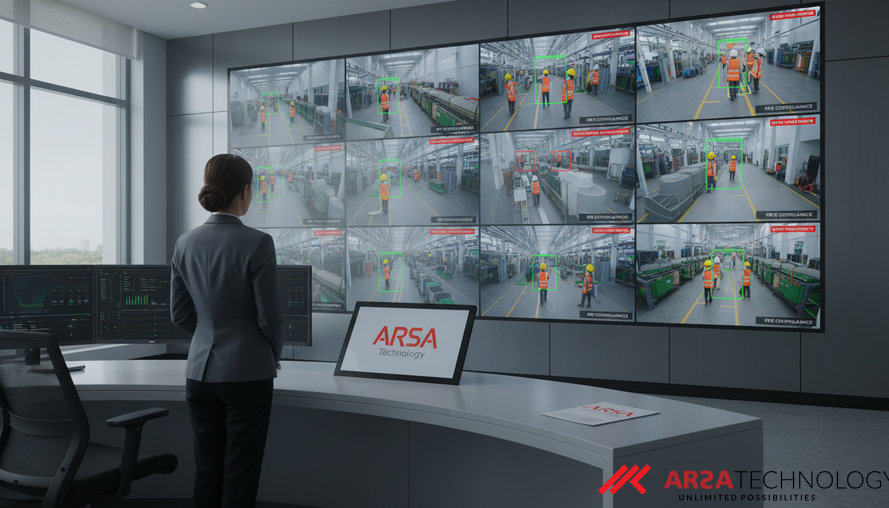
ARSA’s Basic Safety Guard, part of our innovative AI Box Series overview, is specifically designed to convert IP cameras to an AI safety system without requiring you to replace your existing cameras or backend infrastructure. This edge computing solution processes video streams locally, delivering instant insights with no cloud dependency.
The core of the Basic Safety Guard lies in its ability to perform advanced video analytics directly at the source. This means your video data stays within your network, ensuring maximum privacy and compliance with data sovereignty regulations. For more details on how edge AI enhances security and privacy, you can read our article on turning existing CCTV into smart safety monitoring with AI edge computing.
Key Functions and Capabilities:
- PPE Detection: The system can accurately identify whether personnel are wearing required Personal Protective Equipment (PPE) such as hard hats, safety vests, and masks. This includes precise hard hat detection and safety vest detection.
- Restricted Area Monitoring: Define virtual zones within your camera’s view, and the system will instantly alert you to any unauthorized entry or loitering.
- Intrusion Alerts: Receive real-time notifications via email, SMS, or integrated dashboards when a safety violation or intrusion is detected.
- Safety Compliance Reporting: Automatically generate detailed reports on safety incidents, compliance rates, and trend analysis, significantly simplifying audits and regulatory submissions.
- Real-time Alerts: Immediate notifications allow for rapid intervention, preventing incidents from escalating.
Technical Highlights for Seamless Integration:
The ARSA Basic Safety Guard is built for practical deployment. It’s a plug-and-play solution, designed for a 5-minute setup. Simply connect the AI Box to power, network, and your existing ONVIF and RTSP compatible CCTV cameras. The system runs on powerful edge computing hardware, available in two configurations:
- Mini PC Model: Ideal for distributed deployments, processing up to 3 camera streams.
- Server Model (High-Density): Suitable for centralized monitoring and heavy workloads, capable of analyzing up to 30 camera streams simultaneously in real-time.
Crucially, there is no cloud dependency for core operations, giving you full control over your data and minimizing latency. This is a significant advantage for privacy-sensitive environments and industries with strict data governance requirements. To understand more about the specifics of PPE detection, consider reading What Is PPE Detection? How AI Video Analytics Software Delivers Smart Safety Monitoring.
Business Outcomes: Real ROI for Facility Management
Implementing ARSA Basic Safety Guard offers tangible business benefits that directly impact your bottom line and operational efficiency:
- Reduce Workplace Injury Rates: Proactive detection of safety violations leads to fewer accidents and a safer working environment.
- Automate OSHA / EU-OSHA / ISO 45001 Reporting: Streamline compliance processes with automated data collection and reporting, reducing administrative burden and potential fines.
- Lower Workers’ Compensation Insurance Premiums: A demonstrably safer workplace can lead to reduced insurance costs.
- Eliminate Manual Safety Inspections: Free up valuable human resources from tedious monitoring tasks, allowing them to focus on higher-value activities.
- Enhanced Operational Efficiency: Gain real-time insights into operational flows and potential bottlenecks related to safety protocols.
This solution allows facility managers to effectively retrofit CCTV with PPE detection and other critical safety analytics, turning a cost center into a strategic asset for risk management.
Implementing Your Smart Safety Monitoring System
The process to turn existing CCTV into smart safety monitoring with ARSA Basic Safety Guard is straightforward:
1. Connect: Link the ARSA AI Box to your power source, network, and existing ONVIF/RTSP compatible CCTV cameras.
2. Configure: Utilize the intuitive interface to select the desired analytics modules (e.g., PPE detection, restricted area monitoring), define detection zones, and set alert rules.
3. Monitor: Access real-time dashboards, alerts, and historical reports either locally or remotely, gaining immediate visibility into your facility’s safety posture.
For organizations with unique or highly specialized safety requirements, ARSA Technology also offers ARSA Custom AI Solution development, ensuring that your specific challenges are met with tailored intelligence.
Frequently Asked Questions
What is the easiest way to upgrade CCTV with AI safety detection?
The easiest way is to use an edge AI device like the ARSA Basic Safety Guard (AI Box). It’s a plug-and-play solution that integrates with your existing ONVIF and RTSP CCTV cameras, providing real-time AI analytics without needing to replace your current infrastructure.
Can I add AI analytics to existing security cameras without cloud dependency?
Yes, solutions like the ARSA AI Box Series operate on-premise with edge computing, meaning all AI processing runs locally. This ensures full data ownership and eliminates the need for cloud connectivity for core operations, supporting privacy-sensitive environments.
How does PPE detection work with existing cameras?
PPE detection involves AI algorithms analyzing video streams from your existing cameras to identify if individuals are wearing specific personal protective equipment like hard hats or safety vests. The ARSA Basic Safety Guard module within the AI Box Series is specifically designed for this, providing real-time alerts and compliance reporting.
What are the benefits of converting IP cameras to an AI safety system?
Converting IP cameras to an AI safety system offers numerous benefits, including reduced workplace injury rates, automated compliance reporting (e.g., ISO 45001), lower workers’ compensation insurance premiums, and the elimination of manual safety inspections, leading to significant cost savings and improved operational efficiency.
Conclusion
Transforming your existing CCTV infrastructure into a smart safety monitoring system is no longer a futuristic concept but a practical, accessible reality. By embracing solutions like the ARSA Basic Safety Guard, facility managers can proactively address safety concerns, ensure compliance, and create a more secure and efficient workplace. This strategic upgrade not only protects your most valuable assets—your people—but also delivers significant operational and financial benefits.
Ready to explore how ARSA Technology can help you enhance safety and compliance in your facility? Visit our all ARSA products page or contact ARSA solutions team today to discuss your specific needs and request a quotation.
Stop Guessing, Start Optimizing.
Discover how ARSA Technology drives profit through intelligent systems.