
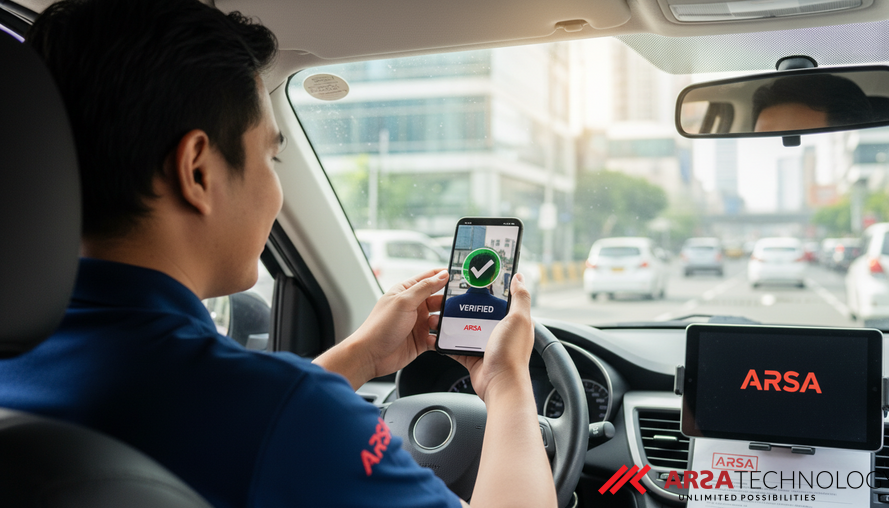

Maximizing ROI: How a Face Recognition API for Ride-Hailing and Gig-Economy Driver Verification Drives Profitability
In the rapidly expanding ride-hailing and gig-economy sectors, ensuring the identity and trustworthiness of drivers and delivery riders is paramount. Mobility platform engineers face the constant challenge of balancing seamless user experience with robust security measures. This is where a specialized face recognition API for ride-hailing and gig-economy driver verification becomes not just a security feature, but a critical tool for achieving measurable return on investment (ROI). By integrating advanced biometric authentication, platforms can significantly reduce fraud, enhance operational efficiency, and build greater trust with both customers and regulators.
The stakes are high: identity fraud, account sharing, and impersonation can lead to severe financial losses, reputational damage, and even safety risks. Traditional verification methods are often cumbersome, prone to human error, and easily circumvented. Modern platforms demand a solution that is fast, accurate, scalable, and compliant with evolving global standards.
The Imperative for Robust Driver Identity Verification
The dynamic nature of the gig economy means a constant influx of new drivers and the need for ongoing verification of existing ones. A reliable driver identity verification face API is essential for several reasons:
- Onboarding Efficiency: Streamlining the registration process for new drivers, reducing manual review times, and accelerating time-to-market for new recruits.
- Fraud Prevention: Mitigating risks associated with synthetic identities, account takeovers, and drivers attempting to operate under false pretenses.
- Safety and Trust: Assuring passengers and customers that their service providers are legitimate and verified, thereby enhancing brand reputation and user confidence.
- Regulatory Compliance: Meeting stringent Know Your Customer (KYC) and Anti-Money Laundering (AML) obligations, which are increasingly extending beyond traditional financial services into digital platforms, aligning with frameworks like PSD2, eIDAS, and FinCEN.
ARSA Technology understands these challenges. Our ARSA Face Recognition & Liveness API offers a cloud-based SaaS solution designed for rapid integration and unparalleled accuracy, allowing platforms to launch face login in days, not months.
Key Features of a High-Performance Face Recognition API for Ride-Hailing and Gig-Economy Driver Verification
When evaluating a face recognition API for ride-hailing and gig-economy driver verification, mobility platform engineers should look for a comprehensive suite of features that address both immediate security needs and long-term operational scalability.
1. Advanced Liveness Detection to Combat Spoofing
One of the most critical aspects of driver verification is ensuring that the person presenting their face is a live individual, not a photo, video, or 3D mask. ARSA’s API includes both passive liveness detection (which works seamlessly in the background) and active liveness with head movement challenges. This dual approach provides robust protection against presentation attacks and synthetic identity fraud, adhering to standards like ISO 30107-3.
2. Seamless 1:1 Verification and 1:N Identification
For daily login, a 1:1 face verification ensures that the person logging in matches their enrolled profile. For more complex scenarios, such as checking against a watchlist of banned drivers, 1:N face recognition against a database can quickly identify potential risks. The API also provides face detection with bounding boxes, age estimation, gender classification, and expression detection (neutral, happy, sad, surprise, anger) for richer insights, though these are typically used for analytics rather than direct verification decisions.
3. Robust Face Database Management and Data Privacy
Effective identity management requires secure storage and organization of biometric data. ARSA’s API offers comprehensive face database management, allowing platforms to enroll multiple images per face ID for higher accuracy, update, and remove identities. Crucially, it provides per-account isolated databases, ensuring stringent data privacy and tenant separation, which is vital for compliance with regulations like GDPR and CCPA.
4. Flexible Deployment and Integration
As a cloud SaaS offering, the ARSA Face Recognition & Liveness API is designed for ease of use. Developers can make their first API call in under 5 minutes, leveraging simple x-key-secret API key authentication. It supports JPEG/PNG image formats and MP4/WebM video for active liveness, with readily available cURL, Python, and JavaScript code examples in the documentation. This flexibility ensures that integration is quick and doesn’t require significant infrastructure management. For more details on integrating this powerful tool, refer to our Face Recognition API documentation.
5. Scalable and Cost-Effective Pricing
The gig economy operates on fluctuating demand, and verification costs should reflect this. ARSA offers a transparent, pay-only-for-what-you-use model with various Face API pricing plans. This includes a Basic free 30-day trial (100 calls/month, 100 face IDs, no credit card required), scaling up to Pro ($29/mo for 5,000 calls), Ultra ($149/mo for 50,000 calls), and Mega ($1,290/mo for 500,000 calls). All features are included on every plan, with convenient PayPal monthly subscription billing and a developer dashboard for usage analytics.
The ROI of Periodic Driver Re-verification API
Beyond initial onboarding, the need for continuous vigilance is critical. Implementing a periodic driver re-verification API can significantly enhance security and compliance. This prevents instances of drivers sharing accounts or using their accounts after being deactivated or banned. Regular, automated checks ensure that the person behind the wheel or delivering the package is always the authorized individual. This proactive approach minimizes risks and reinforces the platform’s commitment to safety and integrity, ultimately protecting revenue and brand value.
For a deeper dive into the financial implications, you might find our article on What Face Recognition & Liveness Actually Costs in 2026 for Ride-Hailing and Gig-Economy Driver Verification insightful.
Beyond Ride-Hailing: The Broader Impact on Trust and Operations
While the focus here is on mobility, the principles of secure identity verification extend across the entire gig economy, from delivery services to freelance platforms. The ability to perform gig worker selfie verification quickly and reliably builds a foundation of trust that is invaluable. This trust translates directly into higher user engagement, reduced churn, and a stronger market position.
Choosing the right technology partner is crucial. ARSA Technology has over seven years of experience delivering production-ready AI and IoT solutions to government and enterprise clients, ensuring our systems are engineered for accuracy, scalability, privacy, and operational reliability. Our expertise extends to custom AI solutions for unique operational demands, as highlighted on our ARSA Custom AI Solution page.
For more insights into selecting the right solution, consider reading Securing the Gig Economy: Choosing a Face Recognition API for Ride-Hailing and Gig-Economy Driver Verification and Enhancing Trust and Security: A Face Recognition API for Ride-Hailing and Gig-Economy Driver Verification.
Conclusion: A Strategic Investment in Security and Growth
Implementing a robust face recognition API for ride-hailing and gig-economy driver verification is a strategic investment that yields significant ROI. It’s about more than just security; it’s about operational efficiency, fraud prevention, compliance adherence, and ultimately, fostering a trusted environment that drives business growth. By leveraging ARSA’s enterprise-grade Face Recognition & Liveness overview, mobility platforms can safeguard their operations, protect their users, and ensure sustainable success in a competitive landscape.
Ready to transform your driver verification process? Contact ARSA solutions team today to discuss how our API can integrate seamlessly into your platform, or create a free Face API account to experience the power of ARSA’s technology firsthand.
—
FAQ
What are the primary benefits of using a face recognition API for ride-hailing driver verification?
A face recognition API enhances security by preventing fraud and impersonation, streamlines driver onboarding, ensures compliance with identity verification regulations, and builds trust with users, all contributing to significant operational ROI.
How does ARSA’s API ensure the security of gig worker selfie verification?
ARSA’s API employs both passive and active liveness detection, including challenge-response mechanisms with head movements, to prevent spoofing attacks using photos, videos, or masks, thereby securing the gig worker selfie verification process.
Can ARSA’s face recognition API be used for periodic driver re-verification?
Yes, the ARSA Face Recognition & Liveness API is ideal for periodic driver re-verification. It allows platforms to regularly confirm the identity of active drivers against their enrolled profiles, preventing account sharing and ensuring ongoing compliance and safety.
What compliance standards does ARSA’s Face Recognition & Liveness API support for digital-banking applications?
ARSA’s API is designed with data privacy and security at its core, offering features like per-account isolated databases and robust liveness detection, which help platforms meet stringent KYC and AML obligations under international frameworks such as PSD2, eIDAS, FinCEN, GDPR, and CCPA.
Stop Guessing, Start Optimizing.
Discover how ARSA Technology drives profit through intelligent systems.