
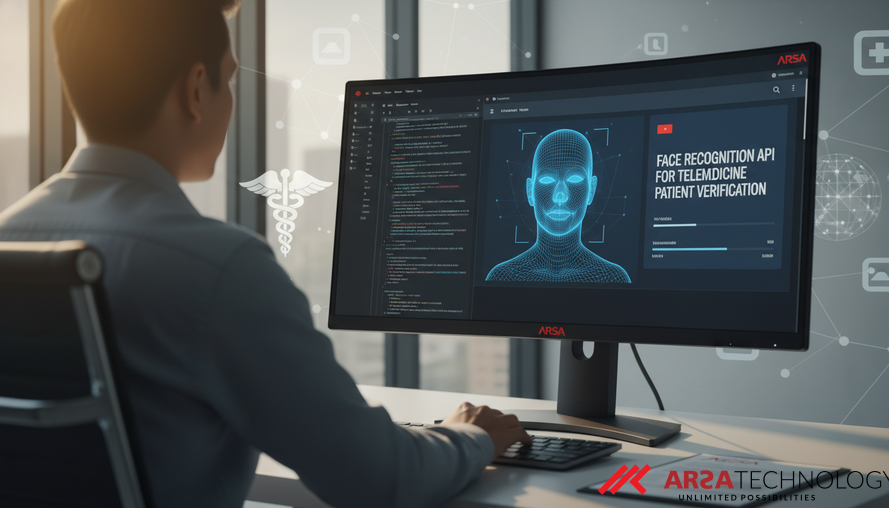

Optimizing Telemedicine: Choosing a Face Recognition API for Telemedicine Patient Verification
In the rapidly evolving landscape of digital healthcare, ensuring patient safety and data integrity is paramount. For healthtech developers, integrating a reliable face recognition API for telemedicine patient verification is no longer a luxury but a fundamental requirement. This technology provides a critical layer of security, verifying patient identity at every touchpoint, from initial login to prescription refills, all while streamlining the user experience. ARSA Technology offers a robust, cloud-based Face Recognition & Liveness API specifically engineered to meet these demands, providing a scalable and compliant solution without the burden of infrastructure management.
The shift to virtual consultations has brought immense convenience, but it also introduces unique challenges in verifying who is on the other end of the screen. Traditional password-based systems are often insufficient, vulnerable to phishing and identity theft. A dedicated patient identity verification face API addresses these gaps, offering a secure and seamless method to confirm identity, crucial for maintaining trust and adhering to stringent healthcare regulations.
The Imperative for Secure Patient Identity Verification
Telemedicine platforms handle sensitive personal health information (PHI), making them prime targets for fraud and unauthorized access. Robust identity verification is essential not only for security but also for regulatory compliance. Frameworks like HIPAA in the United States, GDPR in Europe, and similar data protection acts globally mandate strict controls over patient data. Implementing a sophisticated `face recognition for telehealth login` helps healthcare providers meet these obligations by ensuring that only authorized individuals access their health records and services.
ARSA’s Face Recognition & Liveness API is designed with these critical needs in mind. It’s a cloud-based SaaS solution that allows developers to launch face login capabilities in days, not months. The API offers a comprehensive suite of functions, including 1:N face recognition against a database for quick identification, and 1:1 face verification to confirm a user’s identity against a stored biometric template. This dual approach ensures both efficiency and accuracy in high-stakes healthcare environments.
ARSA Face Recognition & Liveness API: Features and Capabilities
When evaluating a face recognition API for telemedicine patient verification, healthtech developers need a solution that is not only accurate but also flexible and easy to integrate. ARSA’s API delivers on all fronts, providing a complete identity layer that goes beyond simple comparison.
- Comprehensive Face Analytics: Beyond basic detection with bounding boxes, the API offers advanced features like age estimation, gender classification, and expression detection (neutral, happy, sad, surprise, anger). These capabilities can be valuable for contextual understanding in certain telemedicine applications, though the primary focus remains on identity.
- Advanced Liveness Detection: A critical component for preventing fraud, ARSA’s API includes both passive liveness detection and active liveness with head movement challenges. This anti-spoofing technology is vital to prevent presentation attacks using photos, videos, or even sophisticated synthetic identities, helping meet KYC and AML obligations under regulations like PSD2, eIDAS, and FinCEN. For a deeper dive into securing patient data, read our article on implementing an enterprise face recognition system in healthcare.
- Scalable Face Database Management: The API allows for efficient management of face databases, enabling enrollment of multiple images per face ID for higher accuracy. Importantly, it provides per-account isolated databases, ensuring robust data privacy and clear tenant separation, a non-negotiable for any `HIPAA-aware face verification workflow`.
- Seamless Integration: Designed for developers, the ARSA Face Recognition & Liveness API offers a straightforward REST API with simple x-key-secret API key authentication. With comprehensive Face Recognition API documentation and cURL/Python/JavaScript code examples, developers can make their first API call in under 5 minutes. This rapid deployment capability is a significant advantage for healthtech startups and established enterprises alike. Learn more about how to get a Face Recognition API key in 5 minutes with ARSA.
Transparent Pricing for Every Scale
ARSA Technology believes in transparent, usage-based pricing that scales with your needs. All features are included on every plan, ensuring you don’t pay extra for essential security capabilities. Pricing is handled via PayPal monthly subscription billing, offering flexibility and predictability.
- BASIC Free Tier: Start building without commitment. This tier offers 100 API calls per month and supports up to 100 Face IDs, with a 30-day free trial and no credit card required. It’s an excellent way to experiment and test the API’s capabilities. You can create a free Face API account today.
- PRO Startup Tier: For growing applications, the Pro tier is available at $29/month, providing 5,000 API calls and support for 5,000 Face IDs.
- ULTRA Scale-up Tier: As your platform expands, the Ultra tier offers 50,000 API calls and 50,000 Face IDs for $149/month.
- MEGA Enterprise Tier: For large-scale deployments, the Mega tier provides 500,000 API calls and 500,000 Face IDs for $1,290/month.
This tiered structure ensures that you only pay for what you use, making it a cost-effective solution for deploying a `face ID for healthcare app` without significant upfront investment or the overhead of managing complex infrastructure. For detailed pricing information, visit the Face API pricing plans page.
Business Outcomes and ROI for Healthtech
Integrating ARSA’s Face Recognition & Liveness API translates directly into tangible business outcomes for healthtech companies:
- Enhanced Security & Compliance: By preventing presentation attacks and synthetic identity fraud, the API helps platforms meet stringent regulatory requirements (e.g., HIPAA, GDPR, ISO 30107-3) and safeguard patient data, reducing legal and reputational risks. Our article on securing telemedicine with face recognition provides further insights.
- Improved Patient Experience: A quick and secure `face recognition for telehealth login` streamlines access, reducing friction and improving patient satisfaction.
- Operational Efficiency: Automating identity verification frees up administrative staff, allowing them to focus on higher-value tasks. The developer dashboard with usage analytics provides insights into API performance and helps optimize resource allocation.
- Cost Savings: With a cloud-based SaaS model, there are no infrastructure costs to manage, and the pay-as-you-go pricing ensures efficient resource utilization. This allows healthtech innovators to focus their capital on core product development.
ARSA Technology has a proven track record of delivering production-ready AI solutions for critical environments. Our commitment to accuracy, scalability, privacy, and operational reliability is embedded in every system we deliver. Explore the full range of ARSA’s AI and IoT solutions on our products page.
Conclusion
The demand for secure and efficient patient verification in telemedicine is undeniable. A specialized face recognition API for telemedicine patient verification like ARSA’s offers a powerful solution, combining advanced biometric security with developer-friendly integration and flexible pricing. By choosing ARSA, healthtech developers can confidently build compliant, secure, and user-friendly platforms that protect patient data and drive innovation in digital healthcare.
Ready to enhance your telemedicine platform’s security and user experience? Contact ARSA solutions team today to discuss your specific needs or visit the ARSA Face Recognition & Liveness API overview to learn more.
—
FAQ Section
Q: How does ARSA’s Face Recognition API ensure a HIPAA-aware face verification workflow?
A: ARSA’s API is designed with data privacy and security at its core. It offers per-account isolated databases, ensuring that biometric data is segregated and managed securely. The cloud-based infrastructure is built for reliability, and the API supports robust liveness detection to prevent spoofing, all contributing to a workflow that can be integrated into HIPAA-compliant systems.
Q: What are the key benefits of using a patient identity verification face API for telehealth login?
A: The primary benefits include enhanced security against identity fraud and unauthorized access, streamlined patient onboarding and login processes, improved compliance with healthcare data protection regulations, and a better overall user experience by replacing cumbersome manual verification methods with a fast, touchless biometric check.
Q: Can the ARSA Face ID for healthcare app integrate with existing systems?
A: Yes, the ARSA Face Recognition & Liveness API is designed for seamless integration. It provides a standard REST API with clear documentation and code examples in multiple languages (cURL, Python, JavaScript), allowing healthtech developers to easily embed face ID capabilities into their existing healthcare applications and platforms.
Stop Guessing, Start Optimizing.
Discover how ARSA Technology drives profit through intelligent systems.