
The True Cost of Safety: A Pricing Breakdown for ISO 45001 Compliant AI Safety Monitoring Software
For multinational manufacturers operating vast warehouse facilities, ensuring a safe working environment is not just a moral imperative; it’s a complex regulatory challenge. Achieving and maintaining ISO 45001 compliance requires rigorous adherence to occupational health and safety standards, a task made significantly more efficient and accurate with the right technology. This article delves into the investment considerations for ISO 45001 compliant AI safety monitoring software, offering a transparent look at pricing, value, and the long-term return on investment (ROI) for solutions like ARSA Basic Safety Guard.
In today’s industrial landscape, traditional manual safety audits are often reactive, resource-intensive, and prone to human error. The emergence of AI-powered video analytics has revolutionized this field, providing proactive, real-time monitoring capabilities that can drastically reduce incidents and streamline compliance efforts. For a compliance lead at a multinational manufacturer, understanding the financial implications and operational benefits of such a system is crucial for strategic decision-making.
The Foundational Value of AI Safety Monitoring
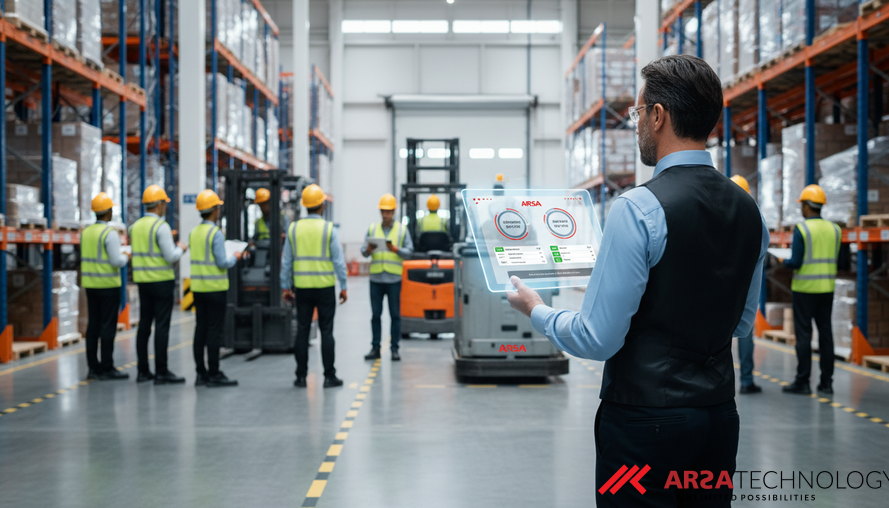
At its core, AI safety monitoring software transforms passive CCTV footage into active intelligence. Systems like ARSA’s Basic Safety Guard (Software) are designed to detect critical safety violations, monitor restricted areas, and ensure proper Personal Protective Equipment (PPE) usage in real-time. This capability is paramount for environments like warehouses, where heavy machinery, high-traffic zones, and diverse tasks present constant safety risks.
The primary benefit is the shift from reactive incident response to proactive prevention. By instantly flagging non-compliance, the software allows for immediate intervention, preventing accidents before they occur. This not only protects personnel but also safeguards the company from costly fines, legal liabilities, and reputational damage. Furthermore, the automated data collection significantly aids in OSHA recordkeeping with AI safety analytics and facilitates comprehensive EU OSHA safety reporting automation, critical for international operations.
Understanding the Investment: Beyond the Sticker Price
When evaluating ISO 45001 compliant AI safety monitoring software, the “price” is more than just a license fee. It encompasses several factors that contribute to the total cost of ownership and, more importantly, the overall value delivered.
1. Software Licensing and Modules
The core of the investment lies in the software license itself. ARSA’s Basic Safety Guard is part of its AI Video Analytics Software overview, offered as an on-premise solution. This means the software is deployed directly on your existing servers or private cloud infrastructure, providing full data ownership and eliminating recurring cloud hosting fees. Pricing models typically involve a one-time license fee or an annual subscription based on the number of camera streams being analyzed and the specific analytics modules required (e.g., PPE detection, restricted area monitoring).
For instance, a basic license for 1-3 camera streams might range from $5,000 to $15,000 USD annually, with costs scaling up for higher camera counts and additional features. It’s important to note that ARSA offers a software-only procurement model, allowing organizations to leverage their existing IT infrastructure without purchasing dedicated AI appliances. This approach often results in a lower initial hardware investment compared to turnkey edge systems, although ARSA also offers the ARSA Traffic Monitor (AI Box) for those preferring a plug-and-play edge solution for other applications.
2. Deployment and Integration Costs
While ARSA’s AI Video Analytics Software is hardware-agnostic, there are costs associated with its deployment and integration into your existing IT ecosystem. These can include:
- Server Resources: Utilizing existing servers means leveraging current assets, but ensuring adequate processing power (CPUs, GPUs) and storage for video streams and analytics data is crucial.
- Network Infrastructure: Ensuring stable, high-bandwidth network connectivity between cameras and the central processing server.
- API Integration: For multinational manufacturers, integrating the AI safety analytics with existing dashboards, alerting systems, and data pipelines (e.g., SCADA, ERP) via REST API is a key advantage. While ARSA’s software is “Integration Ready,” custom development work may be needed depending on the complexity of your existing systems.
- Configuration and Calibration: Initial setup involves defining detection zones, configuring alert rules, and calibrating the AI models for your specific environment.
3. Training and Support
To maximize the effectiveness of any new system, proper training for your safety officers and IT staff is essential. ARSA Technology provides comprehensive documentation and support to ensure smooth operation. Ongoing technical support and software updates are typically included in the annual subscription or maintenance fees, ensuring your system remains up-to-date with the latest AI models and compliance features.
The ROI of Proactive Safety: Why the Investment Pays Off
The investment in ISO 45001 PPE compliance automation and broader AI safety monitoring software delivers significant, quantifiable ROI for multinational manufacturers.
Reduced Accidents and Injuries: The most direct and impactful ROI comes from preventing accidents. Each avoided incident saves on medical costs, workers’ compensation claims, lost productivity, and potential legal fees. A single severe accident can cost hundreds of thousands, if not millions, of dollars. Proactive AI monitoring drastically reduces this risk.
Enhanced Compliance and Audit Readiness: Automated safety monitoring ensures consistent adherence to ISO 45001, OSHA, and other regional regulations. The system generates detailed event logs and compliance reports, providing an undeniable audit trail. This not only prevents fines but also demonstrates a commitment to safety, which can positively impact insurance premiums and corporate reputation. Imagine having a comprehensive workplace safety compliance dashboard that provides real-time insights and historical data for any audit. This capability alone can save countless hours in manual data compilation and report generation.
Operational Efficiency and Productivity: By automating routine safety checks, human safety officers can focus on higher-value tasks, such as training, risk assessments, and continuous improvement initiatives. The real-time alerts minimize downtime caused by incidents and ensure that operations run smoothly and safely. For a multinational manufacturer, this translates to consistent production across global sites.
Data-Driven Decision Making: The rich data generated by the AI system provides invaluable insights into safety trends, high-risk areas, and the effectiveness of safety protocols. This allows compliance leads to make data-backed decisions to further optimize safety measures and allocate resources more effectively. For example, identifying recurring PPE non-compliance in a specific zone can trigger targeted retraining or engineering controls.
For a deeper dive into how ARSA’s solutions can transform your operations, you can explore Achieving ISO 45001 Compliance with AI Safety Monitoring Software in Warehouses, which provides a detailed look at warehouse-specific applications. Additionally, understanding How to Turn Existing CCTV into Smart Safety Monitoring: A Logistics Operations Guide can illustrate the ease of integrating ARSA’s software with your existing infrastructure. For a more direct discussion on the financial aspects, consider reading ARSA Basic Safety Guard (Software) Pricing: How to Reduce Workplace Accidents with AI Video Analytics.
Why ARSA Technology for Your Safety Monitoring Needs?
ARSA Technology’s Basic Safety Guard (Software) is engineered for the demands of large enterprises and governments. Our on-premise deployment model ensures full data ownership, a critical factor for privacy-sensitive industries and compliance with regulations like GDPR and CCPA. With no cloud dependency, all video streams, inference results, and metadata remain entirely within your infrastructure, offering unparalleled security and control.
Our solution is designed to be hardware-agnostic, allowing deployment on your existing servers, private data centers, or edge compute infrastructure. This flexibility minimizes upfront hardware costs and integrates seamlessly with your current IT strategy. The REST API integration capability ensures that ARSA’s safety analytics can feed into your centralized safety monitoring across global sites, providing a unified view of your operational health.
ARSA Technology has over seven years of experience delivering production-ready AI and IoT solutions to government and enterprise clients. Our commitment to accuracy, scalability, privacy, and operational reliability means you’re investing in a proven solution that delivers measurable impact.
Frequently Asked Questions
What makes ARSA’s AI safety monitoring software ISO 45001 compliant?
ARSA’s ISO 45001 compliant AI safety monitoring software, Basic Safety Guard, provides automated, real-time detection of safety violations, PPE non-compliance, and restricted area intrusions. It generates comprehensive event logs and compliance reports, offering an indisputable audit trail that directly supports the systematic management of occupational health and safety required by ISO 45001. All analytics run within your environment, preserving privacy and supporting compliance requirements.
How does ARSA’s software assist with OSHA recordkeeping and EU OSHA safety reporting automation?
The software automatically captures and logs all detected safety events, including timestamps, locations, and types of violations. This granular data can be easily exported and integrated into existing OSHA recordkeeping with AI safety analytics systems, streamlining the process of incident reporting and analysis. For European operations, the structured data facilitates efficient EU OSHA safety reporting automation, ensuring timely and accurate submissions.
Can ARSA’s AI safety monitoring software integrate with existing warehouse IT infrastructure?
Yes, ARSA’s AI Video Analytics Software is designed for seamless integration. It is hardware-agnostic and can be deployed on existing servers, private data centers, or virtualized infrastructure. Its REST API allows for integration with your current dashboards, alerting systems, and data pipelines, ensuring that safety insights are accessible where you need them most. This enables a truly centralized safety monitoring across global sites.
What are the key benefits of on-premise deployment for AI safety monitoring in a multinational manufacturing context?
On-premise deployment provides multinational manufacturers with full data ownership and control, which is crucial for sensitive operational data and compliance with various data privacy regulations (e.g., GDPR, CCPA). It eliminates cloud dependency, minimizing latency and ensuring that all video streams and inference results remain within your secure network. This air-gapped capability is vital for environments requiring maximum security and zero data exposure.
Conclusion
Investing in ISO 45001 compliant AI safety monitoring software is a strategic move for any multinational manufacturer committed to elevating workplace safety and operational excellence. Solutions like ARSA Basic Safety Guard (Software) offer a clear path to enhanced compliance, significant cost savings through accident prevention, and improved operational efficiency. By leveraging existing CCTV infrastructure and deploying on-premise, organizations gain full control over their data while transforming passive surveillance into active, intelligent safety management.
Ready to transform your warehouse safety and achieve unparalleled compliance? Contact ARSA solutions team today to discuss a tailored deployment for your enterprise. Explore all ARSA products to see how our AI and IoT solutions can meet your specific needs.
Stop Guessing, Start Optimizing.
Discover how ARSA Technology drives profit through intelligent systems.