
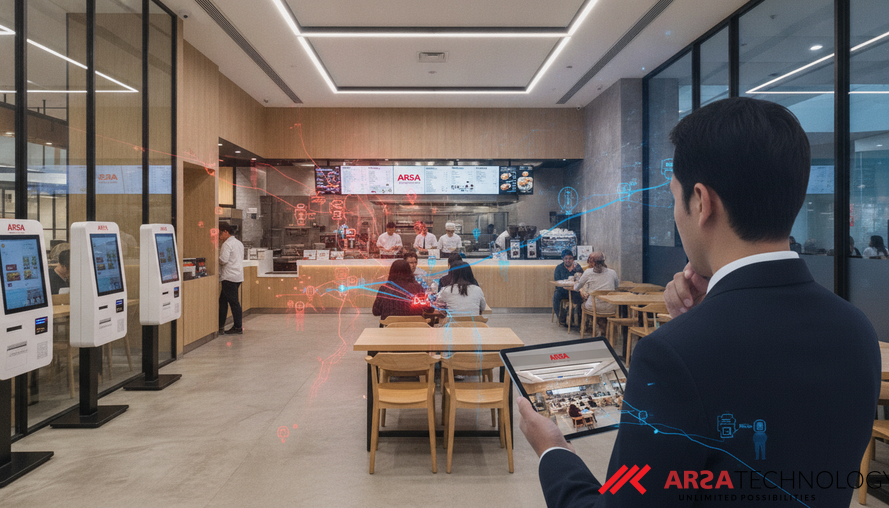

Unlocking QSR Profitability: Leveraging Customer Heatmap Analytics for Store Layout Optimization
In the competitive landscape of quick-service restaurants (QSRs) and shopping malls, understanding customer behavior is no longer a luxury—it’s a necessity. Mall property managers and QSR operators are constantly seeking innovative ways to enhance visitor experience, optimize operational efficiency, and ultimately drive revenue. This is where customer heatmap analytics for store layout optimization emerges as a game-changer, transforming passive surveillance into actionable intelligence. By visualizing how customers move, dwell, and interact within a space, businesses can make data-driven decisions that significantly impact their bottom line.
Traditional retail strategies often rely on intuition or anecdotal evidence, leading to missed opportunities and inefficient layouts. However, with advanced AI video analytics, businesses can now gain unprecedented clarity. ARSA Technology, with its 7+ years of expertise and status as an NVIDIA Inception and Intel partner, provides robust solutions like the ARSA Smart Retail Counter (AI Box) that empower QSRs to thrive.
The Strategic Imperative of Customer Movement Pattern Analysis
The way customers navigate a QSR or a retail space directly influences their purchasing decisions and overall satisfaction. Understanding these intricate patterns is crucial for optimizing the physical environment. Customer movement pattern analysis using CCTV footage, enhanced by AI, provides a detailed understanding of shopper journeys, identifying popular routes, overlooked areas, and potential bottlenecks.
For mall property managers, this translates into valuable insights for tenant placement and common area design. For QSRs, it means optimizing counter layouts, seating arrangements, and promotional displays to maximize throughput and customer engagement. According to McKinsey & Company, strategic optimization of store layouts can boost sales by up to 15%, highlighting the significant financial impact of these insights.
AI Dwell Time Analysis for Shopping Malls and QSRs
Beyond simply tracking movement, the duration customers spend in specific areas—known as dwell time—offers profound insights into engagement. AI dwell time analysis for shopping malls and QSRs reveals which product displays capture attention, which promotional zones are most effective, and where customers might be experiencing delays, such as in queues.
ARSA’s Smart Retail Counter, part of the ARSA AI Box Series, excels in this area. Deployed at the edge, this plug-and-play solution can be set up in approximately 5 minutes, integrating seamlessly with existing CCTV (ONVIF/RTSP) infrastructure. It processes video streams locally, generating real-time data on people counting, visitor footfall tracking, queue management, and detailed heatmap visualizations. This edge computing approach ensures low latency and keeps all processing on-site, eliminating cloud costs and enhancing data privacy.
The ability to accurately measure dwell time allows QSRs to:
- Optimize labor scheduling: Deploy staff more effectively during peak engagement periods.
- Improve promotional effectiveness: Place high-margin items in areas with high dwell times.
- Reduce queue abandonment: Proactively address long queues, as a significant 73% of customers may abandon a purchase if they wait longer than five minutes, a challenge exacerbated by a 61% surge in retail wait times since 2022, as reported by Footfall.au.
Optimize Retail Floor Plan with Heatmap Data
The visual power of heatmaps makes complex data immediately understandable. By overlaying color-coded representations of customer density and movement onto a store’s floor plan, QSR operators and mall managers can instantly identify “hot zones” (areas of high traffic and engagement) and “cold zones” (underutilized spaces). This visual feedback is critical to optimize retail floor plan with heatmap data.
For instance, a QSR might discover that customers consistently bypass a new menu board or that seating near the entrance is underused. With heatmap data, these issues become evident, allowing for targeted adjustments to the layout, signage, or even lighting. Footfall.au notes that strategic store layout adjustments informed by data can lead to a 20% increase in sales per square foot. This empirical evidence empowers businesses to move beyond guesswork and implement changes with confidence, driving higher conversion rates and operational efficiency.
ARSA’s Smart Retail Counter provides these critical insights without compromising privacy. The system utilizes privacy-first, skeleton/keypoint-based analytics, meaning it detects and tracks human movement without capturing or storing any biometric data or facial prints. This approach ensures compliance with stringent data protection regulations like GDPR and CCPA, aligning with the industry standard of non-facial recognition technology by January 2026, as highlighted by Footfall.au. For more on privacy-first approaches, read our article on Enhancing Retail Operations with Privacy-First People Counting Without Facial Recognition.
Foot Traffic Analytics for Tenant Performance
For mall property managers, understanding foot traffic analytics for tenant performance is paramount. Heatmap data can reveal which areas of the mall attract the most visitors, how customers flow between different stores, and the overall engagement levels in common areas. This information is invaluable for:
- Strategic tenant placement: Positioning new tenants where they can benefit from existing footfall.
- Lease negotiations: Providing data-backed insights into potential traffic for prospective tenants.
- Marketing and event planning: Directing promotional activities to high-traffic zones or revitalizing cold zones.
The ARSA Smart Retail Counter offers robust footfall analytics, enabling precise people counting and visitor flow analysis. This helps mall managers understand the true value of different locations within their property, fostering better relationships with tenants and driving overall mall profitability.
The ARSA Advantage: Edge AI for Smart Retail
ARSA Technology’s ARSA Smart Retail Counter (AI Box) is engineered for the demands of modern retail environments, especially QSRs. Its edge computing architecture ensures that all AI processing occurs locally on the device, providing real-time insights without reliance on cloud connectivity. This not only minimizes latency but also guarantees full data ownership and control, which is critical for privacy-sensitive environments.
The system’s core functions include:
- People Counting: Accurate entry and exit tracking.
- Visitor Footfall Tracking: Mapping customer journeys throughout the store.
- Queue Management: Identifying and alerting staff to long queues, reducing abandonment.
- Heatmap Visualization: Intuitive visual representation of customer density and movement.
- Dwell Time Analysis: Measuring engagement in specific areas.
- Conversion Rate Measurement: Understanding how foot traffic translates into sales.
With an impressive 99.5% accuracy rate in distinguishing human movement from inanimate objects, even in complex, high-density environments, ARSA’s solution provides reliable data for critical business decisions. This precision, combined with a privacy-first design, makes it an ideal choice for QSRs and mall operators seeking to leverage AI responsibly. For more on managing queues, see our article on Reduce Queue Wait Times in Retail with AI Video Analytics.
Business Outcomes and ROI
Implementing customer heatmap analytics for store layout optimization with ARSA’s Smart Retail Counter delivers tangible business outcomes:
- Increased Sales Conversion: By optimizing layouts and product placement based on real customer behavior, businesses can significantly improve their conversion rates. Our research shows that data-driven layout optimization can lead to a 20-40% increase in sales for retailers.
- Optimized Labor Scheduling: Data-driven workforce management using heat mapping can result in labor efficiency gains of up to 30%, ensuring staff are deployed where they are most needed.
- Improved Store Layout: Continuous refinement of the retail floor plan based on empirical data leads to a more intuitive and engaging customer journey.
- Reduced Queue Abandonment: Proactive queue management, informed by real-time analytics, minimizes customer frustration and lost sales.
These benefits translate directly into a strong return on investment, allowing QSRs and mall property managers to operate more efficiently and profitably.
Frequently Asked Questions
What is customer heatmap analytics for store layout optimization?
Customer heatmap analytics for store layout optimization involves using AI-powered video analytics to visualize customer movement patterns and dwell times within a physical space. This data is then represented as a color-coded map, helping businesses identify high-traffic areas (“hot zones”) and underutilized spaces (“cold zones”) to make informed decisions about store design, product placement, and operational efficiency.
How does AI dwell time analysis benefit shopping malls?
AI dwell time analysis for shopping malls provides insights into how long visitors spend in specific areas, such as common spaces, near particular stores, or at promotional displays. This helps mall property managers understand engagement levels, assess the effectiveness of marketing initiatives, and identify areas for improvement in tenant mix or layout to enhance overall visitor experience and tenant performance.
Can existing CCTV systems be used for customer movement pattern analysis?
Yes, ARSA Technology’s Smart Retail Counter (AI Box) is designed to integrate with existing CCTV infrastructure (ONVIF/RTSP). It transforms standard video feeds into powerful analytical tools for customer movement pattern analysis, allowing businesses to leverage their current investments without a complete hardware overhaul.
How does ARSA ensure privacy with its retail analytics solutions?
ARSA Technology prioritizes privacy by design. Our Smart Retail Counter uses skeleton/keypoint-based analytics, which detects human presence and movement without capturing or storing any personally identifiable biometric data or facial prints. All AI processing occurs locally at the edge, ensuring data remains within your network and supports compliance with regulations like GDPR and CCPA.
Ready to Transform Your Retail Space?
The future of retail demands intelligence. By embracing customer heatmap analytics for store layout optimization, QSRs and mall property managers can gain a significant competitive edge. ARSA Technology is committed to providing practical, proven, and profitable AI solutions that work in the real world.
To explore how ARSA’s Smart Retail Counter or other ARSA products can revolutionize your operations, or to discuss a custom web application to integrate these insights, contact ARSA solutions team today.
Stop Guessing, Start Optimizing.
Discover how ARSA Technology drives profit through intelligent systems.