
Unpacking the Costs: Custom Air-Gapped Computer Vision System Development for Government Facilities in 2026
In an era of escalating cyber threats and stringent data sovereignty demands, government facilities, particularly within the utilities sector, require security solutions that offer unparalleled protection. This often translates to investing in custom air-gapped computer vision system development for government facilities. Such systems operate in complete isolation from external networks, providing a critical layer of defense for classified and secure zones. But what does it truly cost to implement such a sophisticated, tailored AI solution, and what factors influence the final price tag in 2026?
Developing a custom air-gapped computer vision system goes far beyond off-the-shelf software. It involves a deep understanding of specific operational requirements, stringent regulatory compliance, and the unique challenges of deploying AI in highly secure, often air-gapped environments. For systems integrators working on government contracts, understanding this investment landscape is crucial for accurate budgeting and successful project delivery.
Why Air-Gapped Systems Matter for Classified and Secure Zones
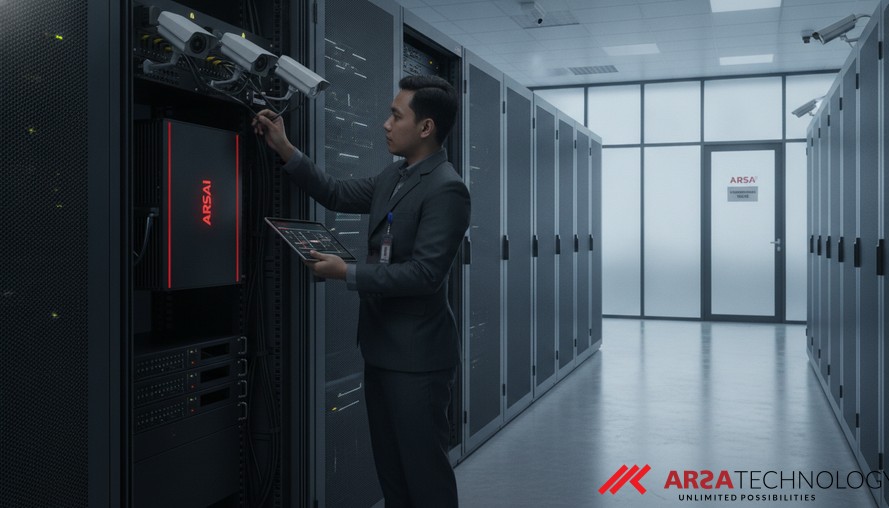
The primary driver for air-gapped computer vision systems in government and critical infrastructure is data security. In environments handling sensitive information or controlling vital national assets, any connection to public networks introduces unacceptable risks. Air-gapped systems ensure that video streams, inference results, and operational data never leave the local network, safeguarding against remote cyberattacks, espionage, and unauthorized data exfiltration. This isolation is paramount for protecting national security interests and maintaining operational integrity in sectors like utilities, defense, and public safety.
ARSA Technology, with over seven years of experience delivering production-ready AI, specializes in architecting solutions for such demanding environments. Our approach to ARSA Custom AI Solution development prioritizes security and data control, making air-gapped deployments a core offering.
Deconstructing the Investment: Key Cost Factors
The cost of custom computer vision development can vary significantly, ranging from approximately $50,000 for fine-tuning a pre-trained model via an API to over $500,000 for highly customized, real-time systems with proprietary data and edge deployment, as noted by industry analyses in 2026. For an enterprise-grade solution like a custom air-gapped computer vision system development for government facilities, the investment typically falls into the higher end of this spectrum, often exceeding $300,000 and potentially reaching $1,000,000+ depending on complexity and scale.
Several critical factors influence this cost:
- Scope and Complexity of Computer Vision Tasks: Simple object detection is less expensive than complex behavioral anomaly detection, threat recognition, or multi-object tracking. Features like License Plate Recognition (LPR / ANPR) with high accuracy (ARSA’s LPR/ANPR processes 200+ vehicles/minute at 98.5% accuracy) or VIN tamper detection require specialized model training and integration.
- Data Acquisition and Annotation: High-quality, domain-specific training data is the lifeblood of effective AI. For classified environments, this data must often be generated and annotated internally, adding significant cost. Annotation for industrial or medical imaging can cost between $0.05 and $2 per image, with large datasets (100,000+ images) incurring costs of $30,000 to $100,000 for annotation alone.
- Model Architecture and Training Compute: Developing custom models from scratch for unique government facility requirements is more costly than fine-tuning existing models. Training large, custom models can require extensive GPU hours, with cloud GPU instances costing $2-$16 per hour. For air-gapped systems, this compute must be provisioned on-premise, requiring significant capital expenditure on hardware.
- Inference Infrastructure and Edge Deployment: Air-gapped systems necessitate on-premise or edge deployment. This involves selecting and integrating specialized hardware, such as NVIDIA Jetson or x86 inference machines, and ensuring robust firmware engineering. ARSA’s solutions are designed for edge or private cloud deployment, supporting up to 64 concurrent camera streams per node.
- Regulatory Documentation and Compliance: Meeting FISMA requirements with fully contained video intelligence is non-negotiable for federal agencies and their contractors. This involves extensive documentation, security assessments, and adherence to federal information security standards, adding a substantial layer of cost and effort. Similar quality assurance requirements apply to industrial safety systems.
- Integration with Existing Systems: Seamless integration with a facility’s existing security infrastructure, access control systems, and monitoring dashboards is crucial. This often requires custom API development and robust system integration work.
- Ongoing Maintenance and Updates: AI models require continuous monitoring, retraining, and updates to maintain accuracy and adapt to evolving threats or operational changes. A comprehensive maintenance plan, often including 12 months of model maintenance and refresh for enterprise platforms, is a vital part of the total cost of ownership.
ARSA Technology’s 4-Phase Delivery for Custom AI Solutions
ARSA Technology approaches custom AI and engineering services with a structured, transparent 4-phase delivery model:
1. Discovery: A deep dive into the client’s operational challenges, security requirements, and existing infrastructure. This phase defines the project scope, technical specifications, and expected outcomes.
2. Proof of Concept (PoC): Development and deployment of a limited-scope AI solution to demonstrate feasibility and validate core functionalities in the target environment. This minimizes risk and provides tangible results early in the process.
3. Production Deployment: Full-scale development, rigorous testing, and deployment of the custom air-gapped computer vision system across the designated facility. This includes camera placement and NVR storage planning for secure facilities, ensuring optimal coverage and data retention in compliance with regulations.
4. Scale and Optimization: Post-deployment support, performance monitoring, and iterative improvements to scale the solution across multiple sites or expand its capabilities. This also includes configuring air-gapped deployments around a facility’s risk profile, adapting the system to evolving threats and operational needs.
Our expertise, honed over 7+ years and recognized as an NVIDIA Inception and Intel partner, ensures that each phase is executed with precision and a focus on measurable impact.
Core Functions and Technical Highlights
ARSA’s custom AI solutions for government facilities can encompass a wide array of advanced computer vision capabilities:
- Custom Computer Vision Development: Tailored models for specific object, event, or behavioral detection unique to a facility’s security needs.
- License Plate Recognition (LPR / ANPR) & VIN Tamper Detection: High-accuracy vehicle identification and anomaly detection for access control and forensic analysis.
- Threat & Action Recognition: Identifying suspicious activities or potential security breaches in real-time.
- Private LLM Deployment & Document Intelligence: For secure processing and analysis of classified documents within an air-gapped environment.
- Behavioral Anomaly Detection: Flagging unusual patterns of movement or activity that deviate from established norms.
- Restricted Area Protection: Real-time monitoring and alerting for unauthorized entry into sensitive zones.
Our proprietary ARSA Face Recognition & Liveness SDK, for instance, offers enterprise-grade face recognition and liveness detection for on-premise, air-gapped deployments, crucial for identity verification in highly secure settings. This SDK ensures no biometric data ever leaves your infrastructure, aligning with the strictest data sovereignty requirements. For a broader view of our capabilities, explore all ARSA products.
Achieving Tangible Business Outcomes and ROI
The investment in a custom air-gapped computer vision system development for government facilities yields significant returns:
- Enhanced Security: A 90%+ reduction in unauthorized access incidents through proactive threat detection and real-time alerts.
- Operational Efficiency: A 75-90% reduction in manual data entry time for tasks like vehicle logging or personnel tracking.
- Reduced Monitoring Workload: AI automates routine surveillance, allowing human operators to focus on critical incidents, leading to a massive reduction in monitoring workload.
- Compliance Assurance: Systems designed to help meet stringent regulatory frameworks like FISMA by providing fully contained, auditable video intelligence.
- Rapid Payback: With increased efficiency and reduced security risks, organizations typically see a payback period of 12-24 months.
For instance, the Federal Information Security Modernization Act (FISMA) of 2014 mandates a comprehensive framework for securing federal information systems, including those operated by contractors. Implementing robust, air-gapped computer vision systems directly supports agencies in meeting these critical security obligations by ensuring data integrity and confidentiality within their operational environments (CISA).
FAQ
What are the primary benefits of an air-gapped computer vision system for government facilities?
Air-gapped systems offer unparalleled data security by operating in complete isolation from external networks, crucial for protecting classified information and critical infrastructure. They prevent remote cyberattacks and ensure data sovereignty, which is vital for why air-gapped systems matter for classified and secure zones.
How does ARSA Technology assist with camera placement and NVR storage planning for secure facilities?
ARSA Technology provides expert consultation and implementation services for optimal camera placement and NVR storage planning for secure facilities. This ensures comprehensive coverage, efficient data retention, and compliance with security protocols, all integrated within the air-gapped system architecture.
What are the typical cost components for custom computer vision development in a government context?
Key cost components include the complexity of AI tasks, data acquisition and annotation, specialized hardware for edge/on-premise deployment, regulatory compliance documentation (like for meeting FISMA requirements with fully contained video intelligence), and ongoing maintenance. These factors collectively drive the overall investment.
How can air-gapped deployments be configured to align with a facility’s specific risk profile?
Configuring air-gapped deployments around a facility’s risk profile involves a detailed assessment of potential threats, vulnerabilities, and critical assets. ARSA’s custom solutions allow for tailored analytics modules, detection zones, alert rules, and integration points, ensuring the system precisely addresses the unique security posture of each government facility.
Partnering for Uncompromising Security
Investing in custom air-gapped computer vision system development for government facilities is a strategic imperative for organizations that cannot compromise on security or data integrity. ARSA Technology provides the expertise, proven solutions, and structured delivery necessary to navigate these complex projects. From initial discovery to long-term optimization, our team ensures your mission-critical operations are protected by intelligent, fully contained video intelligence.
To discuss your specific requirements and receive a tailored quotation for your secure facility, contact ARSA solutions team today. Explore our comprehensive ROI of ARSA Custom AI Solution for Defense and Critical Infrastructure and understand the power of an On-Premise Face Recognition SDK for Government and Defense. For a broader overview of our capabilities, visit our Custom AI & Engineering Services overview.
Stop Guessing, Start Optimizing.
Discover how ARSA Technology drives profit through intelligent systems.