
What Self-Check Health Kiosk Actually Costs in 2026: A Guide to Automated Employee Health Screening for Workplace Compliance
In 2026, organizations are increasingly prioritizing employee well-being and regulatory adherence, making automated employee health screening for workplace compliance a critical investment. For occupational health directors, understanding the true cost and return on investment (ROI) of a self-check health kiosk is paramount. Beyond the initial purchase price, factors like deployment, maintenance, and the long-term benefits of early detection and improved compliance significantly influence the total cost of ownership. This article delves into the financial considerations and operational advantages of integrating advanced health kiosks into your workplace strategy.
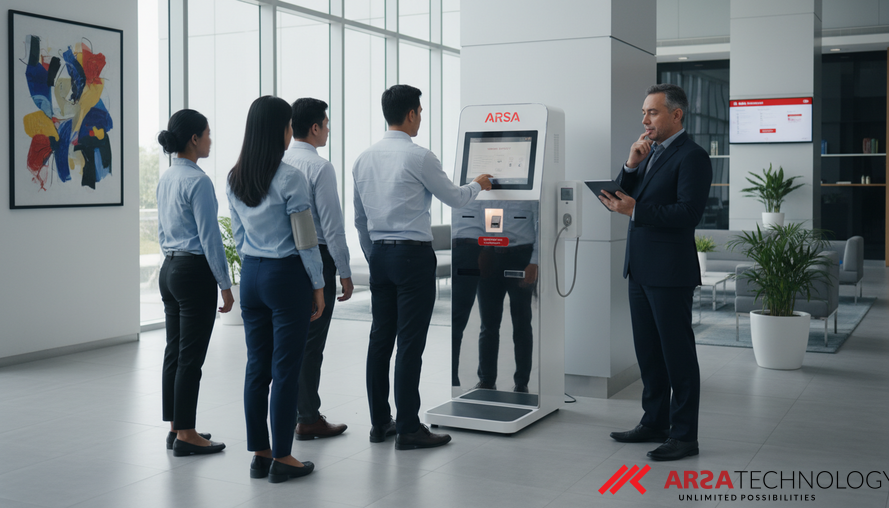
Traditional health screening methods are often resource-intensive, requiring significant staff time and incurring high per-screening costs. The shift towards autonomous, AI-powered solutions like the ARSA Self-Check Health Kiosk offers a compelling alternative, streamlining processes and providing actionable health data.
The Core Investment: Understanding Kiosk Pricing
The base price for a medical-grade self-check health kiosk can range from approximately $10,000 to $30,000 USD, depending on the manufacturer, integrated features, and sensor quality. However, this is just the starting point. ARSA Technology’s Self-Check Health Kiosk overview, for instance, highlights a comprehensive solution designed for enterprise environments, which includes advanced features that impact overall value.
Key components influencing the initial hardware cost include:
- Medical-grade sensors: For accurate blood pressure monitoring, blood oxygen measurement, and heart rate monitoring. FDA/CE-certified sensors are crucial for reliability and compliance.
- AI-powered modules: Such as the AI Romberg test kiosk for balance assessment, which adds significant diagnostic capability.
- Identity verification: Features like face recognition identification or QR-code scanning, essential for secure record-keeping and data privacy (e.g., GDPR, HIPAA compliance).
- Display and interface: High-quality touchscreens and multi-language voice guidance enhance user experience.
Beyond Hardware: Software, Deployment, and Ongoing Costs
The true cost of ownership extends beyond the physical unit. Occupational health directors must account for:
1. Software and Analytics Platform:
A robust health kiosk with dashboard and reporting is indispensable. This typically involves a licensing fee for the software that powers the kiosk and provides a centralized platform for data management. ARSA’s solution includes a local dashboard with data export capabilities and API integration, allowing for seamless integration with existing HR or health management systems. This software enables:
- Real-time alerts for critical readings.
- Aggregated, de-identified analytics for population health management.
- Secure storage of encrypted health profiles.
2. Installation and Integration:
On-site installation costs will vary based on location and existing infrastructure. Integrating the kiosk with your network and any existing access control systems is crucial for a smooth workflow. While ARSA kiosks are designed for straightforward setup, professional installation ensures optimal performance and security.
3. Maintenance and Support:
Ongoing maintenance, software updates, and technical support are vital for long-term operational reliability. Look for providers offering service level agreements (SLAs) and remote troubleshooting capabilities. ARSA Technology, for example, offers a 99.2% uptime SLA for its health kiosks, minimizing potential disruptions.
4. Customization and Scalability:
If your organization requires specific customizations or plans to deploy multiple units across various sites, these factors will influence the total investment. Scalability is a significant advantage of modern IoT kiosk solutions, allowing a single dashboard to manage hundreds or even thousands of units. For broader AI/IoT deployments, ARSA offers a range of all ARSA products, from AI Box series to custom solutions. Even in diverse applications like traffic management, the principles of edge processing and real-time insights, as seen in the ARSA Traffic Monitor (AI Box), underscore the versatility of ARSA’s technology.
The ROI of Automated Employee Health Screening for Workplace Compliance
While the initial outlay for an advanced health kiosk might seem substantial, the ROI is typically realized through significant cost savings and improved operational efficiency.
Reduced Operational Costs:
An ARSA Self-Check Health Kiosk can replace the need for 2-3 full-time equivalent (FTE) nurses per shift for routine vital checks. This labor reallocation can lead to an ROI achieved in as little as 14-18 months. For hospitals, this means nursing staff can be reallocated to critical care, improving overall patient throughput and reducing clinic congestion. Our article, A Hospital’s Guide to Digital Health Kiosks, further explores these benefits.
Enhanced Compliance and Safety:
Meeting workplace compliance standards, such as ISO 45001 for occupational health and safety, is simplified with automated, consistent screening. The kiosk provides a standardized process, reducing human error and ensuring accurate data collection. This is particularly important for industries requiring stringent pre-shift health screening.
Early Detection and Corporate Wellness:
The ability to conduct regular, convenient health checks facilitates the early detection of employee health issues. This proactive approach can lead to better health outcomes, reduced absenteeism, and lower long-term healthcare costs. Implementing a digital health kiosk for hospital visitor screening or as a self-service blood pressure kiosk for clinics also extends these benefits to a broader population, supporting comprehensive corporate wellness programs. Our blog post, Transforming Workplace Health with AI-Powered Kiosks, offers more insights into this aspect.
Data Sovereignty and Privacy:
For organizations concerned with data privacy and compliance with regulations like GDPR or Indonesia PDPA, ARSA offers on-premise or hybrid cloud deployment options. This ensures full data ownership, with biometric data remaining within your infrastructure, aligning with internal security and compliance reviews. Understanding these deployment models is key, as highlighted in Understanding AI-Powered Corporate Wellness Kiosks.
What to Expect in 2026
As technology advances, we can expect health kiosks to become even more sophisticated and integrated. The focus will remain on:
- Increased automation: Further reducing the need for human intervention.
- Predictive analytics: Leveraging AI to identify health trends and potential risks earlier.
- Broader parameter measurement: Including optional modules for glucose and cholesterol, expanding the scope of preventive monitoring.
- Enhanced user experience: With more intuitive interfaces and personalized health insights.
The investment in an ARSA Self-Check Health Kiosk in 2026 is not merely a purchase; it’s a strategic move towards a healthier, more compliant, and more efficient workplace. It’s about transforming occupational health from a reactive expense into a proactive asset.
FAQ
What are the primary benefits of automated employee health screening for workplace compliance?
Automated employee health screening significantly reduces operational costs by minimizing the need for manual checks, enhances compliance with health and safety regulations like ISO 45001, and supports early detection of health issues, thereby improving overall employee well-being and reducing absenteeism.
How does a digital health kiosk for hospital visitor screening improve efficiency?
A digital health kiosk automates the initial screening process for hospital visitors, freeing up staff time, reducing bottlenecks at intake desks, and ensuring consistent, accurate vital sign measurements. This improves patient flow and allows healthcare personnel to focus on critical care.
What specific health parameters can a self-service blood pressure kiosk for clinics measure?
Beyond accurate blood pressure monitoring, a comprehensive self-service kiosk like ARSA’s can measure heart rate, blood oxygen (SpO2), body temperature, and even perform an AI Romberg test for balance assessment. Optional modules can also include weight, height, BMI, glucose, and cholesterol.
How does a health kiosk with dashboard and reporting aid occupational health directors?
A health kiosk with dashboard and reporting provides occupational health directors with real-time operational and safety metrics, historical analytics, and business insights. This data, often de-identified for privacy, enables informed decision-making for population health management, compliance audits, and the evaluation of corporate wellness programs.
Ready to Optimize Your Workplace Health Strategy?
Investing in an advanced, reliable solution for automated employee health screening for workplace compliance is a strategic decision that yields substantial returns. ARSA Technology is committed to delivering practical AI solutions that enhance security, optimize operations, and unlock new business value. To learn more about how the ARSA Self-Check Health Kiosk can transform your organization’s occupational health program and to get a detailed quotation, please contact ARSA solutions team today.
Stop Guessing, Start Optimizing.
Discover how ARSA Technology drives profit through intelligent systems.