
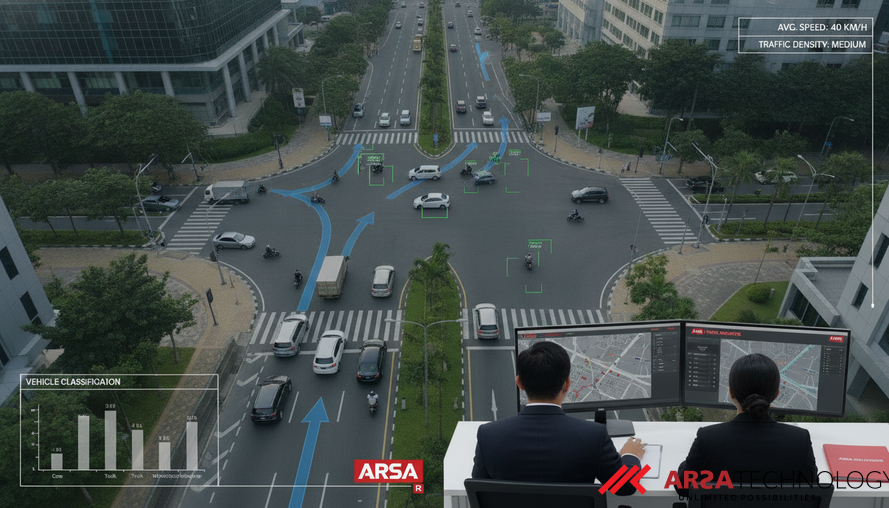

In an increasingly urbanized world, efficient traffic and parking management are paramount for smart cities. Government IT procurement teams are constantly seeking innovative solutions to alleviate congestion, enhance public safety, and optimize resource allocation. The question of how to implement AI traffic analytics with existing CCTV cameras has become a critical focus, offering a cost-effective pathway to advanced urban intelligence without requiring a complete overhaul of current infrastructure.
Traditional CCTV systems, while essential for security, often fall short in providing actionable, real-time traffic data. They capture footage but lack the inherent intelligence to automatically identify, classify, and count vehicles, or analyze complex traffic patterns. This guide explores how organizations can leverage their existing surveillance assets to unlock powerful AI-driven insights, transforming passive video feeds into dynamic traffic sensors.
The Challenge: Maximizing Existing Infrastructure for Traffic Intelligence
Cities globally face mounting pressure from growing vehicle populations and limited infrastructure. The traditional approach to traffic monitoring often involves expensive, dedicated sensors or manual data collection, which can be resource-intensive and prone to human error. The challenge for many government bodies and enterprises, particularly in the parking sector, is to gain granular traffic intelligence without incurring prohibitive capital expenditure on new hardware. This necessitates finding ways to add AI traffic counting to security cameras already in place.
The integration of AI into existing CCTV infrastructure presents a compelling solution. By deploying intelligent software, organizations can transform their standard security cameras into sophisticated traffic monitoring tools, capable of providing real-time data on vehicle movement, density, and classification. This not only optimizes traffic flow but also provides invaluable data for urban planning and incident response.
How to Implement AI Traffic Analytics with Existing CCTV Cameras: A Step-by-Step Guide
Implementing AI traffic analytics with your current CCTV setup involves a strategic, software-centric approach. ARSA Technology specializes in providing enterprise-grade AI Video Analytics Software that seamlessly integrates with your existing video streams.
1. Assessment of Existing Infrastructure: Begin by evaluating your current CCTV network. ARSA’s AI Video Analytics Software is designed to be hardware-agnostic, working with standard ONVIF/RTSP compatible cameras. This means you can often utilize your current cameras, avoiding the need for costly replacements.
2. Software Deployment: The core of this transformation lies in deploying robust AI video analytics software. Solutions like ARSA AI Video Analytics Software are self-hosted and on-premise, ensuring full data ownership and control. This is particularly crucial for government and public sector entities with strict data residency and privacy requirements. The software can be deployed on existing servers, private data centers, or edge compute environments, offering flexible integration with your IT strategy.
3. Configuration of Analytics Modules: Once deployed, configure the specific analytics modules required. For traffic and parking management, this includes:
- Vehicle Counting: Accurately tallying vehicles entering, exiting, or passing through designated zones.
- Vehicle Classification: Distinguishing between different types of vehicles (e.g., cars, trucks, motorcycles, buses).
- Congestion Analysis: Identifying areas of high traffic density and slow-moving vehicles in real-time.
- Traffic Flow Analysis: Understanding directional movement and bottlenecks.
4. Integration and Visualization: The AI software processes video streams in real-time, converting raw footage into actionable data. This data is then fed into centralized dashboards, providing a comprehensive overview of traffic conditions. Integration with existing dashboards, alerting systems, and data pipelines is facilitated via a REST API. This allows for real-time alerts and notifications, operational metrics, and historical reporting.
By following these steps, you can effectively retrofit CCTV for vehicle classification and other advanced traffic analytics, turning your surveillance network into a powerful data-gathering asset.
Key Benefits of Upgrading Traffic Cameras with Edge AI for Parking Management
The adoption of AI traffic analytics brings significant advantages, especially for parking management and urban mobility. According to a 2026 report, AI-powered parking analytics can reduce traffic congestion in urban areas by 23%, while predicting parking spot occupancy with 92% accuracy, as noted in a 2022 study by the International Association of Parking Professionals (IAPP) (ZipDo). This translates directly into tangible business outcomes:
- City-Wide Traffic Intelligence: Gain a holistic view of traffic patterns across your jurisdiction, enabling proactive management and informed decision-making.
- Reduced Infrastructure Costs: By utilizing existing CCTV, the need for new, expensive road sensors or specialized hardware is minimized, leading to substantial cost savings.
- Data-Driven Transport Planning: Access historical analytics and real-time data to inform urban planning initiatives, optimize road networks, and strategically locate future parking facilities. The global Smart Parking System Market is projected to grow from USD 10.47 Billion in 2026 to USD 32.91 Billion by 2035, indicating a strong trend towards such data-driven solutions (Business Research Insights).
- Real-Time Incident Response: Automated alerts for congestion or unusual traffic events allow for rapid response, improving public safety and minimizing disruption. AI-powered parking surveillance systems can cut response time to incidents by 50%, according to a 2022 Genetec study (ZipDo).
- Enhanced Parking Revenue and Utilization: Optimize parking space allocation and dynamic pricing strategies based on real-time demand, increasing revenue and maximizing the utilization of existing parking assets.
- Environmental Impact Reduction: By reducing search time for parking and overall congestion, AI analytics contribute to lower fuel consumption and reduced greenhouse gas emissions.
These benefits demonstrate how to upgrade traffic cameras with edge AI and software solutions to create a more efficient, responsive, and sustainable urban environment. For further insights into optimizing vehicle flow, consider reading our article on A Complete Guide to AI Vehicle Counting System for Smart City Traffic Management.
ARSA Traffic Monitor: Your Solution to Convert Surveillance Cameras to Traffic Sensors
ARSA Technology offers the ARSA Traffic Monitor, a powerful module within its AI Video Analytics Software suite, specifically engineered to convert surveillance cameras to traffic sensors. This on-premise solution provides government agencies and enterprises with comprehensive traffic intelligence capabilities:
- Self-Hosted & Centralized Processing: Maintain full control over your data with a system deployed entirely within your infrastructure. Analyze multiple camera streams from a central location, simplifying management and ensuring data privacy.
- REST API for Seamless Integration: The built-in REST API allows for easy integration with your existing IT systems, command centers, and custom applications, including those developed through ARSA Custom Web Application services.
- Multi-Camera Support: Scale your traffic monitoring across numerous cameras and locations, providing a city-wide or campus-wide view of traffic dynamics.
- Historical Analytics: Access rich historical data for long-term trend analysis, enabling predictive modeling and strategic infrastructure planning.
- Real-Time Dashboards: Intuitive dashboards provide instant visibility into traffic conditions, congestion levels, and vehicle counts, empowering operators with immediate insights.
ARSA Technology, with over 7 years of experience and as an NVIDIA Inception and Intel partner, delivers proven AI solutions for mission-critical environments. Our focus is on practical AI that provides measurable impact, ensuring your investment in traffic analytics yields significant returns. Explore all ARSA products to see how our AI solutions can address diverse operational needs. You might also find value in our blog post, How to Implement AI Traffic Analytics with Existing CCTV Cameras for Smarter Urban Planning.
Frequently Asked Questions (FAQ)
Q: How can I add AI traffic counting to security cameras I already own?
A: You can integrate AI traffic counting by deploying specialized AI video analytics software, such as ARSA Traffic Monitor, onto your existing servers or edge compute infrastructure. This software connects to your current ONVIF/RTSP compatible CCTV cameras and processes video streams to perform real-time vehicle counting and classification.
Q: What are the main benefits of retrofitting CCTV for vehicle classification in parking facilities?
A: Retrofitting CCTV for vehicle classification provides numerous benefits, including improved parking space utilization, reduced traffic congestion within facilities, enhanced security through better monitoring, and data-driven insights for optimizing parking operations and pricing strategies.
Q: Is it possible to upgrade traffic cameras with edge AI for offline operation?
A: Yes, many AI traffic analytics solutions, including ARSA’s on-premise software, can be deployed with edge AI capabilities. This allows for local processing of video streams directly on-site, enabling real-time analysis and insights even in environments with limited or no cloud connectivity, ensuring data privacy and low latency.
Q: How does converting surveillance cameras to traffic sensors reduce operational costs for government agencies?
A: Converting existing surveillance cameras into traffic sensors significantly reduces operational costs by eliminating the need to purchase and install new, dedicated traffic monitoring hardware. It leverages existing infrastructure, minimizes maintenance overhead, and provides automated data collection, freeing up personnel for other critical tasks. For a deeper dive into the economic advantages, read The Business Case for an AI Vehicle Counting System for Smart City Traffic Management.
Conclusion
The ability to how to implement AI traffic analytics with existing CCTV cameras represents a significant leap forward for modern urban management, particularly within the parking industry. By transforming passive surveillance into active intelligence, government IT procurement teams can achieve unprecedented levels of insight into traffic flow, congestion, and vehicle patterns. ARSA Technology’s Traffic Monitor, delivered as an on-premise AI Video Analytics Software, offers a robust, scalable, and data-private solution to meet these demands. With capabilities ranging from real-time vehicle counting and classification to comprehensive historical analytics, it empowers organizations to make data-driven decisions that reduce costs, optimize operations, and enhance the quality of urban life.
Ready to transform your city’s traffic management? Contact ARSA’s solutions team today to discuss how our AI Video Analytics Software can be tailored to your specific needs.
Stop Guessing, Start Optimizing.
Discover how ARSA Technology drives profit through intelligent systems.