
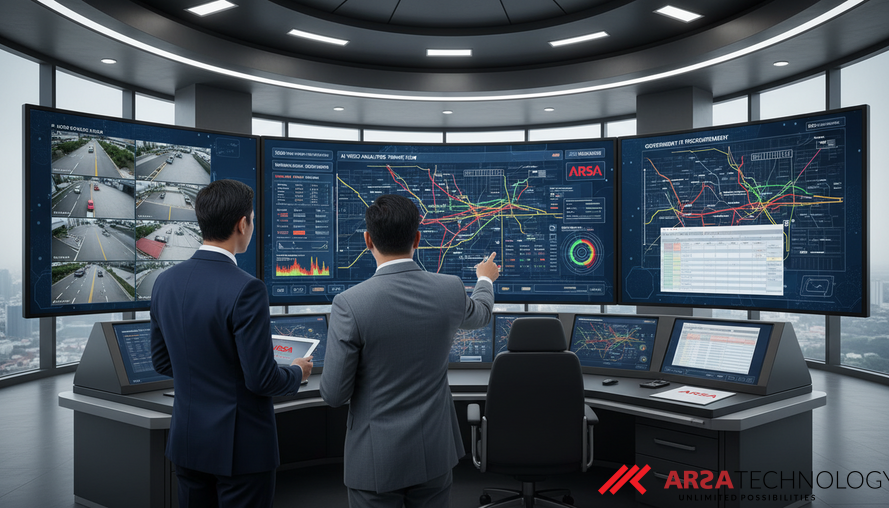
A Complete Guide to Implement AI Traffic Analytics with Existing CCTV Cameras
In an era of rapidly expanding urban centers and increasing vehicular traffic, efficient traffic management is no longer a luxury but a necessity. Government agencies and private tolling operators are constantly seeking innovative solutions to optimize flow, reduce congestion, and enhance public safety. The good news is that you don’t need to overhaul your entire surveillance infrastructure to achieve this. This guide will show you how to implement AI traffic analytics with existing CCTV cameras, transforming passive video feeds into actionable intelligence.
Traditional CCTV systems, while effective for security monitoring, often fall short when it comes to providing dynamic, real-time traffic insights. They capture vast amounts of data but lack the inherent intelligence to interpret it for traffic management purposes. This is where AI video analytics steps in, offering a cost-effective and powerful upgrade path. By leveraging advanced AI software, organizations can unlock unprecedented levels of detail regarding vehicle movements, patterns, and potential incidents, all without the prohibitive expense of new hardware deployments.
The Strategic Advantage of AI Traffic Analytics
For government IT procurement teams, the decision to invest in new technology often hinges on clear ROI and seamless integration with existing assets. Implementing AI traffic analytics on existing CCTV infrastructure offers significant advantages:
- Cost Efficiency: Avoids the massive capital expenditure associated with replacing thousands of cameras or installing dedicated traffic sensors.
- Rapid Deployment: Utilizes your current network, allowing for faster rollout and immediate data collection.
- Enhanced Data Quality: AI algorithms provide precise vehicle counting, vehicle classification, and congestion analysis, far surpassing manual review or basic motion detection.
- Real-time Insights: Enables proactive traffic management, from dynamic signal timing to rapid incident response.
- Data-Driven Planning: Provides historical analytics and trends crucial for long-term urban planning and infrastructure development.
Understanding the Core Technology: ARSA AI Video Analytics Software
At the heart of this transformation lies robust AI video analytics software. ARSA Technology’s ARSA Traffic Monitor (Software) is specifically designed for this purpose. Unlike cloud-dependent solutions, this enterprise-grade platform is deployed on-premise, giving you full control over your data and ensuring compliance with stringent regulations like GDPR and CCPA.
The ARSA Traffic Monitor operates by converting raw CCTV streams into real-time operational intelligence. It’s a software-only solution, meaning it can be deployed on your existing servers or edge compute infrastructure, eliminating the need for dedicated AI appliances. This approach ensures full data ownership, with all video streams, inference results, and metadata remaining entirely within your secure environment.
How to Implement AI Traffic Analytics with Existing CCTV Cameras: A Step-by-Step Guide
Upgrading your existing CCTV network to a smart traffic monitoring system involves a structured approach to ensure efficiency and accuracy.
1. Assess Your Existing Infrastructure
Begin by evaluating your current CCTV camera network. Identify camera locations, coverage areas, video stream quality, and network connectivity. Ensure your existing cameras provide sufficient resolution and clear visibility of traffic lanes for accurate AI analysis. Modern IP cameras are generally ideal, but many legacy analog systems can also be integrated with appropriate encoders.
2. Choose the Right AI Video Analytics Software
Selecting a powerful and flexible software platform is paramount. The AI Video Analytics Software overview from ARSA Technology highlights the capabilities needed for effective traffic monitoring. Look for features such as:
- Hardware-agnostic deployment: The ability to run on your existing servers or private data centers.
- Centralized processing: To analyze multiple camera streams from a single location.
- Robust analytics modules: Including vehicle counting, classification (e.g., cars, trucks, motorcycles), speed detection, and congestion analysis.
- REST API for integration: Essential for connecting with existing dashboards, alerting systems, and data pipelines for a truly integrated smart city solution.
- Scalability: The capacity to expand analytics as your needs grow, simply by allocating more compute resources.
3. Software Deployment and Configuration
Once the software is selected, it’s installed directly into your environment. For the ARSA Traffic Monitor, this means deploying it on your on-premise servers or private cloud. The configuration process involves:
- Connecting to CCTV feeds: The software will integrate with your existing video management system (VMS) or directly with camera streams.
- Defining detection zones: Specifying the areas within each camera’s view where traffic analysis should occur (e.g., specific lanes, intersections).
- Setting up analytics rules: Configuring parameters for vehicle counting, classification, and congestion thresholds.
- Establishing alert protocols: Defining when and how real-time alerts for incidents (e.g., stopped vehicles, unusual congestion) should be triggered.
4. Calibration and Optimization
Initial deployment requires calibration to ensure optimal performance. This involves fine-tuning detection parameters based on real-world conditions, such as varying lighting, weather, and traffic densities. Continuous monitoring and optimization will enhance accuracy and ensure the system provides reliable insights. This step is crucial to effectively retrofit CCTV for vehicle classification and other advanced analytics.
5. Integrate with Dashboards and Reporting
The true value of AI traffic analytics lies in its ability to deliver actionable intelligence. ARSA’s platform provides real-time dashboards and historical reports. These dashboards offer a centralized view of traffic flow, incident alerts, and performance metrics. Integration via REST API allows this data to feed into your existing city management platforms, enabling data-driven transport planning and real-time incident response.
Key Benefits for Tolling and Smart City Operations
For tolling authorities, the ability to accurately count and classify vehicles automatically can significantly enhance operational efficiency and revenue assurance. By leveraging AI to add AI traffic counting to security cameras, manual processes are minimized, and data integrity is maximized. This also provides valuable data for dynamic pricing models and congestion management strategies.
Beyond tolling, smart cities benefit immensely. The ability to convert surveillance cameras to traffic sensors provides a comprehensive overview of urban mobility. This intelligence supports:
- Traffic Flow Optimization: Adjusting signal timings in real-time to alleviate bottlenecks.
- Emergency Response: Quickly identifying and responding to accidents or unusual traffic patterns.
- Infrastructure Planning: Using historical data to inform decisions on road expansions, public transport routes, and urban development.
- Environmental Monitoring: Correlating traffic data with air quality sensors to understand urban pollution patterns.
Furthermore, the capability to upgrade traffic cameras with edge AI (or centralized on-premise AI, as with ARSA’s software) ensures that processing happens where it’s most efficient and secure, minimizing latency and upholding data privacy standards. This approach aligns with the growing need for robust, compliant AI solutions in public sector applications. For broader applications of AI in public spaces, consider how similar analytics are used for audience measurement, such as with the ARSA DOOH Audience Meter (AI Box).
Ensuring Data Privacy and Compliance
When dealing with public infrastructure and sensitive data, compliance is paramount. ARSA Technology’s on-premise AI Video Analytics Software ensures that all data processing occurs within your controlled environment. This architecture inherently supports compliance with international data protection regulations such as GDPR (General Data Protection Regulation) and Indonesia PDPA, as no biometric data or personally identifiable information leaves your infrastructure unless explicitly configured and consented to. This commitment to data sovereignty is a critical factor for government and enterprise clients.
Frequently Asked Questions
What are the primary benefits of adding AI traffic counting to security cameras?
Adding AI traffic counting to security cameras provides benefits such as real-time vehicle counts, accurate classification, congestion detection, and historical data for planning. This leads to optimized traffic flow, reduced operational costs, and improved incident response.
How can I retrofit CCTV for vehicle classification without replacing hardware?
You can retrofit CCTV for vehicle classification by deploying a software-only AI video analytics platform like ARSA Traffic Monitor on your existing servers. This software integrates with your current camera feeds to perform advanced analysis without requiring new cameras.
What is involved in upgrading traffic cameras with edge AI or on-premise AI?
Upgrading traffic cameras with on-premise AI involves installing specialized software on your existing servers or edge compute devices. This software processes video streams locally, performing real-time analytics such as vehicle counting, classification, and congestion analysis, all within your network for enhanced privacy and low latency.
Can I convert surveillance cameras to traffic sensors for smart city applications?
Yes, you can convert surveillance cameras to traffic sensors by integrating them with AI video analytics software. This software transforms raw video feeds into actionable traffic data, enabling smart city applications like dynamic traffic management, urban planning, and real-time incident detection.
Ready to Transform Your Traffic Management?
Implementing AI traffic analytics with existing CCTV cameras offers a powerful, cost-effective pathway to smarter, more efficient urban mobility. By choosing a robust, on-premise solution like ARSA Traffic Monitor, government agencies and tolling operators can gain full control over their data, ensure compliance, and achieve significant operational improvements. Explore all ARSA products to see how our AI solutions can benefit your organization.
To learn more about how ARSA Technology can help you deploy advanced traffic analytics or to discuss a tailored solution for your specific needs, don’t hesitate to contact ARSA solutions team today. We are committed to engineering intelligence into operations, delivering practical AI that is deployed, proven, and profitable. For further insights into the strategic value of such systems, you might find our article on the business case for an AI vehicle counting system helpful, or delve deeper into implementing an AI vehicle counting system for smart city traffic management.
Stop Guessing, Start Optimizing.
Discover how ARSA Technology drives profit through intelligent systems.