
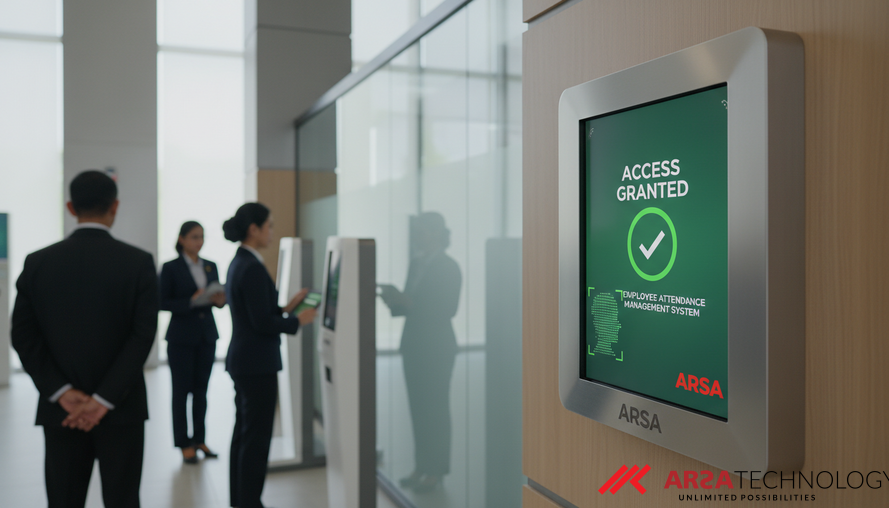

Boosting Efficiency and Security: The Power of a Face Recognition API for Attendance Management System
In today’s fast-paced operational environments, traditional attendance tracking methods—from manual sign-ins to card-based systems—are increasingly proving inefficient, prone to error, and vulnerable to fraud. For government agencies and large enterprises, these inefficiencies translate directly into significant operational costs and security risks. The solution lies in advanced biometric technology, specifically a robust face recognition API for attendance management system. This article explores how integrating such an API can revolutionize workforce management, enhance security, and deliver a compelling return on investment for system integrators building mission-critical applications.
ARSA Technology, with its proven track record in enterprise AI solutions, offers a powerful Face Recognition & Liveness API designed for seamless integration into existing or new attendance and access control platforms. This cloud-based solution provides the precision and reliability demanded by organizations that prioritize both operational efficiency and stringent security protocols.
The Hidden Costs of Traditional Attendance Systems
Manual and legacy attendance systems present numerous challenges that impact an organization’s bottom line and operational integrity:
- Time Theft and Buddy Punching: Employees can easily clock in or out for colleagues, leading to inaccurate payroll and significant financial losses over time.
- Administrative Overhead: Manual data entry, cross-referencing, and error correction consume valuable HR and administrative resources.
- Security Vulnerabilities: Card-based systems are susceptible to lost or stolen credentials, compromising physical access control and data security.
- Lack of Real-time Insights: Without immediate, accurate data, organizations struggle to monitor workforce presence, manage emergencies, or optimize staffing levels effectively.
- Compliance Risks: Inaccurate attendance records can lead to non-compliance with labor laws and internal regulations, resulting in penalties or legal issues.
These challenges highlight a critical need for a more secure, automated, and reliable solution.
How a Face Recognition API for Attendance Management System Delivers ROI
Integrating a high-performance face recognition API for attendance management system offers a clear path to overcoming these challenges, providing tangible financial and operational benefits. ARSA’s API, for instance, is engineered for enterprise-grade performance, boasting 99.67% accuracy on the LFW benchmark, ensuring reliable identification every time.
1. Eliminating Time Theft and Fraud:
The most direct financial impact comes from preventing “buddy punching” and other forms of time theft. By requiring unique facial authentication, the system ensures that only the authorized individual can clock in or out. ARSA’s API includes both active and passive liveness detection, which effectively thwarts spoofing attempts using photos, videos, or masks. This anti-spoofing capability is crucial for maintaining the integrity of an employee check-in system, directly impacting payroll accuracy and reducing fraudulent payouts.
2. Reducing Administrative Overhead by 80%:
Automating the attendance process drastically cuts down on the manual effort required for data collection, verification, and reconciliation. HR and administrative staff can reallocate up to 80% of the time previously spent on attendance management to more strategic tasks. The ARSA API seamlessly integrates with existing HR and payroll systems via its REST API, providing real-time data that minimizes errors and streamlines reporting.
3. Enhancing Security and Access Control:
Beyond attendance, facial recognition serves as a powerful layer for physical security. A facial authentication API for access control app ensures that only verified personnel can enter restricted areas. This is particularly vital for government facilities, critical infrastructure, and sensitive enterprise environments. ARSA’s API supports both 1:1 face verification (matching a live scan to a stored ID) and 1:N face identification (identifying an individual from a database of faces), providing flexible and robust security options for building access control.
4. Streamlined Visitor Management:
For system integrators developing comprehensive security platforms, a biometric API for visitor management platform can significantly improve efficiency and security at entry points. Visitors can be quickly registered and verified using facial biometrics, enhancing the overall security posture while providing a modern, efficient experience. This also aids in maintaining accurate logs for compliance and emergency response.
5. Scalability and Rapid Deployment:
ARSA’s cloud-hosted Face Recognition & Liveness API is built for scalability, capable of handling up to 500,000 API calls per month, making it suitable for large organizations with extensive workforces or multiple locations. For system integrators, the availability on RapidAPI and a free tier allows for quick prototyping and testing, accelerating development cycles and time-to-market for new solutions. Its REST API ensures straightforward integration, minimizing development complexities.
ARSA’s Face Recognition & Liveness API: A Closer Look
The ARSA Face Recognition & Liveness API is a production-grade solution developed by ARSA Technology, a company with over 7 years of experience in deploying practical AI solutions for governments and enterprises. Key features include:
- 1:1 Face Verification: Confirming an individual’s identity by comparing their live scan to a stored reference image.
- 1:N Face Identification: Searching a database of faces to identify an individual from a group.
- Active and Passive Liveness Detection: Advanced anti-spoofing measures to detect and prevent fraudulent attempts using photos, videos, or 3D masks. This is critical for secure e-KYC and employee check-in processes.
- Face Database Management: Tools to enroll, update, and manage face collections securely.
- REST API: Easy integration into any existing application or platform.
- Cloud-Hosted: Managed infrastructure for high availability and performance.
- High Accuracy: 99.67% accuracy ensures reliable performance in diverse conditions.
This comprehensive Face Recognition & Liveness overview demonstrates ARSA’s commitment to delivering secure, efficient, and scalable biometric solutions.
The ARSA Advantage for System Integrators
For system integrators, partnering with ARSA Technology means gaining access to a proven, reliable, and easy-to-integrate biometric solution. The API’s architecture allows for rapid development of custom applications, from advanced attendance systems to secure access control and digital identity verification. By leveraging ARSA’s expertise and robust API, integrators can deliver high-value solutions to their clients, ensuring data integrity, reducing operational costs, and enhancing overall security.
Consider the impact on a government department managing thousands of employees across various sites. A centralized system powered by a reliable face ID API for building access control and attendance not only streamlines daily operations but also provides an auditable, tamper-proof record of presence, crucial for compliance and accountability.
While the Face Recognition & Liveness API is cloud-based, ARSA Technology also offers on-premise solutions like the Face Recognition & Liveness SDK for environments with strict data sovereignty requirements, and various all ARSA products including the ARSA DOOH Audience Meter (AI Box) which demonstrates edge AI capabilities. This flexibility ensures that ARSA can meet diverse deployment needs.
Frequently Asked Questions
What is the primary benefit of using a facial authentication API for access control app?
The primary benefit is enhanced security and fraud prevention. A facial authentication API ensures that only authorized individuals gain access, eliminating the risks associated with lost or stolen credentials and preventing “buddy punching” in attendance systems.
How does ARSA’s face verification for employee check-in system prevent spoofing?
ARSA’s system incorporates both active and passive liveness detection. Active liveness may involve challenge-response actions (e.g., blinking), while passive liveness uses AI to detect subtle cues that differentiate a live person from a photo, video, or mask, ensuring robust anti-spoofing.
Can ARSA’s biometric API for visitor management platform integrate with existing systems?
Yes, ARSA’s Face Recognition & Liveness API is built with a REST API, making it highly compatible and easy to integrate with a wide range of existing visitor management, HR, and security systems. This allows system integrators to leverage current infrastructure.
What kind of ROI can be expected from implementing a face recognition API for attendance management system?
Organizations can expect significant ROI through reduced time theft, up to 80% reduction in administrative overhead for attendance management, improved security, and enhanced compliance. These benefits often lead to ROI within a short timeframe, making it a financially justifiable investment.
Conclusion
The demand for secure, efficient, and reliable attendance and access control systems is growing, particularly within government and large enterprise sectors. A face recognition API for attendance management system offers a modern, intelligent solution that addresses critical operational challenges and delivers substantial ROI. By leveraging ARSA Technology’s Face Recognition & Liveness API, system integrators can build powerful, future-proof applications that enhance security, streamline operations, and provide unparalleled accuracy.
Ready to transform your attendance and access control solutions? Contact ARSA solutions team today to discuss how our API can empower your next project.
Stop Guessing, Start Optimizing.
Discover how ARSA Technology drives profit through intelligent systems.