
Face Recognition API for Event Check-in and Ticket Validation: A Comprehensive Buyer’s Guide
For event tech product managers, the challenge of balancing seamless attendee experience with robust security and fraud prevention is constant. Long queues, fraudulent tickets, and manual verification processes can detract from an event’s success and impact ROI. The solution lies in advanced identity verification technologies, and a face recognition API for event check-in and ticket validation stands out as a transformative tool. This guide will walk you through the critical considerations when evaluating such a solution, helping you select a system that not only streamlines entry but also elevates the entire event experience.
ARSA Technology, with its proven expertise in AI and IoT solutions for mission-critical enterprises, offers a powerful Face Recognition & Liveness API designed to meet the stringent demands of modern event management. Our cloud-based SaaS solution provides enterprise-grade biometric capabilities, ensuring secure, efficient, and scalable event entry.
The Evolving Landscape of Event Entry: Why Biometric Event Check-in Software is Essential
Traditional event check-in systems, often reliant on QR codes or printed tickets, are increasingly vulnerable to fraud and prone to creating bottlenecks. Attendees expect quick, hassle-free entry, while organizers demand ironclad security against ticket resale scams, impersonation, and unauthorized access. This is where biometric event check-in software becomes indispensable. By leveraging unique biological identifiers, such as facial features, events can achieve unparalleled levels of security and operational efficiency.
The shift towards biometric solutions mirrors the advancements seen in highly regulated industries like neobanking, where robust identity verification is paramount for compliance and fraud prevention. The same underlying technology that secures financial transactions can now ensure the integrity of your event entry process, providing a secure and rapid experience for every attendee.
Key Features to Evaluate in a Face Recognition API for Event Check-in and Ticket Validation
When considering a face recognition API for event check-in and ticket validation, a product manager must look beyond basic functionality. The right API offers a comprehensive suite of features designed for real-world event scenarios.
- Accuracy and Speed: The core of any face recognition system is its ability to accurately and rapidly identify individuals. Look for an API that offers both 1:N face recognition (identifying a person against a large database of attendees) and 1:1 face verification (confirming an attendee’s identity against a pre-registered face). Real-time performance is crucial to prevent queues. ARSA’s API delivers high accuracy, processing detections with bounding boxes almost instantly.
- Robust Liveness Detection: Preventing spoofing attacks (using photos, videos, or masks) is critical. A superior API will include both passive liveness detection (detecting liveness without user interaction) and active liveness detection, which involves challenge-response mechanisms like head movement challenges. This ensures that only genuine, live individuals gain entry, protecting against presentation attacks and synthetic identity fraud.
- Scalability and Database Management: Events vary wildly in size, from intimate gatherings to massive conferences. Your chosen API must scale effortlessly. Look for robust face database management capabilities, allowing you to enroll, update, and remove identities efficiently. Crucially, ensure the system offers per-account isolated databases for enhanced data privacy and tenant separation, especially if managing multiple events or clients. ARSA’s ARSA Face Recognition & Liveness API provides this isolation, giving you full control.
- Ease of Integration: A powerful API is only valuable if it’s easy to integrate into your existing event management platforms. A well-documented REST API with clear cURL, Python, and JavaScript code examples can significantly reduce development time. ARSA’s API is designed for quick setup, enabling your team to make their first API call in under 5 minutes, accelerating your time to market. You can explore the comprehensive Face Recognition API documentation for detailed integration guides.
- Data Privacy and Compliance: In an era of increasing data privacy regulations (like GDPR and Indonesia PDPA), adherence to compliance standards is non-negotiable. The API should offer robust security features, including GDPR/HIPAA encryption for identity verification, and ensure that biometric data is handled with the utmost care. A cloud SaaS model that offers isolated per-account face databases means you have no infrastructure to manage, simplifying your compliance burden.
- Advanced Analytics and Insights: Beyond just check-in, a sophisticated face recognition API can provide valuable post-event insights. Features like age estimation, gender classification, and expression detection (neutral, happy, sad, surprise, anger) can help event organizers understand their audience better, optimize future events, and even measure engagement. This capability, as explored in articles like Maximizing ROI: Face Recognition API for Sentiment Analysis in Retail and Live Events, can transform raw attendance data into actionable business intelligence.
ARSA Face Recognition & Liveness API: Your Solution for Seamless Event Entry
The ARSA Face Recognition & Liveness API is engineered to address the specific needs of event tech product managers. It’s a cloud-based SaaS platform that delivers production-ready face recognition and liveness detection, making it an ideal face ID ticket validation API.
Our API provides:
- 1:N Face Recognition against a database: Quickly identify attendees against your registered database, perfect for large-scale events.
- 1:1 Face Verification: Confirm an individual’s identity with high precision, suitable for VIP access or sensitive areas.
- Comprehensive Face Detection: Accurately detect faces within images and video streams, complete with bounding boxes for precise analysis.
- Advanced Liveness Detection: Featuring both passive and active liveness with head movement challenges, our API prevents fraudulent entry attempts, ensuring the person presenting for check-in is real and present.
- Flexible Database Management: Easily manage face collections and maintain per-account isolated databases, guaranteeing data privacy and tenant separation.
- Rich Demographic Insights: Utilize age estimation, gender classification, and expression detection to gather valuable audience data for post-event analysis.
With ARSA, you benefit from a system that requires no infrastructure to manage, allowing your team to focus on innovation rather than maintenance. Our self-hosted ARSA platform at faceapi.arsa.technology ensures robust performance and security. We offer simple x-key-secret API key authentication and support JPEG/PNG images, along with MP4/WebM video for active liveness checks.
Pricing is transparent and scalable, designed to grow with your event needs. You can start with a Basic free 30-day trial, offering 100 calls/month and 100 face IDs, with no credit card required. For larger requirements, our Pro plan starts at $29/month (5,000 calls, 5,000 face IDs), Ultra at $149/month (50,000 calls, 50,000 face IDs), and Mega at $1,290/month (500,000 calls, 500,000 face IDs). All features are included across every plan, with convenient PayPal monthly subscription billing. A developer dashboard provides usage analytics to keep track of your consumption. You can review our flexible Face API pricing plans to find the best fit.
Achieving Business Outcomes with Face ID Ticket Validation API
Implementing a robust face ID ticket validation API like ARSA’s translates directly into tangible business outcomes and a strong return on investment.
- Accelerated Deployment: Launch face login capabilities in days, not months, significantly reducing your development cycle and getting your solution to market faster.
- Enhanced Security & Fraud Prevention: By preventing presentation attacks and synthetic identity fraud, you safeguard your event’s integrity and protect your attendees. This level of security is comparable to the stringent requirements of neobanks and financial institutions, helping meet obligations under frameworks like PSD2, eIDAS, and FinCEN. For more insights on securing events, read Securing Events with ARSA Face Recognition API for KYC.
- Cost Efficiency: With a pay-as-you-use model and no infrastructure to manage, you optimize operational costs. This allows for predictable budgeting and efficient resource allocation.
- Superior Attendee Experience: Eliminate long queues and provide a swift, frictionless entry process that leaves a positive lasting impression on your attendees.
Streamlining Conference Registration with Face Verification for Event Entry
Conferences, with their often complex registration processes and high volume of attendees, particularly benefit from advanced biometric solutions. Implementing face recognition for conference registration transforms a potentially stressful entry point into a smooth, professional experience.
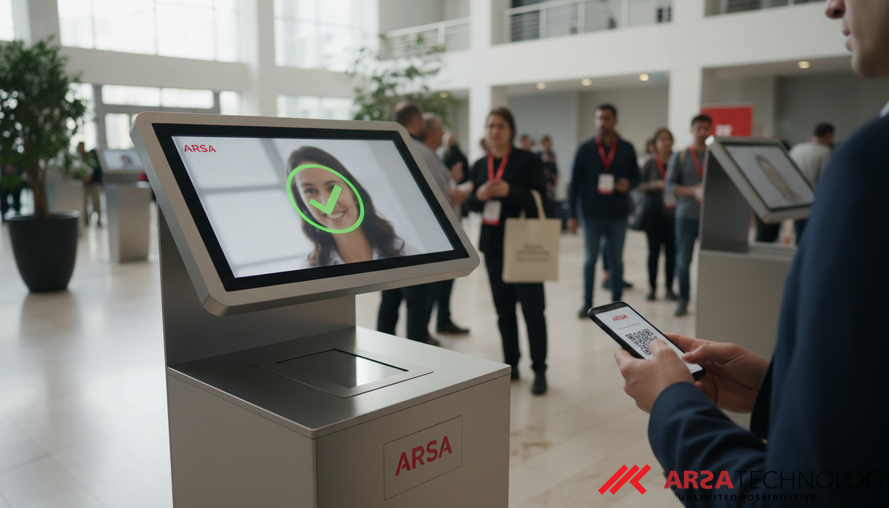
Imagine attendees simply walking up to a kiosk, having their identity verified in seconds using face verification for event entry, and proceeding directly into the venue. This not only enhances security by ensuring only registered individuals enter but also significantly improves operational efficiency. The ability to enroll multiple images per face ID further boosts accuracy, even in varied lighting conditions or with minor appearance changes. This level of precision and speed is invaluable for maintaining tight schedules and managing large crowds effectively.
Conclusion
For event tech product managers navigating the complexities of modern event management, a sophisticated face recognition API for event check-in and ticket validation is no longer a luxury but a strategic necessity. By choosing a solution that prioritizes accuracy, liveness detection, scalability, ease of integration, and data privacy, you can transform your event entry process, enhance security, and deliver an unparalleled attendee experience.
ARSA Technology’s Face Recognition & Liveness API offers the robust, scalable, and compliant solution your events demand. Ready to revolutionize your event check-in? Contact ARSA solutions team today to discuss your specific needs, or create a free Face API account to experience the power of our technology firsthand.
FAQ Section
- What is face verification for event entry?
Face verification for event entry uses biometric technology to confirm an attendee’s identity by comparing their live facial scan against a pre-registered facial image in a database. This ensures the person entering is the legitimate ticket holder, preventing fraud and speeding up the check-in process.
- How does a face ID ticket validation API prevent fraud?
A face ID ticket validation API prevents fraud by employing advanced liveness detection (both passive and active) to ensure the person presenting for entry is a real, live individual and not a spoofing attempt (e.g., using a photo or video). It also verifies the individual against a secure database, preventing unauthorized entry or the use of stolen tickets.
- What are the benefits of using biometric event check-in software?
The benefits of using biometric event check-in software include significantly faster entry times, reduced queues, enhanced security against ticket fraud and impersonation, improved attendee experience, and streamlined operational efficiency for event staff. It also provides valuable data for post-event analysis.
- Can ARSA’s API be used for large-scale conference registration?
Yes, ARSA’s Face Recognition & Liveness API is designed for scalability and high-volume processing, making it ideal for large-scale conference registration. It supports 1:N face recognition against extensive databases and offers per-account isolated databases to manage large attendee numbers efficiently and securely.
Stop Guessing, Start Optimizing.
Discover how ARSA Technology drives profit through intelligent systems.