
How Does CCTV-Based AI Handle Worker Privacy Concerns in 2026?
For HR and legal compliance leads in industrial environments, the question of how does CCTV-based AI handle worker privacy concerns is paramount. As AI video analytics becomes increasingly integral to workplace safety and operational efficiency, navigating the delicate balance between robust monitoring and protecting employee rights is a critical challenge. In 2026, with evolving regulations and heightened awareness, deploying such systems requires a thoughtful approach centered on transparency, purpose, and data minimization.
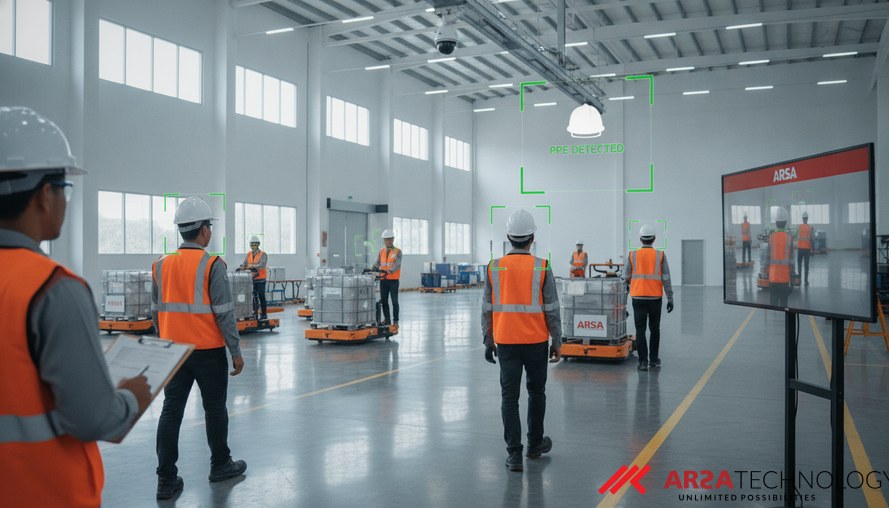
AI-powered CCTV systems, like ARSA Technology’s ARSA Basic Safety Guard (AI Box), are designed to enhance safety by detecting critical events such as PPE non-compliance (e.g., missing hard hats or safety vests) or intrusions into restricted areas. These systems offer significant benefits, including reducing workplace injury rates, automating compliance reporting for standards like OSHA or ISO 45001, and potentially lowering workers’ compensation insurance premiums. However, achieving these outcomes must not come at the expense of employee trust and privacy.
Balancing Safety Monitoring with Reasonable Privacy Expectations
The core of addressing worker privacy concerns lies in understanding and respecting the reasonable expectation of privacy. While employers generally have the right to use visible video surveillance in common work areas for legitimate business purposes such as safety and quality control, certain areas are typically off-limits. For instance, many jurisdictions, including several U.S. states, explicitly prohibit cameras in private spaces like restrooms, locker rooms, and changing areas. Furthermore, audio recording often faces stricter legal scrutiny, with many regions requiring all-party consent for conversations to be lawfully captured. This is why many advanced safety systems focus on video-only analytics, minimizing the scope of data collection to what is strictly necessary for safety.
Transparency Policies for Workplace Video Surveillance
One of the most effective strategies for mitigating privacy concerns is establishing clear transparency policies for workplace video surveillance. Employees should be fully informed about the presence of AI-powered CCTV, its purpose, what data is collected, and how it will be used. This proactive disclosure builds trust and helps manage employee expectations. Some states, such as Connecticut, New York, and Delaware, already mandate employers to notify workers of electronic monitoring, with Connecticut’s definition explicitly covering cameras. Even where not legally required, providing conspicuous notice and written policies is a best practice that aligns with global privacy frameworks like GDPR, which emphasizes legitimate reasons and honesty in data collection.
ARSA’s AI Box Series overview, including the Basic Safety Guard, operates on an edge computing model. This means all AI processing runs locally on the device, and video streams are analyzed on-device without cloud dependency. This “no cloud costs” and “full data ownership” approach significantly enhances privacy by ensuring sensitive video data remains within the facility’s network, reducing exposure risks. This local processing capability is a key differentiator for organizations prioritizing data sovereignty and compliance readiness.
Employee Rights Around AI Monitoring Data Collection
Understanding and respecting employee rights around AI monitoring data collection is crucial. These rights often include the right to be informed, the right to access one’s data, and in some cases, the right to request corrections or deletion of inaccurate information. The rise of AI in the workplace has amplified these concerns, with a 2026 Wired report indicating that 81% of employees worry about AI leading to more invasive surveillance. This underscores the need for systems that are purpose-built for specific safety objectives rather than broad, indiscriminate monitoring.
For instance, ARSA Basic Safety Guard focuses on detecting specific safety violations like the absence of PPE (hard hats, safety vests) or unauthorized entry into predefined zones. It does not perform facial recognition for identity tracking, thereby minimizing the collection of personally identifiable information. This privacy-by-design approach ensures that the technology serves its safety purpose without infringing on individual identity.
Disclosure Requirements for Workplace Camera Surveillance
Beyond general transparency, specific disclosure requirements for workplace camera surveillance must be met. These often involve:
- Clear Notice: Prominently displayed signs indicating the presence of video surveillance.
- Written Policies: Detailed documents outlining the scope, purpose, data retention periods, and access controls for the surveillance system.
- Consent (where applicable): For certain types of data collection, especially biometric data, explicit written consent may be required, as seen with Illinois’ Biometric Information Privacy Act (BIPA). While ARSA’s Basic Safety Guard does not collect biometric identifiers like face prints, understanding these broader regulations is vital for HR and legal teams.
The integration of AI into existing CCTV infrastructure (supporting ONVIF and RTSP cameras) with a 5-minute plug-and-play setup makes solutions like the ARSA AI Box highly practical for industrial employers. Whether deploying a Mini PC model for up to 3 cameras or a Server model for up to 30, the edge processing ensures real-time alerts and safety compliance reporting without external data transfer. This contrasts with more generalized monitoring software, which might have different privacy implications. For a deeper dive into how AI can enhance safety, you might find our article on Safety AI vs. Traditional EHS Software: A Buyer’s Guide for Facility Management insightful.
Frequently Asked Questions
How can AI-powered CCTV enhance safety while respecting privacy?
AI-powered CCTV systems, like ARSA Basic Safety Guard, enhance safety by focusing on specific, non-identifying detections such as PPE compliance or restricted area intrusions. By processing data at the edge and avoiding facial recognition, they minimize personal data collection, thereby respecting privacy while still providing critical safety insights.
What are the key considerations for transparency policies in workplace video surveillance?
Key considerations include clearly communicating the purpose of surveillance, the types of data collected, how long data is retained, and who has access to it. Employers should provide both visible signage and detailed written policies to ensure employees are fully informed and to meet disclosure requirements for workplace camera surveillance.
How do edge computing solutions improve worker privacy compared to cloud-based systems?
Edge computing solutions process video data directly on-site, within the facility’s network, without sending raw footage to the cloud. This significantly reduces the risk of data breaches and unauthorized access, giving organizations full control over their data and enhancing employee rights around AI monitoring data collection.
What role does data minimization play in balancing safety monitoring with privacy?
Data minimization is crucial. It means collecting only the data strictly necessary for the stated safety purpose. For example, focusing on PPE detection rather than individual identification ensures that the system is effective for safety without unnecessarily infringing on individual privacy. This approach is fundamental to balancing safety monitoring with reasonable privacy expectations.
Conclusion
Addressing how does CCTV-based AI handle worker privacy concerns is a multifaceted challenge that requires a strategic, compliance-driven approach. For HR and legal compliance leads, the path forward involves embracing technologies that are designed with privacy in mind, prioritizing transparency, and adhering to evolving legal frameworks. Solutions like the ARSA Basic Safety Guard (AI Box) exemplify this by offering robust safety monitoring through edge computing, ensuring data sovereignty and minimizing privacy risks. By choosing systems that support these principles, industrial employers can effectively reduce workplace injury rates and streamline compliance, all while fostering a workplace built on trust and respect for employee privacy.
To explore how ARSA Technology can help your organization implement AI-powered safety solutions that respect worker privacy, please contact ARSA solutions team today. You can also learn more about all ARSA products, including our ARSA AI Video Analytics Software for centralized deployments.
Stop Guessing, Start Optimizing.
Discover how ARSA Technology drives profit through intelligent systems.