
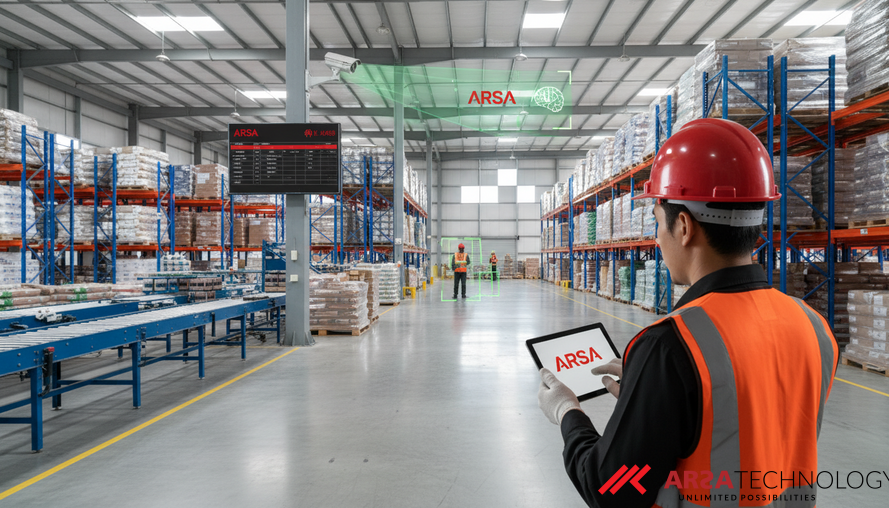
In today’s fast-paced industrial environments, particularly within expansive warehouses, ensuring stringent Personal Protective Equipment (PPE) compliance is paramount. Manual inspections are often reactive, resource-intensive, and prone to human error, leaving gaps in safety protocols. The critical question for many EHS managers is: how to automate PPE compliance monitoring with AI to create a safer, more efficient, and compliant workplace? The answer lies in advanced AI video analytics, specifically edge AI solutions that transform existing CCTV infrastructure into proactive safety guardians.
ARSA Technology offers robust solutions that move beyond traditional surveillance, providing real-time insights and automated enforcement of safety standards. By deploying AI at the edge, organizations can achieve unprecedented levels of control, privacy, and operational reliability, directly impacting injury rates and compliance overheads.
The Limitations of Traditional PPE Monitoring
Historically, PPE compliance has relied on human oversight, periodic audits, and post-incident investigations. While essential, these methods come with significant drawbacks:
- Inconsistent Enforcement: Human observers can miss violations, especially in large or complex areas, or during peak operational hours.
- Delayed Response: Incidents are often detected after they occur, limiting the ability to intervene proactively and prevent injuries.
- High Labor Costs: Dedicating staff solely to safety monitoring diverts valuable resources from other critical tasks.
- Subjectivity and Bias: Manual checks can be inconsistent, leading to unfair or incomplete reporting.
- Data Gaps: Manual record-keeping can be fragmented, making it difficult to identify trends, conduct root cause analysis, or generate comprehensive compliance reports for standards like ISO 45001.
These challenges highlight the urgent need for a more reliable, scalable, and objective approach to workplace safety, especially for critical PPE like hard hats and safety vests.
How AI Automates PPE Compliance Monitoring
AI-powered video analytics systems leverage computer vision to continuously analyze video feeds from existing CCTV cameras. Instead of merely recording events, these systems “see” and “understand” what is happening in real-time. For PPE compliance, this means:
- Continuous Surveillance: AI never blinks. It monitors designated areas 24/7, ensuring consistent adherence to PPE rules.
- Instant Violation Detection: The system can immediately identify if a worker is in a mandatory PPE zone without a hard hat, safety vest, or other required gear. This provides an automated hard hat detection using CCTV capability that far surpasses human capacity.
- Real-Time Alerts: Upon detecting a violation, the system triggers instant alerts to EHS personnel, supervisors, or even the individual concerned (e.g., via an audible warning), enabling immediate corrective action. This capability for real-time safety violation alerts with edge AI is a game-changer for proactive safety management.
- Automated Reporting: All detected events are logged with timestamps, video snippets, and location data, creating an immutable audit trail. This data is invaluable for automating OSHA, EU-OSHA, and ISO 45001 reporting, simplifying compliance audits, and demonstrating due diligence.
ARSA Basic Safety Guard (AI Box): Edge AI for Uncompromised Safety
ARSA Technology’s ARSA Basic Safety Guard (AI Box) is specifically engineered to address the complexities of industrial safety. This plug-and-play edge AI system integrates seamlessly with your existing CCTV infrastructure, turning passive cameras into intelligent safety sensors.
The core strength of the Basic Safety Guard lies in its edge computing capabilities. All AI processing runs locally on the AI Box itself. This means video streams are analyzed on-device and do not leave your network unless explicitly configured, ensuring full data privacy and minimizing latency. This “no cloud dependency” approach is crucial for privacy-sensitive environments and those with limited or unreliable internet connectivity.
Key features and benefits of the ARSA Basic Safety Guard include:
- PPE Detection: Accurately identifies the presence or absence of critical PPE such as helmets, safety vests, and masks.
- Restricted Area Monitoring: Defines specific zones where PPE is mandatory or access is prohibited, triggering alerts for intrusions.
- Real-Time Alerts and Event Logs: Provides immediate notifications for violations and maintains detailed logs for forensic analysis and reporting.
- Scalable Deployment: Available in a Mini PC model for up to 3 cameras, ideal for distributed deployments, or a Server model for up to 30 cameras, suitable for centralized monitoring of larger facilities. This flexibility is a hallmark of the AI Box Series overview.
- Compatibility: Works with existing ONVIF and RTSP compatible cameras, eliminating the need for costly infrastructure overhauls.
For a deeper dive into the concept of PPE detection, you might find our article What Is PPE Detection? How AI Video Analytics Software Delivers Smart Safety Monitoring insightful.
Business Outcomes: Beyond Compliance
Implementing an AI PPE detection system for construction sites (or, in this case, warehouses) delivers tangible business benefits that extend far beyond mere compliance:
- Reduced Workplace Injury Rates: Proactive detection and immediate alerts lead to fewer accidents, protecting your most valuable asset: your workforce.
- Automated Compliance Reporting: Effortlessly generate comprehensive reports for regulatory bodies like OSHA, EU-OSHA, and for ISO 45001 certification. This eliminates manual safety inspections and frees up EHS teams.
- Lower Workers’ Compensation Insurance Premiums: A demonstrably safer workplace with fewer incidents often translates to reduced insurance costs.
- Increased Operational Efficiency: By automating routine monitoring, EHS managers can reallocate resources to higher-value tasks, such as safety training, risk assessment, and continuous improvement initiatives.
- Enhanced Safety Culture: Consistently enforced safety protocols foster a stronger culture of safety, where employees understand and adhere to rules, knowing that the system is fair and vigilant.
- Data-Driven Safety Improvements: The rich data generated by the system provides insights into common violations, high-risk areas, and patterns that can inform targeted safety interventions. Our article Revolutionizing Workplace Safety further explores these benefits.
The adoption of CCTV AI analytics for workplace safety is not just a technological upgrade; it’s a strategic investment in the well-being of your employees and the financial health of your organization. Understanding the difference between deployment models is also key; our post Edge AI vs. Cloud for Safety offers valuable perspectives on this.
Why Edge AI is Ideal for Warehouse Environments
For warehouses, the choice of deployment model is crucial. Edge AI, as offered by the ARSA AI Box Series, provides distinct advantages:
- Low Latency: Processing happens directly at the source, enabling instant detection and alerts – critical for preventing accidents in real-time.
- Data Privacy: Sensitive video footage and analytics remain within your local network, addressing concerns around data sovereignty and compliance with regulations like GDPR and Indonesia PDPA.
- Reduced Bandwidth: Only metadata or specific alerts need to be transmitted, significantly lowering network load compared to cloud-based solutions that stream all video data.
- Offline Operation: The system can function fully even without an internet connection, ensuring continuous safety monitoring in isolated or air-gapped environments.
This makes the ARSA AI Box a superior choice for organizations prioritizing security, privacy, and operational resilience. You can explore all ARSA’s innovative solutions, including the ARSA Self-Check Health Kiosk for employee wellness, by visiting all ARSA products.
Conclusion: A Proactive Approach to Workplace Safety
The question of how to automate PPE compliance monitoring with AI is no longer theoretical; it’s a practical imperative for modern industrial operations. By embracing solutions like the ARSA Basic Safety Guard (AI Box), EHS managers can transition from reactive incident management to a proactive, preventative safety culture. This not only safeguards personnel but also drives significant cost savings through reduced injuries, streamlined compliance, and lower insurance premiums.
Ready to transform your warehouse safety protocols with intelligent AI? Contact ARSA’s solutions team today to learn how our edge AI systems can deliver measurable impact for your organization.
FAQ
- What is an AI PPE detection system for construction sites (and warehouses)?
An AI PPE detection system uses artificial intelligence and computer vision to automatically identify if workers are wearing required Personal Protective Equipment (PPE) like hard hats or safety vests in designated areas, triggering real-time alerts for non-compliance.
- How does automated hard hat detection using CCTV improve safety?
Automated hard hat detection continuously monitors CCTV feeds, eliminating human error and fatigue. It provides instant alerts for violations, allowing for immediate intervention to prevent accidents and significantly reducing workplace injury rates.
- What are the benefits of real-time safety violation alerts with edge AI?
Real-time safety violation alerts with edge AI enable immediate corrective action, preventing potential incidents before they escalate. Edge AI also ensures low latency, enhanced data privacy (no cloud dependency), and reliable operation even without internet connectivity.
Stop Guessing, Start Optimizing.
Discover how ARSA Technology drives profit through intelligent systems.