
How to Automate PPE Compliance Monitoring with AI: A Practical Guide for Oil & Gas Businesses
Ensuring stringent Personal Protective Equipment (PPE) compliance is non-negotiable in the high-stakes environment of oil and gas operations. From drilling rigs to refineries, the presence of hazards demands unwavering adherence to safety protocols. Traditionally, this has relied on manual inspections, which are prone to human error, inconsistent, and often reactive rather than proactive. However, a transformative shift is underway. This guide explores how to automate PPE compliance monitoring with AI, offering oil and gas businesses a robust solution to enhance safety, mitigate risks, and streamline operational efficiency.
The integration of Artificial Intelligence into existing surveillance infrastructure is revolutionizing workplace safety. By leveraging advanced computer vision, companies can move beyond conventional monitoring to achieve real-time, accurate, and comprehensive oversight of PPE adherence, ensuring every worker is protected and every regulation is met.
The Critical Need for Automated PPE Monitoring in Oil & Gas
Oil and gas facilities are inherently dangerous, characterized by flammable materials, heavy machinery, and complex processes. A single lapse in PPE compliance can lead to severe injuries, fatalities, environmental disasters, and significant financial penalties. HSE (Health, Safety, and Environment) managers face immense pressure to maintain impeccable safety records while managing vast, often remote, operational sites.
Manual checks, while essential, are resource-intensive and cannot provide continuous, 24/7 coverage. This leaves gaps where non-compliance can occur unnoticed, increasing the likelihood of incidents. Furthermore, compiling compliance reports manually is time-consuming and often lacks the granular data needed for effective trend analysis and preventive action. This is where an AI PPE detection system for construction sites and industrial facilities like oil and gas can make a profound difference.
Understanding AI-Powered PPE Compliance Monitoring
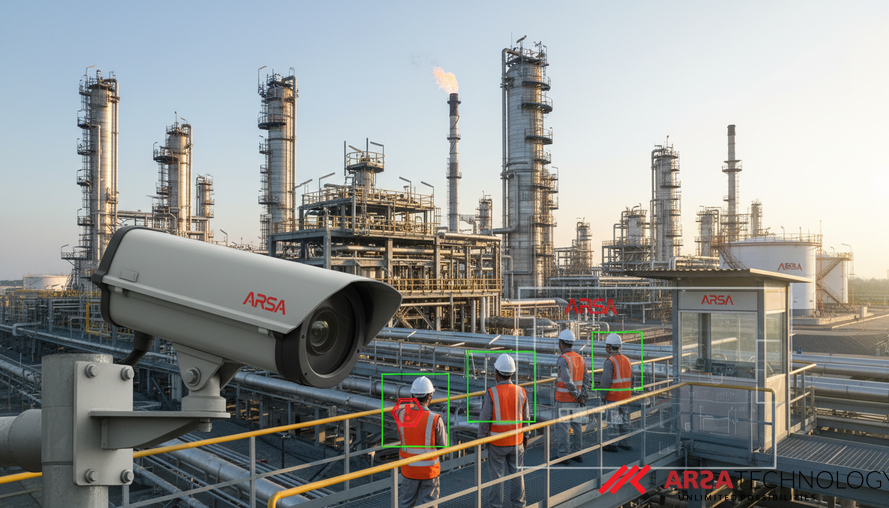
AI-powered PPE compliance monitoring systems utilize computer vision algorithms to analyze live or recorded video feeds from existing CCTV cameras. These algorithms are trained to identify specific types of PPE, such as hard hats, safety vests, gloves, and eye protection, and detect their presence or absence on personnel within designated areas.
The process typically involves:
1. Data Ingestion: Video streams from existing CCTV cameras are fed into the AI system.
2. Object Detection: AI models identify individuals and various types of PPE within the video frames.
3. Compliance Analysis: The system determines if individuals are wearing the required PPE for their specific zone or task.
4. Alerting & Reporting: Non-compliance triggers real-time alerts, and detailed reports are generated for audit and analysis.
This automated approach ensures consistent monitoring, eliminates human bias, and provides objective data for safety improvements.
Key Components of an Effective AI PPE Detection System
To successfully automate PPE compliance monitoring with AI, several core components are essential:
1. Robust AI Video Analytics Software
At the heart of any effective system is powerful AI video analytics software. This software should be capable of processing high-resolution video streams in real-time, accurately identifying various PPE items, and distinguishing between compliant and non-compliant situations. ARSA Technology’s Basic Safety Guard (Software) is specifically designed for this purpose, offering modules for PPE detection, restricted area monitoring, and real-time safety violation alerts.
2. Seamless Integration with Existing CCTV Infrastructure
For oil and gas businesses, replacing existing CCTV systems is often impractical and costly. A truly practical AI solution should be hardware-agnostic, integrating seamlessly with your current camera infrastructure. This allows for a cost-effective upgrade, transforming passive surveillance into active, intelligent monitoring without significant capital expenditure on new hardware.
3. On-Premise Deployment for Data Sovereignty
Given the sensitive nature of operations and data in the oil and gas sector, full data ownership and control are paramount. An on-premise deployment model ensures that all video streams, inference results, and metadata remain entirely within your infrastructure, eliminating cloud dependency and addressing critical data privacy and compliance concerns. This is a key feature of ARSA’s AI Video Analytics Software overview, providing enterprises with the control they need.
4. Real-Time Alerting and Event Logging
Immediate notification of safety violations is crucial for rapid response. The system must provide real-time safety violation alerts with edge AI capabilities, notifying HSE personnel via dashboards, email, or SMS when non-compliance is detected. Comprehensive event logs, including timestamps and video snippets, are vital for incident investigation and audit trails.
5. Centralized Dashboards and Reporting
HSE managers need a clear, consolidated view of safety performance across all sites. A centralized dashboard provides real-time insights, while customizable reports offer historical analytics on compliance rates, common violations, and incident trends. This data empowers informed decision-making and continuous improvement of safety protocols.
Implementing Automated Hard Hat Detection Using CCTV
One of the most common and critical PPE items in oil and gas is the hard hat. Automated hard hat detection using CCTV is a prime example of how AI can enhance safety. Here’s how it typically works:
- Camera Placement: Existing CCTV cameras are strategically positioned to cover high-risk areas where hard hats are mandatory.
- AI Configuration: The ARSA Basic Safety Guard software is configured to specifically detect hard hats and identify individuals. Detection zones can be defined for precise monitoring.
- Continuous Monitoring: The AI continuously analyzes video feeds, identifying every person entering the designated zone.
- Violation Detection: If a person is detected in a hard hat-required zone without one, the system flags it as a violation.
- Instant Alerts: An alert is immediately sent to the relevant safety officer, allowing for prompt intervention.
- Data Collection: Every detection and violation is logged, providing valuable data for compliance reporting and training needs.
This capability extends beyond hard hats to other critical PPE, offering a holistic approach to safety compliance.
The ARSA Technology Approach: On-Premise AI for Oil & Gas Safety
ARSA Technology understands the unique demands of the oil and gas industry, particularly the need for robust security, data sovereignty, and operational reliability. Our AI Video Analytics Software, featuring the Basic Safety Guard module, is engineered to meet these challenges head-on.
- Self-Hosted & Cloud-Independent: Deploy ARSA Basic Safety Guard directly on your existing servers or private data centers. This self-hosted model ensures no sensitive video data or inference results ever leave your network, providing full data ownership and adhering to strict regulatory requirements.
- Hardware-Agnostic Flexibility: Our software is designed to run on diverse hardware, from bare metal servers to virtualized infrastructure. This means you can leverage your current IT investments without being forced into proprietary hardware, offering unparalleled flexibility and cost efficiency.
- Scalable by Design: As your operations expand, our system scales with you. Increase analytics capacity by allocating more compute resources, not by purchasing and deploying new physical devices at every location.
- Comprehensive Analytics Modules: Beyond PPE detection, the ARSA AI Video Analytics Software offers modules for restricted area monitoring, crowd density analysis, and other critical safety applications, providing a unified platform for CCTV AI analytics for workplace safety.
- Integration Ready with REST API: Seamlessly integrate real-time alerts and compliance data into your existing safety management systems, dashboards, and data pipelines using our robust REST API. This ensures that AI-driven insights enhance your current workflows, rather than creating isolated data silos.
By choosing ARSA, oil and gas businesses gain a powerful tool for centralized safety monitoring across multiple sites, ensuring compliance, reducing incidents, and optimizing resource allocation.
Business Outcomes and ROI for Oil & Gas Companies
Implementing an AI-powered PPE compliance monitoring system delivers tangible business outcomes and a clear return on investment:
- Reduced Incident Rates: Proactive detection of non-compliance significantly lowers the risk of accidents and injuries, protecting your most valuable asset – your workforce.
- Enhanced Regulatory Compliance: Automated, objective monitoring provides irrefutable evidence of compliance, simplifying audits and reducing the risk of hefty fines and legal repercussions.
- Operational Efficiency: Reallocate human safety officers from constant surveillance to higher-value tasks like training, risk assessment, and incident response.
- Cost Savings: Preventative measures reduce direct costs associated with accidents (medical care, lost workdays) and indirect costs (investigations, reputational damage).
- Improved Safety Culture: Consistent enforcement through AI fosters a stronger safety culture, where adherence to PPE protocols becomes ingrained.
- Data-Driven Safety Improvements: Granular data on compliance patterns allows for targeted training programs and infrastructure improvements, leading to continuous safety enhancements.
ARSA Technology has a proven track record of deploying mission-critical systems for government and enterprise clients, including in defense and industrial sectors, demonstrating our expertise and reliability in demanding environments.
The Future of Safety: Beyond PPE Monitoring
While PPE compliance is a critical starting point, the capabilities of AI in industrial safety extend much further. Imagine systems that can detect fatigue in operators, identify unusual behavior in restricted zones, or even predict equipment failures based on visual cues. ARSA Technology is at the forefront of these innovations, offering not just products but also custom AI solutions tailored to specific operational needs. For instance, combining video analytics with identity verification using the ARSA Face Recognition & Liveness API can create highly secure access control systems that also verify PPE adherence upon entry.
The journey to a safer, more efficient oil and gas operation begins with intelligent automation. By embracing solutions like ARSA’s AI Video Analytics Software, businesses can transform their safety paradigms from reactive to predictive, ensuring a secure future for their personnel and assets.
Frequently Asked Questions
What is the primary benefit of an automated hard hat detection system?
The primary benefit of an automated hard hat detection system is continuous, real-time monitoring of hard hat compliance in designated areas, significantly reducing the risk of accidents due to non-compliance and providing objective data for safety improvements.
Can ARSA’s AI PPE detection system for construction sites integrate with existing CCTV?
Yes, ARSA’s AI Video Analytics Software is hardware-agnostic and designed to integrate seamlessly with your existing CCTV infrastructure, allowing you to upgrade your surveillance capabilities without replacing current cameras or backend systems.
How does ARSA ensure data privacy with its CCTV AI analytics for workplace safety?
ARSA Technology prioritizes data sovereignty through its on-premise deployment model. All video streams, inference results, and metadata remain entirely within your infrastructure, ensuring full data ownership and eliminating cloud dependency, which is crucial for privacy-sensitive environments like oil and gas.
What kind of real-time safety violation alerts can an AI system provide?
An AI system can provide instant alerts for various safety violations, including missing PPE (e.g., hard hats, vests), entry into restricted areas, and other predefined hazardous behaviors. These alerts can be delivered via dashboards, email, or SMS to relevant safety personnel for immediate action.
—
Ready to enhance safety and compliance in your oil and gas operations? Explore ARSA Technology’s comprehensive range of all ARSA products and discover how our AI solutions can be tailored to your specific needs. Contact ARSA solutions team today for a consultation and demonstration.
Stop Guessing, Start Optimizing.
Discover how ARSA Technology drives profit through intelligent systems.