
How to Automate PPE Compliance Monitoring with AI: A Step-by-Step Guide for EHS Managers
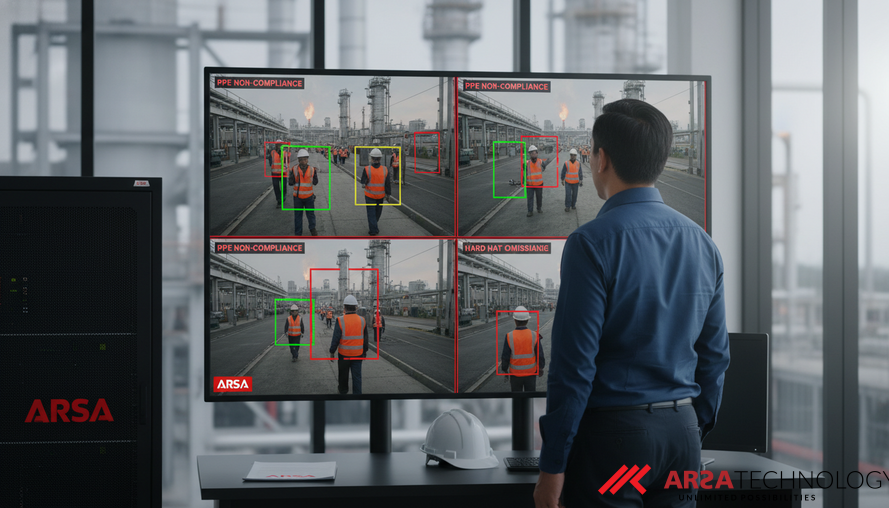
In high-risk industries like oil and gas, ensuring stringent Personal Protective Equipment (PPE) compliance is not just a regulatory requirement—it’s a critical component of operational safety and risk management. Traditional manual inspections are often inconsistent, labor-intensive, and reactive, leaving gaps that can lead to severe accidents and costly penalties. The question for many EHS managers is: how to automate PPE compliance monitoring with AI effectively and efficiently? This guide provides a strategic roadmap to leverage advanced AI video analytics, transforming your existing CCTV infrastructure into a proactive safety intelligence system.
Automating PPE compliance monitoring with AI offers a powerful solution to these challenges. By deploying an intelligent AI PPE detection system, organizations can achieve continuous, objective oversight, significantly reducing human error and improving response times to safety violations. ARSA Technology, with over seven years of expertise in AI and IoT solutions, specializes in delivering production-ready systems that enhance security, optimize operations, and unlock new business value for enterprises and governments.
The Imperative for Automated PPE Compliance in Oil & Gas
The oil and gas sector faces unique safety hazards, from working at heights to handling volatile materials. Non-compliance with PPE mandates, such as wearing hard hats, safety vests, and eye protection, can have catastrophic consequences. Regulatory bodies like OSHA and EU-OSHA, alongside international standards like ISO 45001, impose strict guidelines, making robust compliance monitoring essential.
An automated system not only helps meet these regulatory demands but also fosters a stronger safety culture. It moves beyond punitive measures to create an environment where safety is continuously reinforced through real-time feedback and data-driven insights. This shift is crucial for reducing workplace injury rates and minimizing workers’ compensation insurance premiums.
Step-by-Step: Implementing an AI PPE Detection System
Implementing an AI-powered PPE compliance monitoring system doesn’t require a complete overhaul of your existing security infrastructure. Solutions like the ARSA Basic Safety Guard (AI Box) are designed for seamless integration and rapid deployment.
1. Assess Your Current Infrastructure and Safety Needs
Before deployment, conduct a thorough assessment of your operational sites. Identify critical zones where PPE compliance is paramount, such as drilling platforms, processing plants, or storage facilities. Document the types of PPE required in each area (e.g., hard hats, safety vests, gloves, eye protection). Evaluate your existing CCTV camera coverage and network capabilities. ARSA’s AI Box Series is compatible with standard ONVIF and RTSP cameras, making integration straightforward.
2. Choose the Right Edge AI Solution
For environments like oil and gas facilities, where network connectivity can be unreliable and data privacy is critical, an edge computing deployment model is ideal. Edge AI processes video streams directly on-site, minimizing latency and eliminating reliance on cloud connectivity. This ensures that all video streams, inference results, and metadata remain entirely within your infrastructure, aligning with stringent data sovereignty and compliance requirements.
The ARSA AI Box Series overview offers flexible hardware configurations: a Mini PC model for up to 3 cameras, perfect for distributed deployments, and a Server model for up to 30 cameras, suitable for centralized monitoring of heavy workloads. This flexibility allows you to scale your AI PPE detection system for construction sites or sprawling industrial complexes efficiently.
3. Deploy and Configure the AI Box
One of the key advantages of ARSA’s AI Box is its 5-minute plug-and-play setup.
1. Connect: Simply connect the AI Box to power, your existing network, and your CCTV cameras.
2. Configure: Access the intuitive interface to select the relevant analytics modules. For PPE compliance, this includes hard hat detection, safety vest detection, and restricted area monitoring. Define specific detection zones and set up alert rules for non-compliance or intrusions.
3. Monitor: Once configured, the system immediately begins processing video streams. You can access real-time dashboards, alerts, and reports locally or remotely, depending on your network configuration.
This process transforms passive CCTV footage into active intelligence, capable of detecting conditions and triggering actions instantly. For more insights into how this technology works, you can read our article on What Is PPE Detection? How AI Video Analytics Software Delivers Smart Safety Monitoring.
Real-Time Safety Violation Alerts with Edge AI
The power of edge AI lies in its ability to deliver instant insights. When a worker enters a designated zone without a required hard hat or safety vest, the system immediately generates real-time safety violation alerts with edge AI. These alerts can be sent to EHS personnel via email, SMS, or integrated directly into existing safety management platforms. This proactive approach allows for immediate intervention, preventing potential accidents before they occur.
Beyond simple detection, the ARSA Basic Safety Guard also supports restricted area monitoring, issuing alerts for unauthorized access. This comprehensive surveillance capability is vital for maintaining secure and compliant operational zones, particularly in sensitive oil and gas environments.
Leveraging CCTV AI Analytics for Workplace Safety
The data generated by the AI Box goes far beyond real-time alerts. The system provides robust CCTV AI analytics for workplace safety, offering valuable insights into compliance patterns, high-risk areas, and recurring violations. EHS managers can access historical analytics and reporting to:
- Automate OSHA / EU-OSHA / ISO 45001 reporting: Generate detailed compliance reports with objective data, streamlining auditing processes and demonstrating due diligence.
- Identify training gaps: Pinpoint specific teams or shifts with higher non-compliance rates, indicating a need for targeted safety training.
- Optimize safety protocols: Use heatmaps and trend analysis to understand where and when violations are most likely to occur, allowing for strategic adjustments to site layout or operational procedures.
For a deeper dive into how this technology can be applied in specific high-risk environments, consider reading PPE Detection Explained: How to Turn Existing CCTV into Smart Safety Monitoring for Mining, which shares similar operational challenges to the oil and gas sector.
Business Outcomes and ROI
The investment in an automated PPE compliance monitoring system yields significant returns:
- Reduced Workplace Injury Rates: Proactive detection and immediate intervention drastically lower the incidence of accidents, protecting your workforce.
- Lower Workers’ Comp Insurance Premiums: A demonstrably safer workplace and fewer incidents can lead to substantial reductions in insurance costs.
- Eliminate Manual Safety Inspections: Free up EHS personnel from tedious manual checks, allowing them to focus on higher-value tasks like safety program development and incident investigation.
- Enhanced Compliance: Maintain continuous adherence to regulatory standards, avoiding costly fines and reputational damage.
- Operational Efficiency: Streamline safety management processes, leading to more efficient operations.
ARSA Technology’s solutions are built for real-world operations, trusted by enterprises and public institutions for their accuracy and reliability. Our commitment to data privacy and on-premise deployment options ensures that your sensitive operational data remains secure and under your control. For a broader view of our offerings, explore all ARSA products.
Frequently Asked Questions
What is automated hard hat detection using CCTV?
Automated hard hat detection using CCTV is an AI-powered capability that analyzes video streams from existing surveillance cameras to identify whether individuals in designated areas are wearing hard hats. If a hard hat is not detected where required, the system can trigger real-time alerts to EHS personnel.
How does an AI PPE detection system benefit oil and gas operations?
An AI PPE detection system enhances safety in oil and gas by providing continuous, objective monitoring of PPE compliance, reducing human error, enabling real-time intervention for violations, and automating reporting for regulatory standards like OSHA and ISO 45001. This leads to fewer accidents, lower insurance costs, and improved operational efficiency.
Can ARSA’s AI Box integrate with my existing CCTV cameras?
Yes, ARSA’s AI Box is designed for plug-and-play installation and is compatible with existing CCTV infrastructure that supports ONVIF and RTSP protocols. This allows for rapid deployment without the need to replace your current cameras or backend systems.
What kind of data privacy is offered with ARSA’s edge AI solutions?
ARSA’s edge AI solutions, like the AI Box, process all video streams and analytics locally on the device. This means no data leaves your network unless explicitly configured, ensuring full data ownership, privacy, and compliance with regulations such as GDPR and Indonesia PDPA. This is a core advantage for sensitive industries.
Conclusion
Automating PPE compliance monitoring with AI is no longer a futuristic concept; it’s a proven strategy for enhancing workplace safety and operational efficiency in demanding industries like oil and gas. By implementing solutions like the ARSA Basic Safety Guard (AI Box), EHS managers can transition from reactive safety measures to a proactive, data-driven approach. This not only safeguards personnel but also protects your organization from financial and reputational risks, while streamlining compliance reporting. For those interested in how AI can be applied to other safety-critical logistics operations, our article How to Automate PPE Compliance Monitoring with AI: A Guide for Logistics Safety offers additional context.
Ready to transform your safety protocols and achieve unparalleled compliance? Contact ARSA solutions team today to discuss how a ARSA Custom AI Solution or the ARSA AI Box Series can be tailored to your specific operational needs.
Stop Guessing, Start Optimizing.
Discover how ARSA Technology drives profit through intelligent systems.