
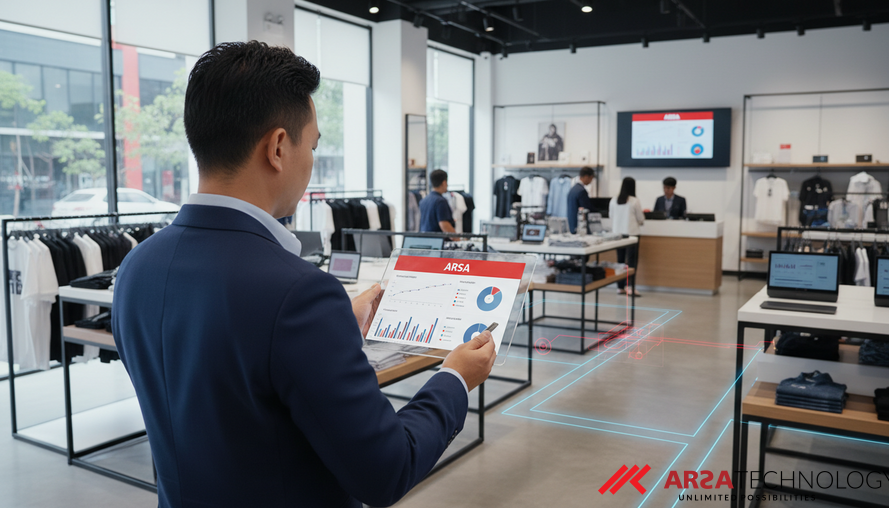

How to Measure Retail Store Conversion Rate with AI Analytics: A Step-by-Step Guide
In today’s competitive retail landscape, understanding customer behavior is paramount to success. For retail operations managers, knowing how to measure retail store conversion rate with AI analytics is no longer a luxury but a necessity. This metric, which tracks the percentage of visitors who make a purchase, is a direct indicator of your store’s effectiveness. Traditional methods often fall short, providing incomplete or delayed data. However, with advanced AI video analytics, retailers can gain unprecedented real-time insights, transforming raw foot traffic into actionable intelligence.
ARSA Technology’s ARSA Smart Retail Counter, part of our robust AI Video Analytics Software overview suite, offers a powerful, on-premise solution designed to integrate seamlessly with your existing CCTV infrastructure. This software empowers businesses to deploy sophisticated analytics on their existing servers, ensuring full data ownership and centralized processing across multiple store locations.
Understanding Retail Conversion and Its Importance
Retail conversion rate is calculated by dividing the number of transactions by the total number of visitors, then multiplying by 100. A higher conversion rate signifies more effective sales strategies, better store layouts, and optimized staffing. For shopping malls and individual retail outlets, accurately measuring this rate is the first step towards identifying bottlenecks and capitalizing on opportunities. AI analytics provides the granular data needed to move beyond guesswork and make data-driven decisions.
Step 1: Implementing a People Counting System for Retail Stores
The foundation of conversion rate measurement is accurate visitor counting. A reliable people counting system for retail stores is crucial for distinguishing between mere passersby and actual store visitors. ARSA Smart Retail Counter leverages existing CCTV cameras at store entrances and exits to precisely count individuals entering and leaving. This eliminates the need for expensive new hardware and ensures that your visitor data is both accurate and consistent.
The ARSA AI Video Analytics Software, deployed on your existing servers, processes these video streams in real-time. This on-premise deployment model ensures that all video data and analytics remain within your infrastructure, providing full data ownership and compliance with stringent privacy regulations like GDPR and CCPA. For multi-store retail chains, this centralized processing capability allows for a unified view of visitor traffic across all locations, offering invaluable chain-wide retail intelligence. You can learn more about how our centralized people counting software can benefit your operations.
Step 2: Leveraging AI Customer Footfall Tracking for Shopping Malls
Beyond simple entry/exit counts, AI customer footfall tracking provides deeper insights into customer journeys within your retail space or across a larger shopping mall environment. By analyzing video feeds, the ARSA Smart Retail Counter can track customer paths, identify popular zones, and measure dwell times. This capability is particularly valuable for shopping malls, where understanding traffic flow between common areas and individual stores can inform leasing strategies and promotional placements.
For instance, if a specific area consistently shows high footfall but low engagement, it signals a need for re-evaluation. This level of detail helps operations managers optimize operations across locations, ensuring resources are allocated effectively and store layouts are designed for maximum impact. The insights gained from such tracking can lead to significant improvements in customer experience and, ultimately, conversion.
Step 3: Real-Time Queue Management Analytics to Enhance Service
Long queues are a major deterrent to conversion. Implementing real-time queue management analytics allows you to monitor waiting times and queue lengths at checkout counters, fitting rooms, or service desks. The ARSA Smart Retail Counter can detect when queues exceed predefined thresholds, triggering alerts to staff for immediate action, such as opening new registers or deploying additional personnel.
By proactively managing queues, retailers can significantly reduce customer frustration and minimize abandoned purchases. This not only improves the immediate conversion rate but also enhances overall customer satisfaction and loyalty. For more insights on this, consider reading about improving customer experience by reducing queue wait times.
Step 4: Store Heatmap Analysis Using Existing CCTV
Understanding where customers spend their time and which displays capture their attention is critical for optimizing store layout and product placement. Store heatmap analysis using existing CCTV transforms passive video footage into vivid visual representations of customer engagement. Hotter areas on the heatmap indicate higher traffic and dwell times, while cooler areas suggest less interaction.
This visual data allows operations managers to:
- Identify high-performing product displays.
- Pinpoint underperforming sections of the store.
- Optimize product placement for impulse buys.
- Evaluate the effectiveness of promotional signage.
By integrating this analysis with sales data, you can directly correlate customer engagement with purchasing behavior, providing a clear path to boosting conversion rates.
Step 5: Centralized Analytics Dashboard and API Integration
The true power of ARSA’s AI Video Analytics Software lies in its ability to consolidate all these insights into a centralized analytics dashboard. This dashboard provides a comprehensive, real-time overview of key performance indicators (KPIs) across all your retail locations. From visitor counts and conversion rates to queue times and heatmap data, all critical information is accessible from a single interface.
Furthermore, the system offers robust REST API integration, allowing seamless connection with existing POS (Point of Sale) and ERP (Enterprise Resource Planning) systems. This integration enables a holistic view of your retail operations, linking physical store performance directly to sales data and inventory management. This level of integration is essential for achieving true business outcome-focused retail intelligence. Our all ARSA products are designed with integration in mind.
Why ARSA Technology for Retail AI Analytics?
ARSA Technology brings over seven years of expertise in deploying practical AI solutions for governments and enterprises. Our ARSA Smart Retail Counter is engineered for reliability, accuracy, and data privacy. Unlike cloud-dependent solutions, our on-premise deployment ensures your data remains secure within your infrastructure, crucial for adhering to international compliance frameworks like GDPR and CCPA. This commitment to data sovereignty and security is a cornerstone of our offerings, including products like the ARSA Traffic Monitor (AI Box), which also prioritizes edge processing and local data handling.
Our solutions are not experimental; they are production-grade systems proven in demanding environments. We understand the unique challenges of retail operations and provide tools that deliver measurable ROI through increased efficiency, optimized staffing, and enhanced customer experiences. For a deeper dive into how AI transforms real-world operations, explore real results from AI in shopping malls.
Frequently Asked Questions (FAQs)
What is the primary benefit of using AI analytics to measure retail store conversion rate?
The primary benefit is gaining real-time, accurate insights into customer behavior and store performance, enabling data-driven decisions to optimize operations, improve customer experience, and ultimately boost sales.
How does an AI customer footfall tracking system ensure data privacy?
ARSA’s AI customer footfall tracking systems, like the Smart Retail Counter, operate on-premise, meaning all video streams and analytics data are processed and stored within your own infrastructure. This eliminates cloud dependency and ensures full compliance with privacy regulations such as GDPR and CCPA.
Can store heatmap analysis using existing CCTV help improve store layout?
Absolutely. Heatmap analysis visually highlights areas of high and low customer activity and dwell time. This data is invaluable for optimizing product placement, display effectiveness, and overall store layout to guide customers more efficiently and encourage purchases.
Is ARSA’s AI Video Analytics Software suitable for multi-store retail chains?
Yes, ARSA’s AI Video Analytics Software is specifically designed for multi-store retail chains. Its centralized processing capabilities and unified dashboard provide chain-wide retail intelligence, allowing operations managers to monitor and optimize performance across all locations from a single platform.
Conclusion
Mastering how to measure retail store conversion rate with AI analytics is a strategic imperative for any forward-thinking retail operations manager. By adopting advanced AI video analytics solutions like the ARSA Smart Retail Counter, businesses can transform their existing CCTV infrastructure into a powerful source of real-time operational intelligence. From precise people counting and insightful heatmap analysis to proactive queue management, these tools provide the clarity needed to optimize every aspect of your retail environment. The result is not just improved conversion rates, but a more efficient, customer-centric, and profitable retail operation.
Ready to unlock the full potential of your retail data? Contact ARSA solutions team today to discuss how our AI Video Analytics Software can be tailored to your specific needs.
Stop Guessing, Start Optimizing.
Discover how ARSA Technology drives profit through intelligent systems.