
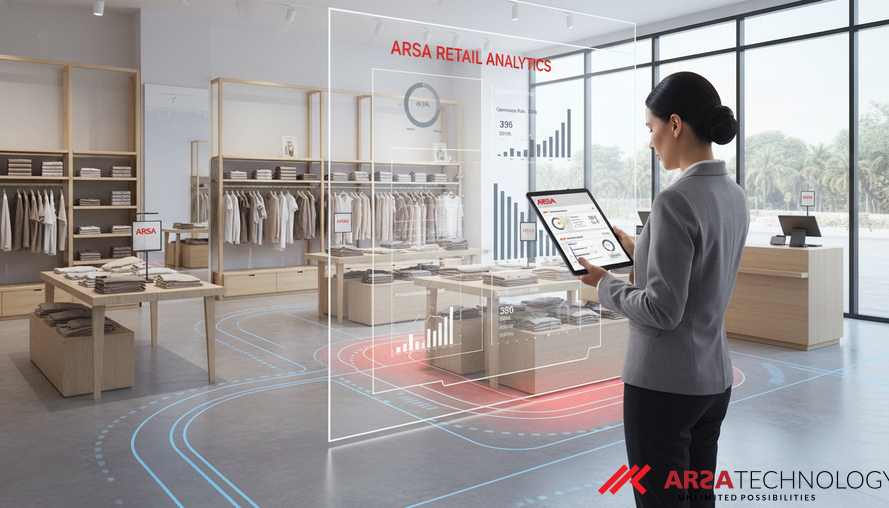

In today’s competitive landscape, understanding customer behavior is paramount for retail success. For any retail store operations manager, knowing how to measure retail store conversion rate with AI analytics is no longer a luxury but a necessity. This guide will walk you through leveraging advanced AI video analytics to transform raw foot traffic data into actionable insights, ultimately boosting your store’s profitability and operational efficiency.
Traditional methods of calculating conversion rates often rely on manual counts or limited data points, leading to inaccuracies and missed opportunities. ARSA Technology’s ARSA Smart Retail Counter (Software) offers an enterprise-grade solution, providing a comprehensive people counting system for retail stores. This self-hosted, on-premise software integrates seamlessly with your existing CCTV infrastructure, delivering real-time intelligence without cloud dependency.
The Foundation: Understanding Retail Conversion Rate
Retail conversion rate is typically defined as the percentage of visitors who make a purchase. While simple in concept, accurately measuring it requires precise data on both footfall and transactions. AI analytics provides this precision by automating the collection of visitor data, allowing for a more accurate and granular understanding of store performance.
Key Steps to Measuring Retail Store Conversion Rate with AI Analytics
Implementing an AI-powered system like ARSA’s AI Video Analytics Software overview involves several strategic steps to ensure you capture the most valuable data.
1. Deploying an Advanced People Counting System for Retail Stores
The first critical step is to accurately count visitors entering and exiting your store. ARSA Smart Retail Counter software, deployed on your existing servers, uses advanced computer vision to provide precise entry and exit counts. This eliminates human error and provides a consistent data stream for calculating your total visitor numbers. The system is designed for centralized processing, allowing you to monitor multiple camera streams from a single location, ideal for multi-store visibility.
2. Implementing AI Customer Footfall Tracking for Shopping Malls and Individual Stores
Beyond simple counts, understanding customer movement patterns within your store is crucial. AI customer footfall tracking for shopping malls and individual retail outlets allows you to see where customers go, how long they stay in certain areas (dwell time), and which displays attract the most attention. This data is invaluable for optimizing store layouts, product placement, and promotional strategies. For instance, by analyzing footfall, you might discover that a particular aisle is consistently overlooked, prompting a redesign or a new marketing approach.
3. Leveraging Store Heatmap Analysis Using Existing CCTV
Store heatmap analysis using existing CCTV transforms your security footage into powerful visual insights. Heatmaps graphically represent areas of high and low activity within your store, highlighting popular zones and bottlenecks. This visual data helps operations managers make informed decisions about staffing, merchandising, and even store design. For example, a heatmap might reveal long queues at checkout, indicating a need for real-time queue management analytics.
4. Integrating Real-Time Queue Management Analytics
Long queues are a major deterrent to conversion and customer satisfaction. Real-time queue management analytics, a core feature of ARSA Smart Retail Counter, monitors queue lengths and wait times at checkout counters or service desks. By setting up alerts for predefined thresholds, managers can proactively deploy additional staff to reduce wait times, improving the customer experience and preventing abandoned purchases. This immediate insight ensures operational agility and responsiveness.
5. Centralized Analytics and API Integration for Comprehensive Retail Intelligence
The true power of AI analytics lies in its ability to provide chain-wide retail intelligence. ARSA’s on-premise solution offers a centralized analytics dashboard, allowing you to view performance metrics across all your locations. Furthermore, its REST API facilitates seamless API integration with POS and ERP systems. This integration allows you to correlate visitor data with actual sales data, providing a complete picture of your conversion funnel and enabling precise ROI calculations for various operational changes. All data remains within your infrastructure, ensuring full data ownership and compliance with international frameworks like GDPR and CCPA.
For a deeper dive into how AI can optimize store layouts, you might find our article on Unlocking Retail Potential: How to Leverage Customer Heatmap Analytics for Store Layout Optimization insightful.
Business Outcomes and ROI
The implementation of AI analytics for retail conversion measurement translates directly into tangible business outcomes:
- Optimized Operations Across Locations: Gain a consistent, data-driven view of performance across your entire retail chain, enabling standardized best practices.
- Increased Conversion Rates: Identify and address pain points in the customer journey, leading to more completed purchases.
- Improved Customer Experience: Reduce wait times and create more intuitive store layouts based on actual customer behavior.
- Reduced Operational Costs: Optimize staffing levels and resource allocation by understanding peak and off-peak periods.
- Data-Backed Decision Making: Move beyond guesswork with precise metrics that support strategic planning and investment.
Our solutions are proven in demanding environments, trusted by enterprises and public institutions. To understand how ARSA’s AI solutions are shaping the future of retail, read about Grocery in 2026: How to Measure Retail Store Conversion Rate with AI Analytics for Future Success.
Conclusion
Mastering how to measure retail store conversion rate with AI analytics empowers retail operations managers with unprecedented insights into their business. By adopting a robust, on-premise AI video analytics solution like the ARSA Smart Retail Counter, you can transform your existing CCTV infrastructure into a powerful engine for operational intelligence. This leads to optimized performance, enhanced customer experiences, and ultimately, a significant boost in your bottom line. Explore all ARSA products to see how our AI and IoT solutions can benefit your enterprise.
Ready to unlock the full potential of your retail operations? Contact ARSA solutions team today for a consultation. Even though this article focuses on retail, ARSA also provides solutions for diverse needs, including the ARSA Self-Check Health Kiosk for corporate wellness.
FAQ Section
What is a people counting system for retail stores and how does it work?
A people counting system for retail stores uses AI video analytics to accurately detect and count individuals entering and exiting a designated area. It works by analyzing CCTV footage in real-time, providing precise visitor numbers without manual intervention, which is crucial for calculating conversion rates.
How can AI customer footfall tracking benefit shopping malls?
AI customer footfall tracking provides shopping malls with detailed insights into visitor flow, popular zones, and dwell times across different areas. This data helps mall management optimize tenant mix, common area design, marketing campaigns, and overall operational efficiency to enhance the visitor experience and attract more traffic.
What are the advantages of real-time queue management analytics for retailers?
Real-time queue management analytics allows retailers to monitor queue lengths and wait times instantly. This enables proactive staffing adjustments, reduces customer frustration, prevents abandoned purchases, and significantly improves the overall customer experience, directly impacting conversion rates and sales.
Stop Guessing, Start Optimizing.
Discover how ARSA Technology drives profit through intelligent systems.