
How to Turn Existing CCTV into Smart Safety Monitoring for Oil & Gas Facilities
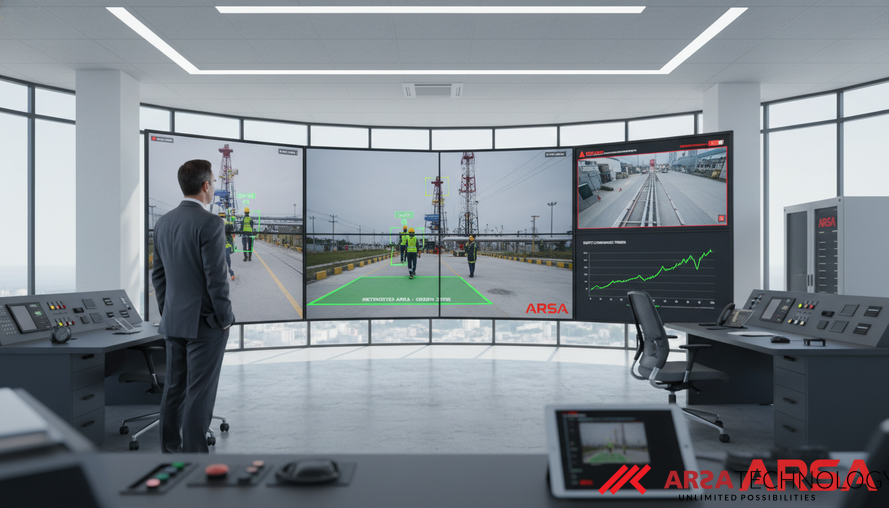
In high-stakes environments like oil and gas facilities, safety is paramount. Traditional CCTV systems, while crucial for surveillance, often fall short in providing proactive, real-time safety intelligence. The good news is that you don’t need to overhaul your entire infrastructure to achieve advanced safety monitoring. This guide will show you how to turn existing CCTV into smart safety monitoring, transforming your passive surveillance into an active, intelligent safety detection system. By leveraging AI video analytics, facility managers can significantly enhance operational safety, ensure compliance, and mitigate risks across their sites.
The challenge for many organizations, especially in the oil and gas sector, is the significant investment already made in legacy CCTV infrastructure. Replacing hundreds or thousands of cameras is often impractical and cost-prohibitive. ARSA Technology offers a solution that allows you to upgrade CCTV with AI safety detection by deploying sophisticated software on your existing servers, turning your current cameras into powerful safety sensors. This approach ensures full data ownership and operates without cloud dependency, critical for sensitive industrial operations.
The Imperative for Smart Safety in Oil & Gas
Oil and gas operations present unique safety challenges, from hazardous zones and complex machinery to strict regulatory compliance. Manual monitoring of CCTV feeds is prone to human error, fatigue, and can miss critical incidents. This is where AI-powered safety monitoring becomes indispensable, providing continuous, objective oversight.
Key Components of an AI-Powered Safety Monitoring System
To effectively add AI analytics to existing security cameras, several core components are essential:
1. AI Video Analytics Software: This is the brain of the system. It processes video streams in real-time to identify objects, people, vehicles, and specific behaviors. ARSA’s AI Video Analytics Software overview is designed for on-premise deployment, ensuring all processing occurs within your secure network.
2. Existing CCTV Infrastructure: The beauty of this solution is its compatibility. Whether you have analog cameras connected via DVRs or modern IP cameras, the software can integrate with your current setup, allowing you to convert IP cameras to an AI safety system without hardware replacement.
3. On-Premise Servers: For industries like oil and gas, data sovereignty and security are non-negotiable. Deploying the AI software on your existing servers or private data centers means no video streams or sensitive data leave your infrastructure, aligning with stringent security protocols and compliance frameworks such as ISO 27001 and GDPR.
4. Customizable Analytics Modules: The software should offer specific modules tailored to industrial safety needs. ARSA’s ARSA Basic Safety Guard (Software) is a prime example, offering specialized capabilities for industrial environments.
How to Turn Existing CCTV into Smart Safety Monitoring with ARSA Basic Safety Guard
Implementing ARSA Basic Safety Guard (Software) allows you to retrofit CCTV with PPE detection and much more, creating a comprehensive safety monitoring solution. Here’s a step-by-step breakdown:
1. Assessment and Planning
Begin by identifying critical safety areas within your oil and gas facility. This includes hazardous zones, machinery operation areas, entry/exit points, and any locations requiring strict PPE compliance. Understand your existing CCTV camera coverage and network infrastructure. This initial assessment helps in strategically deploying the AI software for maximum impact.
2. Software Deployment on Existing Infrastructure
ARSA Basic Safety Guard is designed for flexible, on-premise deployment. It runs on your existing servers, virtual machines, or containerized environments. This eliminates the need for new, dedicated AI appliances, minimizing capital expenditure and integration complexity. The software connects directly to your existing CCTV streams, whether they are IP cameras or integrated via encoders.
3. Configuration of AI Analytics Modules
Once deployed, you can configure specific AI analytics modules. For oil and gas, critical modules include:
- PPE Detection: Automatically identifies if personnel are wearing required personal protective equipment such as helmets, safety vests, and masks. This is vital for adhering to safety standards like ISO 45001.
- Restricted Area Monitoring: Defines virtual perimeters and triggers alerts if unauthorized personnel or vehicles enter these zones. This is crucial for securing sensitive areas within a facility.
- Safety Violation Alerts: Detects specific unsafe behaviors or conditions, such as loitering in dangerous areas, unauthorized access, or even falls.
- Event Logging and Reporting: All detected events are logged with timestamps and associated video snippets, providing an invaluable audit trail for compliance and incident investigation.
4. Integration with Existing Systems
A significant advantage of ARSA’s AI Video Analytics Software is its REST API integration readiness. This allows seamless connection with your existing dashboards, alerting systems, and data pipelines, including SCADA systems. This means safety alerts can be routed directly to control room operators, security personnel, or facility managers via email, SMS, or integrated alert platforms, enabling immediate response.
5. Centralized Monitoring and Scalability
With ARSA Basic Safety Guard, you can achieve centralized safety monitoring across global sites. The software’s scalable design allows you to expand analytics capacity by allocating compute resources rather than installing new hardware at each location. This provides a unified view of safety compliance and incidents, enhancing oversight and operational efficiency.
For a deeper dive into selecting the right technology for your specific needs, consider reading about what to evaluate when choosing a PPE detection provider for AI restricted area monitoring in oil and gas facilities.
Business Outcomes and ROI
The implementation of smart safety monitoring delivers tangible business outcomes:
- Reduced Accidents and Injuries: Proactive detection of safety violations and non-compliance leads to immediate interventions, significantly reducing the likelihood of incidents.
- Enhanced Compliance: Automated PPE detection and restricted area monitoring provide continuous adherence to industry regulations and internal safety protocols, generating audit-ready compliance reports.
- Operational Efficiency: By automating monitoring tasks, human resources can be reallocated to higher-value activities. Real-time insights enable faster decision-making and optimized safety protocols.
- Full Data Ownership and Privacy: With on-premise deployment, all video streams and analytics data remain within your infrastructure, ensuring maximum privacy and adherence to data protection regulations.
- Cost Savings: Leveraging existing CCTV infrastructure and servers minimizes new hardware investments, offering a rapid return on investment.
Another relevant perspective can be found in this article: What Is PPE Detection? How AI Video Analytics Software Delivers Smart Safety Monitoring.
Why Choose ARSA Technology for Your Safety Upgrade
ARSA Technology brings over seven years of expertise in deploying practical AI solutions for governments and enterprises. Our AI Video Analytics Software, particularly the Basic Safety Guard module, is engineered for the demanding requirements of industrial environments like oil and gas. We offer:
- Proven Accuracy: Our systems deliver high accuracy in PPE detection and other safety analytics.
- Hardware Agnostic: Deploy on your existing servers without vendor lock-in.
- Scalability: Solutions designed to grow with your operational needs.
- Data Security: Full on-premise deployment ensures complete data control and privacy.
- Comprehensive Support: From initial consultation to deployment and ongoing support, our team is ready to assist. If you have unique challenges, explore an ARSA Custom AI Solution tailored to your specific needs.
Conclusion
Transforming your existing CCTV into a smart safety monitoring system is not just an upgrade; it’s a strategic investment in the future of your facility’s safety and operational efficiency. By choosing ARSA’s AI Video Analytics Software, you can leverage your current infrastructure to gain real-time insights, ensure compliance, and create a safer working environment without the prohibitive costs of a complete system overhaul. Explore all ARSA products to see how our AI and IoT solutions can benefit your operations.
Ready to enhance safety and compliance in your oil and gas facility? Contact ARSA solutions team today to discuss how our Basic Safety Guard software can be deployed in your environment.
—
FAQ Section
Q1: Can ARSA’s AI safety detection work with my old analog CCTV cameras?
A1: Yes, ARSA’s AI Video Analytics Software is hardware-agnostic. It can integrate with existing analog CCTV systems by using video encoders to convert analog signals into digital streams that the software can process. This allows you to add AI analytics to existing security cameras regardless of their age.
Q2: How does ARSA ensure data privacy and security for on-premise safety monitoring?
A2: With ARSA’s on-premise deployment model, all video streams, inference results, and metadata remain entirely within your infrastructure. There is no cloud dependency, ensuring full data ownership and control, which is crucial for compliance with regulations like GDPR and for sensitive industries like oil and gas.
Q3: What kind of safety violations can the ARSA Basic Safety Guard detect in real-time?
A3: The ARSA Basic Safety Guard can detect various safety violations, including PPE non-compliance (missing helmets, vests, masks), unauthorized entry into restricted areas, and specific unsafe behaviors. It provides real-time alerts and event logs, enabling immediate response and supporting compliance audits.
Stop Guessing, Start Optimizing.
Discover how ARSA Technology drives profit through intelligent systems.